
Jay-Z's Roc Nation Sports: Reshaping European Football
Jay-Z has spent a career turning side projects into empires. This summer, his most ruthless hit isn’t on a playlist. It’s on the transfer market.
Twenty-four hours after Beyoncé dropped the first track in four years to feature him actually rapping – on an extended remix pack of Morning Dew (Donk) – another of his ventures was busy reshaping European football. Roc Nation Sports, the sporting arm of his entertainment powerhouse, has moved from curiosity to central player in the game’s most expensive conversations.
From courts and diamonds to the Bernabéu
When Roc Nation Sports launched in 2013, it was built for American power leagues: NBA, NFL, MLB. Kevin Durant headlined a roster built around US superstars. Football was a late addition, with Bayern Munich’s Jérôme Boateng breaking the ground in 2015.
The real shift came four years later. Roc Nation Sports International (RNSI), based in London and aimed squarely at Europe’s elite clubs, began stitching itself into the fabric of the global game. The strategy was simple: don’t just join the market. Bend it.
Today, more than 100 footballers sit under the Roc Nation umbrella. At the top of that tree is Vinícius Júnior, now one of the sport’s most valuable assets and, this week, the owner of a lucrative new Real Madrid contract believed to be worth around €25m a year.
That deal did not land quietly.
Vinícius, Arsenal and a two-year poker game
RNSI spent two years pushing Real Madrid towards a number: €30m a season, the Kylian Mbappé benchmark. To crank up the pressure, they let Vinícius’s deal run down into its final 12 months, inviting Europe’s richest to imagine him walking for free.
Arsenal certainly did. The London club, searching for a headline forward, were prepared to put serious money on the table and were linked with a blockbuster move for the 26-year-old. But those inside the process believed the more realistic prize lay a year away: Vinícius, out of contract, arriving in north London for nothing beyond an enormous wage and signing-on fee.
Real Madrid blinked first. They raised their offer, Vinícius signed a new six-year deal, and the idea of him in red and white dissolved. The decision secured their superstar winger. It may also have closed the door on another.
By committing so heavily to Vinícius, Madrid look likely to lose out on Rodri, the Manchester City midfielder who has long been admired at the Bernabéu. Barcelona have moved faster, sensing an opening while their rivals locked down their Brazilian talisman.
The message was clear: in this market, RNSI can dictate the pace.
Diomande: the €115m statement
If Vinícius’s renewal underlined Roc Nation’s leverage, Yan Diomande’s move to Madrid screamed it from the runway.
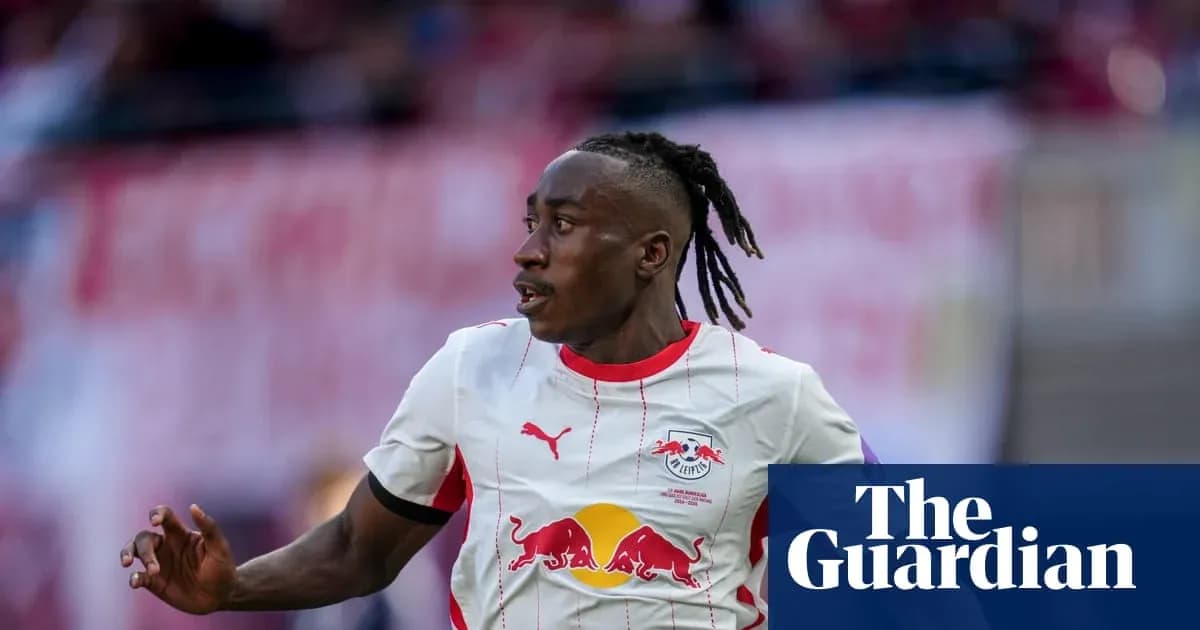
On the same day Real unveiled Vinícius’s new contract, Diomande flew into the Spanish capital to complete a record £115m transfer from RB Leipzig. Nineteen years old. Forty-six senior appearances split between Leipzig and a loan at Leganés. Already the most expensive African player in history.
The images were pure 2024 football theatre: Diomande on a private jet, flanked by his agents Nathan Campbell and Kareem Gbaja, en route to sign a seven-year deal at the Bernabéu. Reports suggest RNSI will collect up to £17m in commission and fees from the move.
The saga stretched back to June, when Liverpool saw a £70m bid rejected by Leipzig. The German club held their line: anyone wanting Diomande would need to push beyond £100m. Every week added another twist, another briefing, another escalation.
Paris Saint-Germain, never shy of a bidding war, walked away at the end of July. Their parting shot was a statement accusing unnamed agents of “inflationary and manipulative games” and insisting the European champions would not play along. The French club stepped back. Madrid stepped in. RNSI cashed in.
Legal fights on the way to the top
The road to that record fee was anything but clean.
RNSI have had to fend off two separate legal challenges involving Diomande. The first came from Max Gradel, the former Bournemouth winger, who claims his agency, Maxidel Management, already had an agreement with the player. Gradel has taken his complaint to Fifa. World football’s governing body did not block the transfer, and Diomande completed his move. RNSI have stayed silent on the case.
Another dispute has emerged from the Rainbow World Group, which launched proceedings in the high court in London and in the British Virgin Islands in mid-June. Rainbow argue they hold binding image rights and intellectual property agreements dating back to Diomande’s early career. They say they invested heavily, taking him on trials at Chelsea, Bournemouth, Crystal Palace and Newcastle before Leganés eventually signed him.
Again, RNSI have not commented. The deals, the disputes, the accusations – all of it underlines the reality of the modern market. Where there is a nine-figure transfer fee, there is a queue of people claiming a slice.
Africa, the new frontier
Diomande’s rise from Côte d’Ivoire to the Bernabéu has not just made agents rich. It has sharpened the focus on Africa as football’s most aggressively targeted frontier.
Jeff Luhnow, the former Astros and St Louis Cardinals general manager who now owns Leganés through his Blue Crow network, spelled out the plan last year. Leganés have been building recruitment and development programmes in several African countries, including Ghana and Zambia. Diomande, he said, was only the beginning. “We’ve got more players like that in our pipeline.”
Roc Nation have moved quickly to plant their flag in the same territory. In July 2023, RNSI acquired Brazilian agency TFM – already representing Vinícius, Gabriel Martinelli and Endrick – and rebranded it as Roc Nation Sports Brazil, tightening their grip on one of the most productive talent factories in world football.
Then, in November, came the next step: eight young African prospects signed to RNSI, among them Ghana Under-17 midfielder Joseph Narbi and Francis Gomez, a Gambian winger at AC Horsens in Denmark. Campbell framed it as a logical evolution of the project, calling Africa “a hotbed of untapped footballing potential” and describing the move as part of a global vision.
The strategy is obvious. Control the pipeline. Control the future.
Jay-Z’s new power base
Strip away the glamour – the private jets, the champagne brands, the luxury streetwear – and the picture is stark. Roc Nation Sports have become one of the most aggressive, influential players in the game’s most ruthless arena.
They pushed Real Madrid to the brink over Vinícius. They helped turn a teenager with fewer than 50 senior games into a £115m signing and the most expensive African footballer in history. They are fighting off legal claims from agencies and academies who insist they were there first. They are buying into Brazil, recruiting across Africa and building a stable that stretches from the Bernabéu to Denmark’s second tier.
In the dog-eat-dog world of football agents, Jay-Z’s operation no longer looks like a side hustle. It looks like a power base. And with the money, reach and ruthlessness now at their disposal, the real question is not how far they’ve come – but how much of the next era of football they intend to own.




