Japan's Tactical Resilience Ahead of Sweden Clash
Hajime Moriyasu stood on the brink of the knockout rounds and pointed not to a star, but to a system.
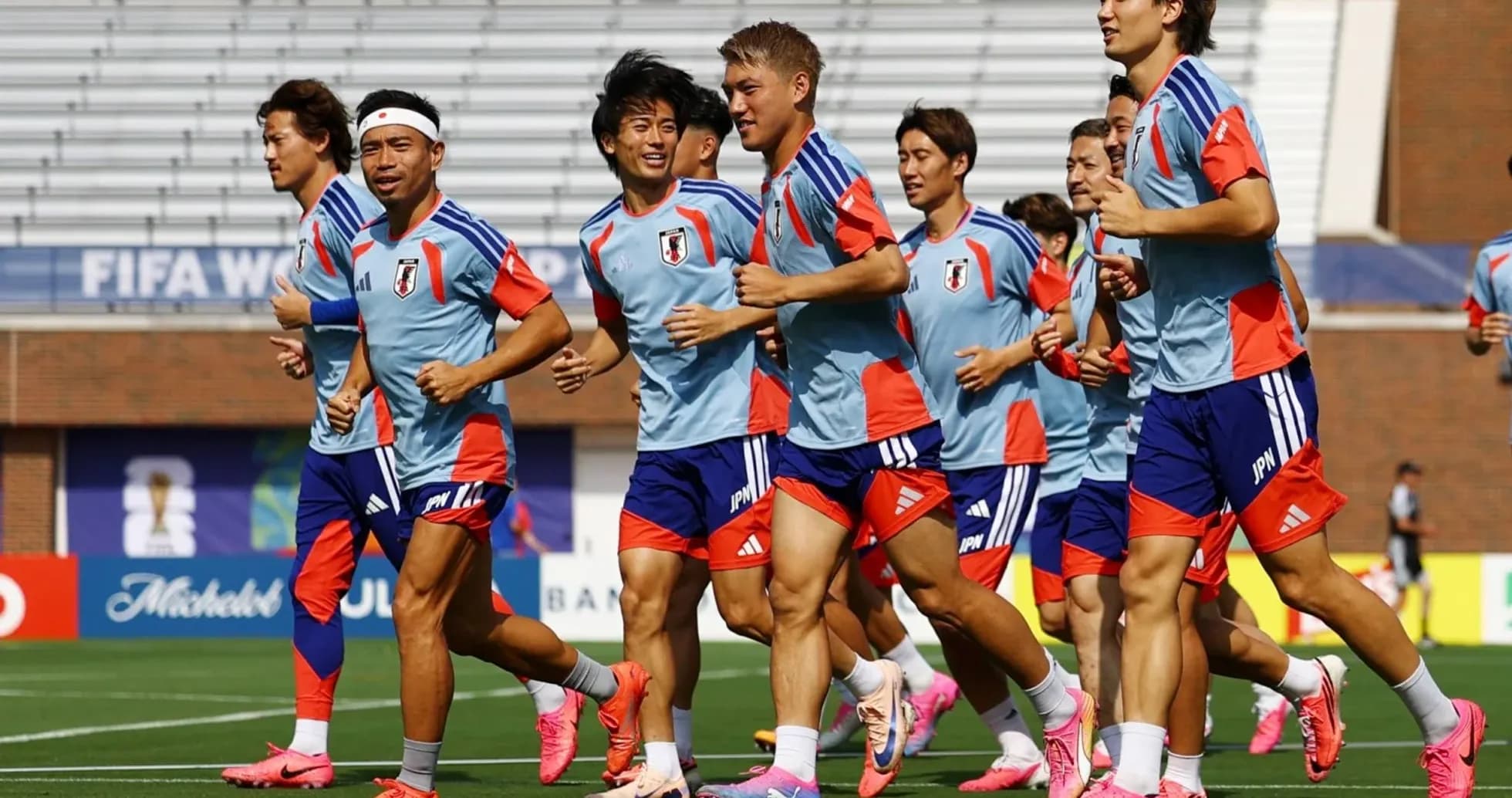
Japan, stripped of some of its brightest names, has fought its way to the edge of the last 32 with a mix of tactical clarity and collective stubbornness. A 4-0 dismantling of Tunisia on Saturday followed a breathless 2-2 comeback draw against the Netherlands, leaving Moriyasu’s side one result away from completing a quietly impressive group campaign in Group F.
They have done it without Takefusa Kubo for much of the way, and they will almost certainly have to do it without him again.
Japan’s reshaped core holds firm
Kubo is expected to miss Thursday’s decisive clash with Sweden after picking up a knee problem against the Dutch. He joins an already daunting absentee list: former captain Wataru Endo, winger Kaoru Mitoma and playmaker Takumi Minamino have all been ruled out of the tournament through injury.
On paper, that is the spine, the spark and much of the experience gone. On the pitch, Japan have refused to look like a patched-up side.
“Anyone can play with anyone else, that’s the readiness we wanted to ensure,” Moriyasu said, underlining the philosophy that has carried Japan through the disruption. He knows that kind of fluidity does not just appear.
“That’s easier said than done but when there’s a change over in the team, it’s not that simple or easy to play with different players and achieve good results or be successful.”
The evidence so far suggests his squad has embraced the demand. Japan twice dragged themselves back from behind against the Netherlands, then tore through Tunisia with a performance that combined control and ruthlessness. Four points from two games, eight goals scored, and a team that looks comfortable in its own skin despite constant reshuffles.
“I’m very grateful that the other coaches and the players have been developing themselves towards such a great achievement,” Moriyasu added. “In the last two matches the team has functioned tactically and with the teamwork they are developing and increasing their readiness.”
Top spot in sight, but no gamble
With four points already banked, Japan are well placed. They are likely to reach the last 32 even with a defeat to Sweden, but there is no hint of playing for safety. Moriyasu wants more than passage. He wants control of the group.
“We are basically thinking of winning, that’s what’s in our mind,” he said. The ambition stretches beyond just three points. “If possible we would like to advance on top of the group by scoring as many goals, but distorting the balance of the team is more of a risk. We will see.”
That balance has been the defining feature of Japan’s campaign. They have attacked with numbers when the game has allowed it, then dropped into a compact, organised shape when threatened. The temptation to chase a statement win against Sweden is there. Moriyasu’s warning about “distorting the balance” shows he knows exactly what is at stake.
The identity of the next opponent, should they advance, remains unknown. For the coach, that is a secondary concern.
“We don’t know what kind of team we will come up against in the next round but what’s important is that we are solid and that we play against a team that we are able to deal with no matter what appears,” he said. “First we want to think about ourselves and how we play tomorrow. In terms of our target we would like to win and qualify for the knockout stage on top of the table.”
The message is simple: control what you can, be ready for everything else.
Sweden’s wild swings and a dangerous front line
Waiting for Japan is a Swedish side that has lurched from one extreme to another. A 5-1 demolition of Tunisia in their opener announced their attacking power in bold type. A 5-1 defeat to the Netherlands in the next game exposed a soft underbelly.
That volatility makes them awkward opponents. They can be devastating. They can be exposed. Japan will have to read which version turns up in real time.
What is not in doubt is the quality of Sweden’s front line. Alexander Isak and Viktor Gyokeres bring pace, power and penalty-box presence, and Moriyasu is under no illusions about the test they pose.
“They’re world class, wonderful strikers so I would like us to enjoy facing these players,” he said. “It’s going to be a good opportunity for our players to develop themselves further.”
Enjoyment might not be the first word most coaches would choose before facing that pair, but it reveals something about the mindset inside the Japanese camp. This is not a team hiding from the pressure of expectation or from elite opposition. It is one that sees the Sweden game as both a hurdle and a chance to grow.
Japan walk into Thursday with injuries, with reshuffled line-ups and with little margin for error if they want top spot. They also walk in with momentum, a clear idea of themselves and a coach who believes his squad can handle whoever stands in front of them.
Now they have to prove it again, against two of Europe’s most dangerous forwards and a team that can swing from brilliant to brittle in 90 minutes.