Jamshedpur FC Exits Indian Super League: A Football Legacy at Risk
Jamshedpur FC, the club that turned a steel city into a football furnace, is stepping away from the Indian Super League.
Nine years after Tata Steel won the bid to bring an ISL franchise to Jamshedpur, the company has pulled its team out of India’s top tier. The announcement, made on Friday, ends a brief but vivid chapter that gave the league one of its most distinctive homes and, in 2021-22, one of its most compelling champions.
A Furnace Goes Cold
From 2017, when Jamshedpur FC joined the ISL, the JRD Tata Sports Complex quickly became more than a venue. “The Furnace” lived up to its nickname: packed stands, relentless noise, a working-class city embracing a new badge as if it had always been there.
Under Owen Coyle in the 2021-22 season, that energy found its peak. Jamshedpur topped the league phase and lifted the League Winners’ Shield, a high watermark for a project built on structure, scouting, and a clear identity.
Now, as the ISL prepares to kick off again in October, that former champion will be missing from the fixture list.
“Jamshedpur FC would like to confirm that it will not be participating in ISL from 2026-27 season onwards,” the club said in its statement. The message was brief, pointed, and left a lot unsaid.
The club stressed that JFSPL “remains committed, in other capacities, to the continued growth and development of football in India,” highlighting its focus on grassroots work and pathways for young players to reach national and international levels. The words underlined a shift, not a retreat from the sport altogether.
What the statement did not do was explain why a steel giant with deep football roots felt compelled to walk away from the country’s marquee league.
Unanswered Questions, Growing Concerns
Behind the scenes, the picture looks less romantic.
Sources indicated that growing financial losses had become a serious concern. There were also murmurs about the league’s long-term sustainability in some quarters, the kind of internal questioning that rarely surfaces publicly but often shapes big decisions.
The club has already formally notified the All India Football Federation (AIFF) of its decision. Inside the organisation, the impact hit quickly. CEO Mukul Choudhari convened a staff meeting and told employees that the senior team would no longer continue. Close to 50 members of admin and technical staff across the first team, youth, and grassroots structures were left staring at an uncertain future.
For a league that has only just moved to a club-led model, the timing stings.
Under the new structure, ISL clubs collectively operate the competition through a dedicated league entity, while the federation retains a 10% ownership stake. It is a shift designed to give clubs more control and, theoretically, a stronger commercial footing. Losing a franchise backed by Tata Steel in this moment is a jolt the league could have done without.
Players Under Contract, Future in Limbo
On the football side, Jamshedpur’s situation is tangled.
The club has at least 12 senior players tied down on long-term contracts. Owen Coyle, the coach who delivered the league title, is also still under contract. There is no clarity yet on how those agreements will be resolved or what comes next for the squad and staff.
Six other players signed this season are on short-term deals, brought in exclusively for the Durand Cup: former India midfielder Raynier Fernandes, Abhishek Ambekar, Aman CK, Devendra Murgaokar, Leewan Castanha and Provat Lakra. For them, the immediate task is simple—play the Durand Cup—but the horizon beyond that is hazy.
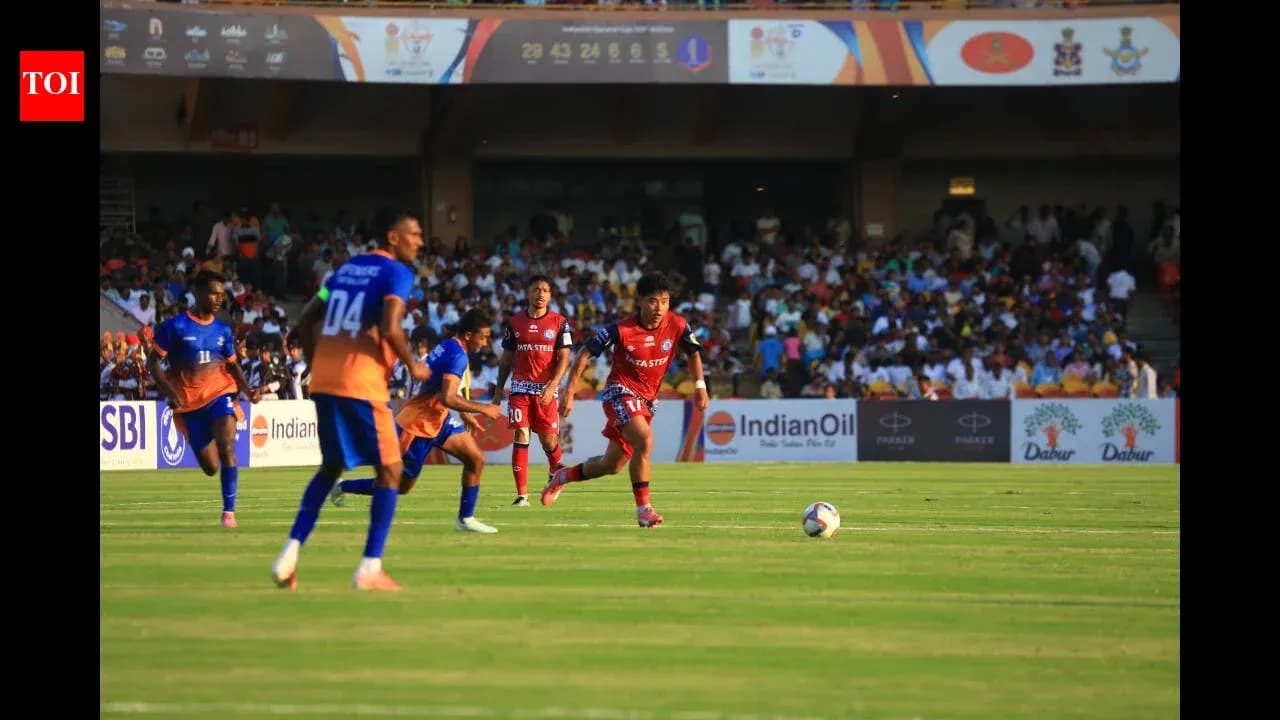
For now, Jamshedpur’s senior team continues to compete in that historic tournament, a curious contrast: a club alive in one competition while its top-tier future has already been written off.
A Giant’s Long Football Shadow
To understand why this decision reverberates beyond one club, you have to look at Tata’s long relationship with the game.
Long before the ISL, Tata’s Mumbai-based team collected some of Indian football’s most prestigious trophies: the Durand Cup, the IFA Shield, the Rovers Cup. The company then built a residential football academy that, over nearly three decades, has supplied close to 150 players to various Indian teams. That pipeline helped shape generations of talent.
Tata Steel also used its clout to bring heavyweight clubs from abroad to Indian shores. PSV Eindhoven and Sao Paulo both came to play friendlies against India, rare nights when global football royalty shared the pitch with local talent.
Jamshedpur FC was the modern expression of that legacy: a professional club in a corporate town, a stadium that felt authentic, a fan base that grew quickly and loudly.
Now, with the ISL exit confirmed from 2026-27, that legacy is being redirected rather than expanded at the top level.
The senior team may fade from the league’s broadcast graphics and fixture lists, but the deeper question lingers: if a group with Tata’s resources and history finds the top tier too costly, what does that say about the road ahead for the rest of Indian football’s ambitious projects?