
Iran's World Cup Journey Amid Conflict and Visa Challenges
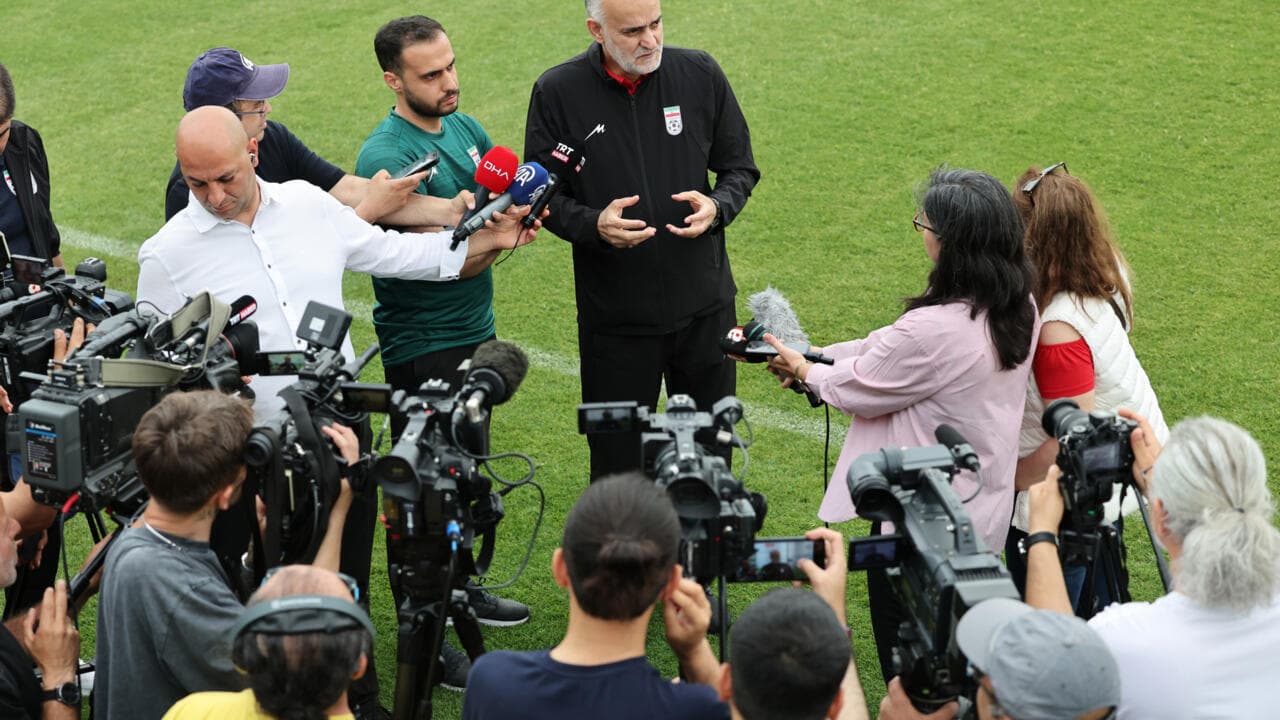
Iran’s national team slipped into Turkey on Monday, not for a friendly or a mid-season tune‑up, but to prepare for a World Cup that will unfold in a country currently at war with their own.
They will be here for weeks, working behind closed doors, sharpening tactics and fitness in a neutral corner of Europe before flying to a United States that began bombing Iran on February 28 alongside Israel, igniting a wider conflict across the Middle East. It is a surreal backdrop for any tournament, let alone football’s biggest stage.
Training in Turkey, questions in Washington
On the surface, this is a standard pre‑tournament camp: players settling into a base, staff laying out schedules, coaches building cohesion. Beneath it, almost everything is complicated.
Iranian officials have already admitted that players and staff still do not have US visas. The plan is to apply through the Canadian embassy in Turkey, a diplomatic detour that underlines how fraught this World Cup will be for them before a ball is even kicked.
“We’re not certain yet that all the players and staff will receive US visas,” said national team director and federation vice-president Mehdi Mohammad Nabi. It is a stark sentence, and a remarkable one, given that Iran have already qualified and the US is obligated, under FIFA rules, to host every competing nation.
One of the fundamental conditions for staging a World Cup is simple on paper: the host must guarantee entry. “One of the rules that applies to the host country is that they must provide guarantees, according to FIFA’s statutes and the regulations of the competition,” Mohammad Nabi noted. That includes visas for every team, every official, every delegation that has earned its place.
FIFA, he stressed, has put mechanisms in place to make sure that happens. “FIFA has made arrangements so that the host country will provide the necessary cooperation to teams like Iran in this area.”
Confidence in the protocols, tension in the air
Publicly, Iran’s camp projects calm. “Everything will proceed properly according to the protocols and what FIFA has stipulated,” Mohammad Nabi said. He pointed to the structures that surround every modern World Cup: layers of security, coordination between local organizers and Zurich, and long-established routines for teams traveling into host nations.
“Inside the United States, they also have committees in place, including a security committee that cooperates with FIFA and is responsible for security matters,” he explained. Iran, he reminded, are no strangers to this machinery. “In past years we’ve experienced all of this and we’re fully informed about how these security committees operate at every World Cup we’ve participated in. In this regard, we’re very confident and we have a clear plan.”
That is the official line: trust the protocols, trust the process, trust FIFA. Yet the reality remains that, as training begins in Turkey, no one inside the squad can be absolutely sure every player will be allowed to walk out at the World Cup venues in June.
Group G awaits in Los Angeles and Seattle
If the paperwork is cleared and the politics do not bar their path, Iran’s route on the pitch is already mapped out.
They open their Group G campaign against New Zealand in Los Angeles on June 15, a fixture that will drop them straight into the glare of a US-based tournament. After that comes Belgium, also in Los Angeles, a step up in pedigree and expectation against one of Europe’s established powers.
Their final group match sends them north to Seattle to face Egypt, a clash that could carry everything: qualification, pride, and perhaps the weight of a region watching through the lens of conflict.
Throughout the tournament, Iran will be based in Tucson, Arizona. From there, they will shuttle to matches in California and Washington state, operating out of an American city while their own country remains under US bombardment.
It is a World Cup story that stretches far beyond formations and finishing drills. Iran’s players will try to shut out the noise in a Turkish training camp, then cross a political fault line simply to take part. The fixtures are set, the venues assigned, the dates inked in. The only question now is whether the promises written into FIFA’s statutes will hold firm when Iran finally head for the United States.




