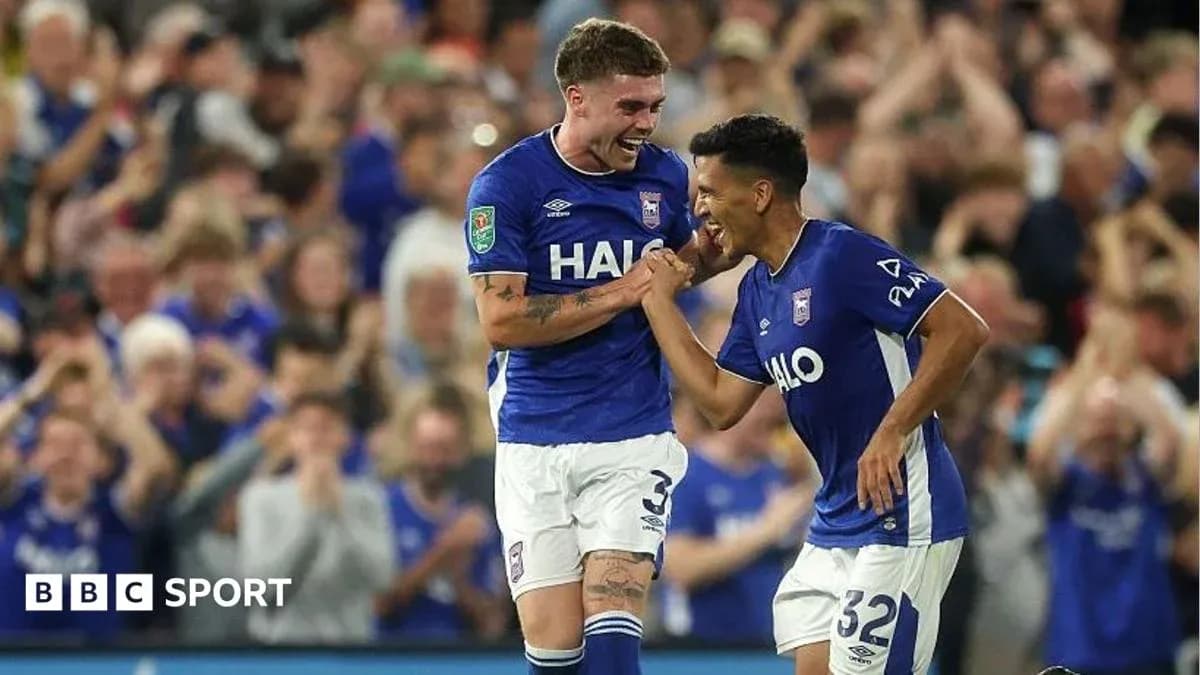
Ipswich Town 3-1 Leicester City: A Tale of Two Halves
Ipswich Town’s 3-1 win over Leicester City in the EFL Cup looked emphatic on the scoreboard. In the stands and living rooms, it felt very different for long spells.
Same faces, same problems
“Ten of the eleven who started were with us last season – and it showed,” Jeremy said, summing up the early frustration. Ipswich looked stuck in second gear. The tempo was flat, the passing ponderous, the movement in front of the ball almost non-existent.
“We were far too slow and lacking in drive and energy,” he added. Leicester, sharper and more aggressive, picked their way through the press and dictated the rhythm. The visitors’ lead at the break felt inevitable to those watching.
Beardo didn’t sugar-coat it either. “We were sluggish and off the pace in the first half,” he said. The press, usually a hallmark of this Ipswich side, simply didn’t bite.
“The press was not working as players were not tight enough and we needed to commit an extra player to it,” he explained. Ipswich didn’t. Leicester did. “They had an overload and they simply played through us. The Foxes really deserved to be in the lead at half-time.”
Leicester’s high line, clever angles and comfort on the ball left Ipswich chasing shadows. The home side were being toyed with positionally, caught between going after the ball and protecting the space behind.
Then the game flipped.
Davis changes the mood
The turning point, in the eyes of many, wore the number of Leif Davis.
“The introduction of Leif Davis was the changing point,” Beardo said. The full-back’s arrival injected exactly what Ipswich had been missing: urgency, aggression, and a willingness to punch holes rather than pass around them.
“Suddenly there was more urgency, a driving force,” he added. Players started to run beyond Leicester’s back line instead of waiting in front of it. The same high defensive line that had been catching Ipswich offside “all night” suddenly looked vulnerable as runners burst in behind with conviction.
The shift in energy spread. Sindre Walle Egeli’s move into the middle, highlighted by Jeremy, tightened Ipswich up centrally and gave them a platform to play. The subs didn’t just freshen legs; they changed the entire personality of the team.
“The subs and moving Sindre Walle Egeli into the middle made a big difference,” Jeremy said. Leicester, once so composed, began to look stretched. Ipswich, previously hesitant, started to look like a side that believed the tie was there to be taken.
The pressure finally told on the scoreboard. The hosts surged, Leicester wilted, and 3-1 suddenly felt like a fair reflection of the final half-hour rather than the whole contest.
Akpom under the spotlight
Not everything in the attacking third drew praise. For Edward, the evening underlined a familiar concern.
“We need another striker,” he said bluntly. Chuba Akpom’s link play caught the eye, but his finishing did not. “Chuba Akpom did good build-up play, but his shooting is terrible.”
The irritation stemmed from the sheer volume of chances. “He had two or three amazing scoring opportunities and scored none!” Edward added. On another night, those misses could have turned a comeback story into a hard-luck tale.
It leaves a nagging question hanging over a positive result. Ipswich showed depth, resilience and the ability to change a game from the bench. They also showed, again, how wasteful finishing and a slow start can drag them into trouble.
The cup win buys time. The performance, and the verdict from the stands, makes one thing clear: if Ipswich want nights like this to become routine, the energy of Davis and the control of Walle Egeli can’t just be cameos – and the next striker through the door might define how far this season can really go.