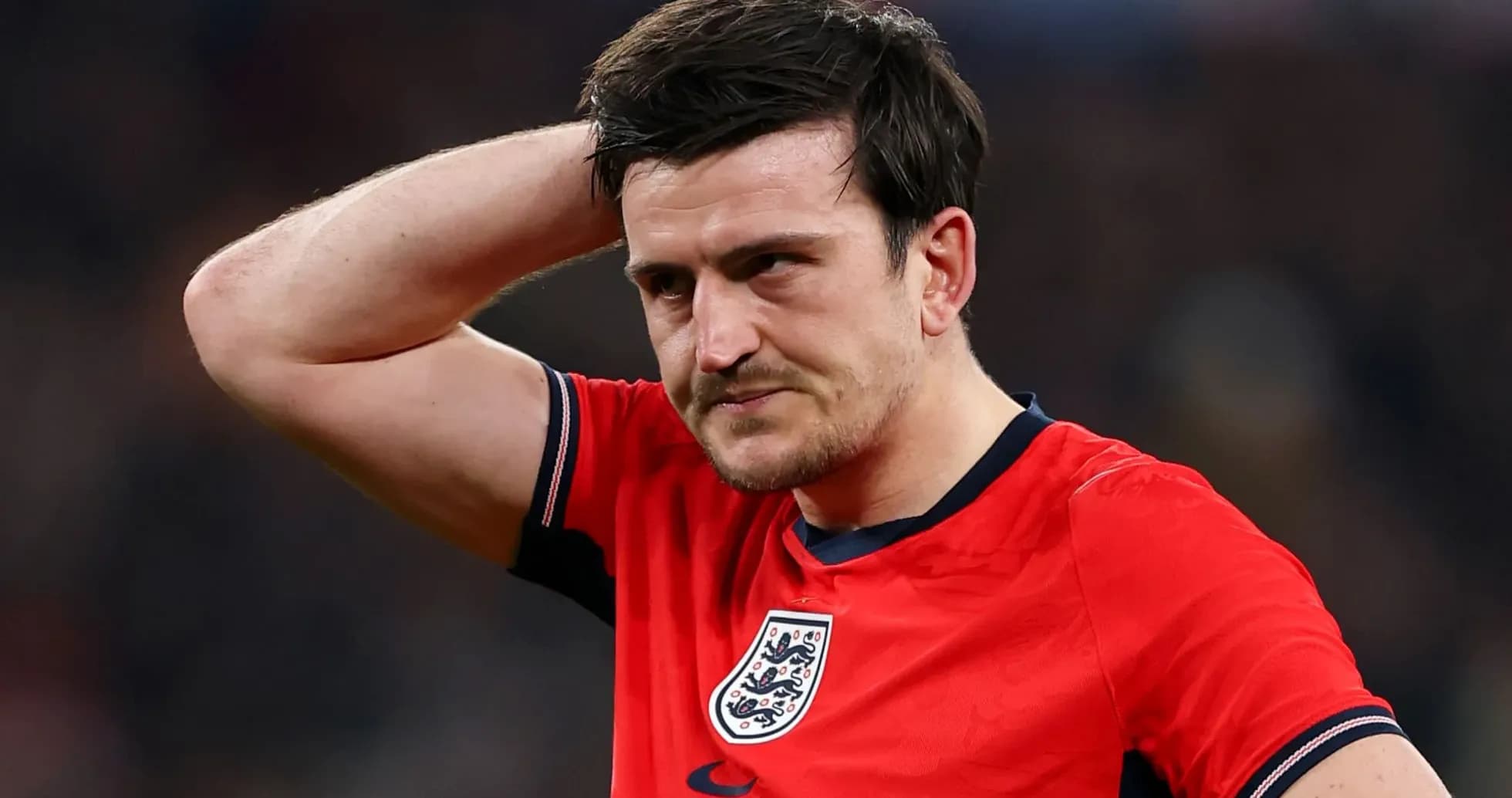
Harry Maguire's Omission from England's World Cup Squad Raises Concerns
Harry Maguire spent the run-in to the 2025-26 Premier League season doing exactly what international managers say they want: playing well, playing often, and playing under pressure.
Manchester United clawed their way to third place and back into the Champions League, and the 33-year-old, reborn under Thomas Tuchel at club level, looked to have forced his way back into England’s plans for another major tournament. Sixty-six caps. A long history of delivering when it matters. A trusted pillar in the biggest games.
It still wasn’t enough.
Tuchel’s England hierarchy at centre-back is clear. John Stones, Ezri Konsa, Marc Guehi, Dan Burn and Jarell Quansah all sit ahead of Maguire in the queue. The message was delivered in modern fashion. Maguire revealed on The Rest Is Football podcast that Tuchel broke the news via FaceTime. “He FaceTimes everyone. It’s quite an awkward call,” Maguire admitted. Awkward is one word for it; brutal is another.
While Maguire watched from home, Stones and Konsa took the starting roles as England opened their World Cup campaign against Croatia in Texas. The scoreline – a 4-2 win – will soothe some nerves. The performance at the back will not.
England’s defence creaked in the first half, Croatia finding gaps and uncertainty where there should have been authority. The attack bailed them out. The questions remain.
Former England full-back Danny Mills, speaking on behalf of betTOM, did not hide his concern when asked by GOAL about the lack of a dominant voice in that back line.
“I think going into the tournament, the defensive situation was always going to be the worry – especially as you go deep into the tournament and you come up against better teams, some very, very good teams, in the latter stages,” he said. “Trying to find that balance is never going to be easy, I think, with the squad that was picked.”
The selection of Stones and Konsa together raised his eyebrows.
“I was a little bit surprised by Stones and Konsa, that selection. I've said from day one, if Stones is fit, he plays, because I think he's exceptional. But I would have played him alongside Marc Guehi. They've not just played together at Manchester City, they know each other from Manchester City as well. They've trained together every day, they have an understanding, they've built that up.”
That understanding, Mills argued, is priceless in tournament football, where partnerships have to withstand the sharp end of knockout ties.
The full-back positions also came under his microscope. On the right, Reece James has long been tipped as a complete modern defender.
“Reece James, I think he's a fantastic full-back and a great footballer,” Mills said.
On the opposite flank, Nico O’Reilly’s emergence at Manchester City has been one of the stories of the domestic season, but Mills sees risk as well as reward.
“Left-back, Nico O'Reilly has done great for Manchester City, but my concern is he's better attacking than he is defensively at times, and he goes wandering into those areas. So, yes, I was surprised by the omission of Harry Maguire.”
This is where Maguire’s absence bites hardest. Whatever his flaws, he brings something this squad lacks: experience of tournament jeopardy, aerial dominance, and a voice that organises those around him.
“When I look at the squad in general, defensively, at what stage do some of those players start for England?” Mills asked. “I'm not sure some of them do, unless there's six or seven injuries. Whereas Harry Maguire, you can bring on, you can play him in a back three if you need to. You can use him as a weapon up front.”
That last point is not romanticism. Maguire’s threat at set pieces has changed games at World Cups and European Championships. For a side that still leans heavily on dead balls in tight contests, leaving that tool in the box is a bold call.
The second half in Texas showed the other side of this England: front-foot, ruthless, full of goals. Mills acknowledged that surge.
“So, yes, one or two defensive concerns still. Fantastic second half, great performance in the second half, but I think there will be much stiffer challenges to come.”
And they will come quickly. Group stages rarely punish defensive lapses as brutally as the knockouts. The deeper England go, the more those frailties will be targeted.
Tuchel did have another opportunity to revisit his Maguire stance. When versatile Newcastle defender Tino Livramento withdrew from the squad, the door briefly reopened. It stayed shut.
Instead, Chelsea’s Trevoh Chalobah – just one senior cap to his name – got the call. Another surprising twist, another sign that Tuchel is determined to reshape this defence on his terms, not on past reputations.
Could Maguire’s own reaction to his initial omission have played a part? He spoke candidly in the aftermath of the snub, and the timing of his comments has been scrutinised. Mills stopped short of claiming a fallout, but he sketched out the likely logic inside Tuchel’s camp.
“I have to assume that when the squad was announced – three weeks ago, three-and-a-half, four weeks ago – Thomas Tuchel would have had to say to four or five players, ‘keep yourself fit and keep yourself ready, because you're on the standby list and if something happens, you may get a phone call’.”
That standby status is a strange limbo. No camp, no matches, no shared rhythm. Just lonely graft and the hope that someone else’s misfortune opens a door.
“That is hard because you're not involved in it and most of your other players and colleagues are either at a World Cup or they're off on holiday, enjoying themselves and doing what they need to do,” Mills said. “But you've got to train alone, keep training – very, very hard to get to that stage and be ready just in case.”
From there, the rest follows.
“So I would assume that's the reason why there would be a list of maybe four or five that were told you have an opportunity if somebody gets injured and that's maybe why that call-up has come.”
For now, Maguire sits outside that circle, his renaissance at Old Trafford acknowledged but not rewarded. England have chosen a new defensive order and doubled down on it, even as old vulnerabilities flicker into view.
The gamble is clear: trust in fresh legs and new partnerships, or lean again on a defender who has rarely failed his country when the stakes spike. Tuchel has made his choice. The World Cup will decide whether he was right.