Genoa's Fury Over VAR Decision in De Bruyne's Goal
Napoli walked out of Marassi with a 2-0 win and three points. Genoa walked out seething.
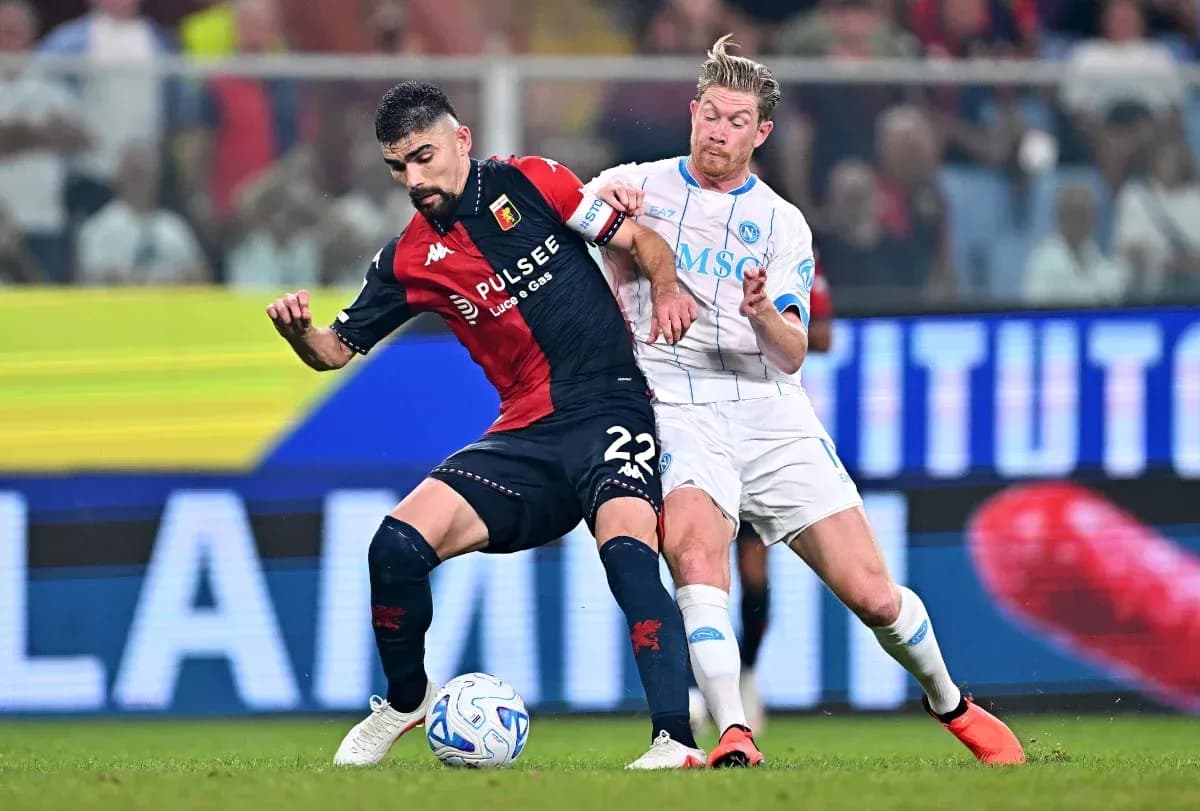
The flashpoint came with the game still goalless, the stadium tense, both sides probing but cautious. A loose ball dropped in the Genoa box, Johan Vasquez stepped across to shield it, and Kevin De Bruyne moved in behind him. There was contact, Vasquez hit the turf, and De Bruyne, unchallenged from seven yards, drilled the ball home.
Referee Marco Di Bello had the incident right in front of him. He raised the whistle to his lips, hesitated, then let play run when he saw the chance developing. Seconds later, Napoli were celebrating.
VAR checked it. No On-Field Review. No change.
The decision ignited Genoa’s technical area and, after the final whistle, the club’s hierarchy.
“All of Italy saw what happened today,” Chief of Football Diego Lopez told Sky Sport Italia and DAZN Italia, his anger barely disguised.
History, he argued, had already primed Genoa to fear this exact scenario.
“This referee was also in the VAR booth last season in the game against Napoli, so naturally when we heard he had been assigned to this match, we were worried.
“Last season it was 2-2 until the last minute and Napoli were awarded a penalty. He was also in Roma-Genoa, where our goalkeeper was hit in the face during a goal. Both times, the referees later acknowledged these were errors in Open VAR.”
Open VAR, DAZN’s weekly breakdown show, has become a kind of public audit for Serie A officials, where the referees’ association reviews the most contentious calls and, at times, admits to mistakes. Genoa feel they have featured in that space far too often.
At Marassi, the resentment deepened.
“Fortunately, there are cameras, so all of Italy saw that there was a clear push on Vasquez to create the opportunity for Napoli to score,” Lopez continued. “The referee saw it and decided not to blow his whistle, then the referee decided not to view it again.
“We tried to calm the players, because they knew Genoa had already suffered two recognised errors at the hands of this referee. We know that officials are human and can make mistakes, but all of Italy saw what happened today.”
Once the deadlock was broken, Napoli took control. De Bruyne, already at the centre of the storm, turned creator, threading the assist for Antonio Vergara to score the second and effectively kill the contest. From there, the visitors managed the game with the assurance of a side used to navigating hostile away days.
Yet the football itself quickly became secondary to the fallout.
This was the opening weekend of the Serie A season, a round the referees had entered with a clear message: VAR would be reserved for “clear and obvious” errors, with a higher threshold for intervention. The De Bruyne–Vasquez clash became the first major test of that stance.
Television studios across Italy dissected the incident frame by frame. Some pundits sided with Genoa, convinced De Bruyne’s nudge was enough to constitute a foul. Others argued Vasquez had tried to engineer the contact, focusing more on protecting the ball and drawing a whistle than attempting to clear it.
In the end, the only opinion that counted belonged to Di Bello. He judged it on the pitch, VAR backed his call, and the incident did not meet the bar for a “clear and obvious” mistake.
Napoli left with a statement win. Genoa left convinced they had seen this movie before. The season is only one matchday old, and already the debate over where to draw the line with VAR is burning again.