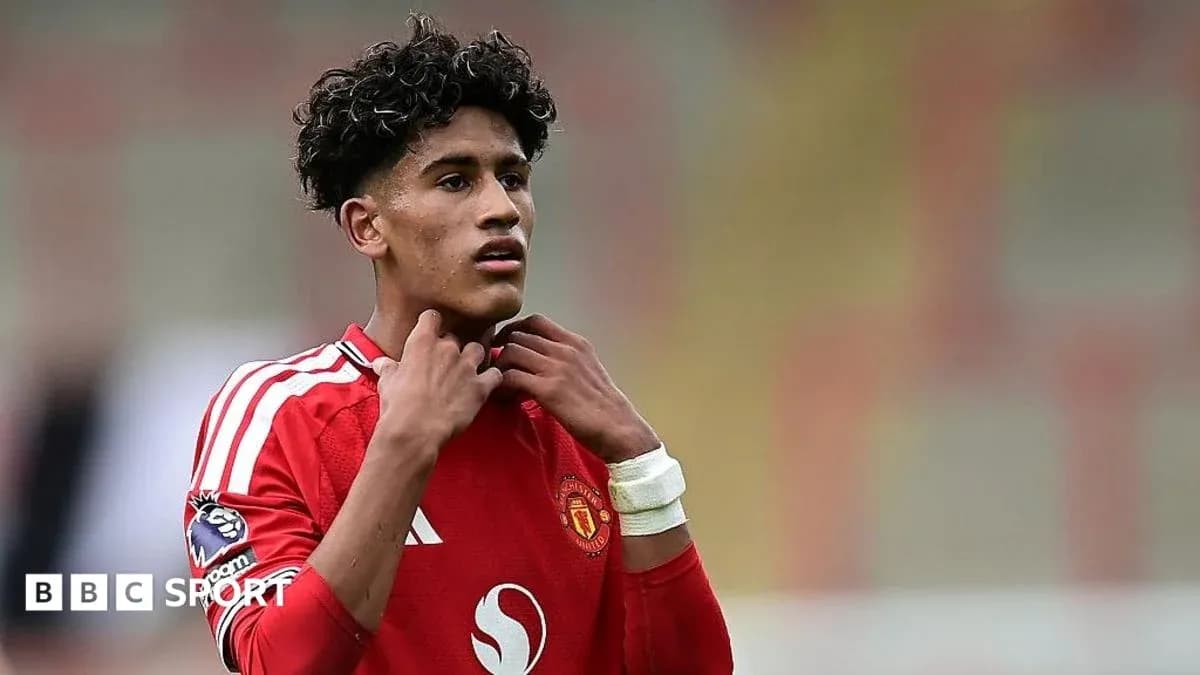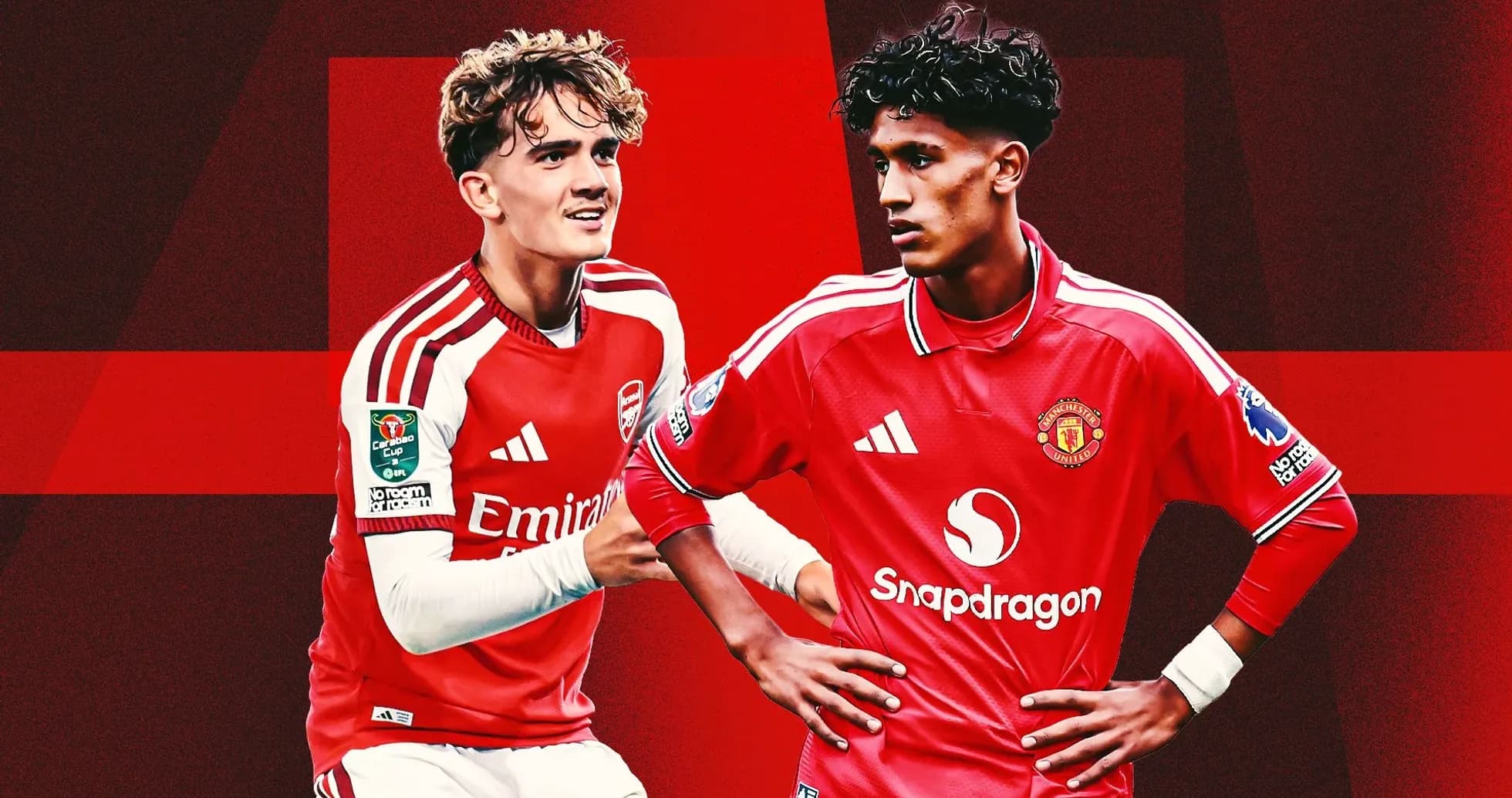
Gabriel's Future: United's Identity Crisis and Transfer Battle
Real Madrid want him. So do Barcelona, Paris Saint-Germain and Bayern Munich. Manchester United, though, are digging their heels in over Gabriel – and the stakes for the club could hardly be higher.
They are fighting to keep a boy who is not even 16.
This is not a standard contract dispute. Gabriel is tied to United only until next summer and is not on a full-time deal or scholarship. Under the current rules, if he holds a European passport, he can walk away when he turns 16 on October 16 and join a club in the EU.
United are scrambling to understand exactly what that means. His father, Joe O’Cearuill, played twice for Ireland. His mother is of Greek Cypriot descent. That dual-nationality route could open the door to an early exit that would leave United empty‑handed.
For Sir Jim Ratcliffe, already under fire from supporters for a series of unpopular football decisions, losing a prodigy of this profile would be brutal. Letting a “once-in-a-generation” talent slip away on his watch would follow him for years.
A prodigy who has stopped turning up
United thought they had won this battle once already. They kept Gabriel away from Manchester City’s grasp last year. This time it feels different.
Signs of a rupture are everywhere. Gabriel was due to train with the first team on Saturday. He didn’t show. He has not been seen at Carrington all week. Michael Carrick had planned to name him in the squad for Wednesday’s Carabao Cup third-round tie against Brighton at Old Trafford. Had he stepped onto the pitch, Gabriel would have become the youngest player ever to appear for United’s senior side.
That dream has been shelved. His involvement is now off the table.
For a club whose academy has not produced a genuine global star since Marcus Rashford, Gabriel has been the great hope. He joined at 11, dazzled his way through the age groups and quickly built a reputation as the jewel of the system: a two-footed forward, slippery in tight spaces, nimble enough to slalom through traffic and ruthless when the goal opens up.
Those inside the club wince at the Messi comparisons. Stylistically, he is closer to Neymar – all feints, flicks and sudden changes of direction. He even laces up in the same model of Nike boots, having penned a lucrative extension with the brand in March 2025.
The numbers back up the hype. At 14, he broke into United’s Under-18s, another club record, and smashed 20 goals in 21 league games. He walked off with the inaugural Premier League U18s Player of the Year award and became the youngest winner of United’s Jimmy Murphy Young Player of the Year prize.
This season he jumped again, into the U21s. On debut against Ipswich he ran the show: two assists and a delicate chip in a 5-0 rout. A week later he scored again as United hammered Leicester City 4-1.
No wonder the biggest clubs in Europe are circling. No wonder United feel cornered.
The Dowman effect
Gabriel’s impatience has a context. It has a face and a name: Max Dowman.
Arsenal have thrown their own teenage sensation into the deep end and watched him swim. The London club have revived the old line – if you’re good enough, you’re old enough – and Dowman has become the poster boy.
The Premier League has already seen this movie. Ethan Nwaneri broke the record as the youngest player in the competition in September 2022 at 15 years and 181 days, coming on for Arsenal at Brentford. His progress has been uneven, with loans to Marseille and Borussia Dortmund, but he now has more than 50 appearances for the Gunners at just 19.
Dowman has gone even further, even faster. He became the Premier League’s second-youngest player when Mikel Arteta used him against Leeds in August 2025. In March, he produced a brilliant solo goal against Everton to become the league’s youngest-ever scorer at 16 years and 139 days.
By May, he was the youngest title winner in Premier League history. This week, he joined Wayne Rooney in an exclusive club as only the second 16-year-old to score a brace for a Premier League side in a major competition, driving Arsenal to a 4-2 Carabao Cup win over Ipswich.
Fourteen senior games already. A blend of flair and physical power that has forced Arteta’s hand. The Arsenal manager has even mentioned him in the same breath as Messi, but has been careful, drip-feeding his minutes, choosing his moments.
“We have to look after him. He’s 16 years old. You don’t see that in this league,” Arteta warned after the Ipswich tie, stressing the physical and mental demands of English football and the need to place Dowman “in the right context with the right preparation”.
United can’t copy that blueprint so easily. Gabriel is not Dowman physically. He is slight, often the smallest player on the pitch. His courage and determination bridge some of that gap, but not all. Throwing him into the Premier League too soon could go badly wrong – especially if he actually shines.
Imagine the scenario. Gabriel comes in, lights up a game or two. The clamour grows. Carrick faces calls to start him every week. The risk of overloading a teenager’s body, and mind, becomes very real. Arteta can rotate Dowman because Arsenal’s squad is deep and winning. United’s is not.
At Old Trafford, performances swing wildly. If Carrick then pulls Gabriel back, he will be branded cautious or negative as the team struggles for rhythm. If Gabriel starts and looks ordinary, the backlash will be swift: overhyped, not ready, another false dawn.
Carrick’s slow play
So far, Carrick has resisted the temptation to cash in on the hype. Former academy graduate Danny Simpson, who emerged under Sir Alex Ferguson, believes that restraint is smart.
Speaking to GOAL via Free Bets, Simpson drew a sharp contrast between Dowman’s environment and Gabriel’s.
He remembered coming through in a United side that was already great. “I could come on for 10 minutes because most of the time we were 2-0 up, 3-0 up,” he said. Even the so-called second XI “could win the Premier League”. Dowman, Simpson argued, is stepping into something similar: a team “flying in confidence, full of top, top talent, winning games”.
That makes cameos easier. It makes mistakes survivable.
“Maybe United at the minute is a bit different,” Simpson admitted. He understands the excitement around Gabriel, but insists the context matters. For now, he backs Carrick to pick his moment, pointing to the careful handling of another talent, Shea Lacey. “Just let him [Gabriel] train and be around the team and his time will come.”
Try telling that to a teenager watching his age-mates explode onto the European stage.
Yamal, Europe and the lure of the fast track
If Dowman is one reference point, Lamine Yamal is another. The Barcelona winger was similarly skinny when he made his senior debut in 2023 at 15 years, nine months and 16 days. He survived, and then thrived, through speed, intelligence and a league that asks different questions.
La Liga is less of a physical onslaught than the Premier League. Games lean more towards positional play, control and patience than relentless end-to-end running. For a technical prodigy like Yamal, it has been fertile ground.
In England’s more unforgiving environment, where time on the ball is scarce and contact is constant, his rise might have been slower. Gabriel will know that. He may believe Barcelona or Real Madrid can offer him the same fast lane to stardom.
On the surface, it makes sense. Scratch a little deeper and it looks far more complicated.
When Yamal debuted, Barca were on their way to the La Liga title under Xavi but had crashed out of the Champions League in the group stage. Raphinha, Ousmane Dembele and Ferran Torres were not yet at their current levels. There was space for disruption, room for a teenager to break the hierarchy.
Now? Barcelona’s forward line is loaded: Yamal himself, a peak Raphinha, Anthony Gordon, Karim Adeyemi, Gabriel Jesus. Real Madrid, under Jose Mourinho, boast Kylian Mbappe, Vinicius Junior, Jude Bellingham and Yan Diomande.
Where, exactly, does a 16-year-old Gabriel fit in that kind of arms race?
Wherever he goes, he will still have to wait. At United, at least, the path to a regular role is clearer. The squad is weaker. The gaps are obvious. There is space to grow into, if he stays and if the club manage his development correctly.
That is the irony. The more Gabriel chases the idea of “right now”, the more he risks slowing his own rise.
United’s line in the sand
One thing is non-negotiable for United: they cannot allow a teenager, no matter how gifted, to dictate their direction.
Gabriel is still 18 months away from sitting his GCSEs. He is not yet a scholar. He is not yet a first-team player. The club have invested heavily in him and, by all accounts, treated him carefully. If he chooses to walk away, there is only so much they can do.
They also know the damage of letting this drag on. A drawn-out saga would only cloud a season that has already started badly. It would feed the sense of chaos that Ratcliffe and his football operation are trying to dispel.
From United’s perspective, Gabriel’s stance looks rash. Whether pushed by family, agents or simply his own ambition, he is acting like someone who believes the world owes him a shortcut.
That is not how this club was built. The pantheon of homegrown icons – George Best, Sir Bobby Charlton, Ryan Giggs, David Beckham, Paul Scholes, Gary Neville – did not glide to the top. They fought, they waited, they met relentless standards every day, on and off the pitch.
Ruben Amorim, much criticised and ultimately sacked in January, at least understood that much. “There is a feeling of entitlement we have in our club,” he warned in a news conference before his exit. Difficult moments, he argued, can be good for young players. “We don’t always need accolades in everything. We are not helping.
“Nowadays, they [players] speak and go against the club because they feel entitled. Let’s stay. Let’s fight. Let’s overcome. That is the way we can solve things.”
He lost his job. The message remains.
If Gabriel cannot accept that no individual is bigger than Manchester United, the club may decide they are better off letting him go now and build his personal brand somewhere else.
The question is whether a 16-year-old, with Europe’s giants at his door and a future that could go in any direction, is ready to learn that lesson – or ready to walk away from it.