Fulham's 2025-26 Preview: From Silva's Stability to Arbeloa's Youth Revolution
The Guardian writers’ average prediction: 15th
Last season: 11th
A riverbank era ends
By the time Marco Silva finally walked away from the Thames, the surprise was that it had taken five years. He had rebuilt Fulham’s reputation, dragged them from yo‑yo status to Premier League regulars and turned Craven Cottage into a ground where even the heavyweights knew they were in for a proper game. His teams were spiky, front-foot and often great fun.
He also never hid his frustration. Silva wanted European nights and a squad to chase them. The ownership wanted Premier League security at a price they considered sustainable. That tension sat in the background for years. Eventually it snapped. Benfica called, Silva left, and with him went a proven ability to retool and rejuvenate a squad on the fly.
Under him, Fulham were no longer looking over their shoulders. They flirted with Europe, played some of the league’s most watchable football and turned a group of supposed misfits into a snarling, awkward opponent for anyone. That version of Fulham has gone. What replaces it is far harder to read.
Arbeloa and the Madrid connection
Álvaro Arbeloa is not a like-for-like successor. Where Silva was a seasoned club manager, the Spaniard arrives as a rookie at this level, his coaching experience largely confined to Real Madrid’s youth set-up and a brief, aborted spell as a first-team replacement for Xabi Alonso.
What Arbeloa does bring is pedigree and contacts. He is a World Cup and Champions League winner, a former fixture in Real’s dressing room and a man with Florentino Pérez’s number in his phone. That matters, because Fulham are now tapping directly into Madrid’s talent pool.
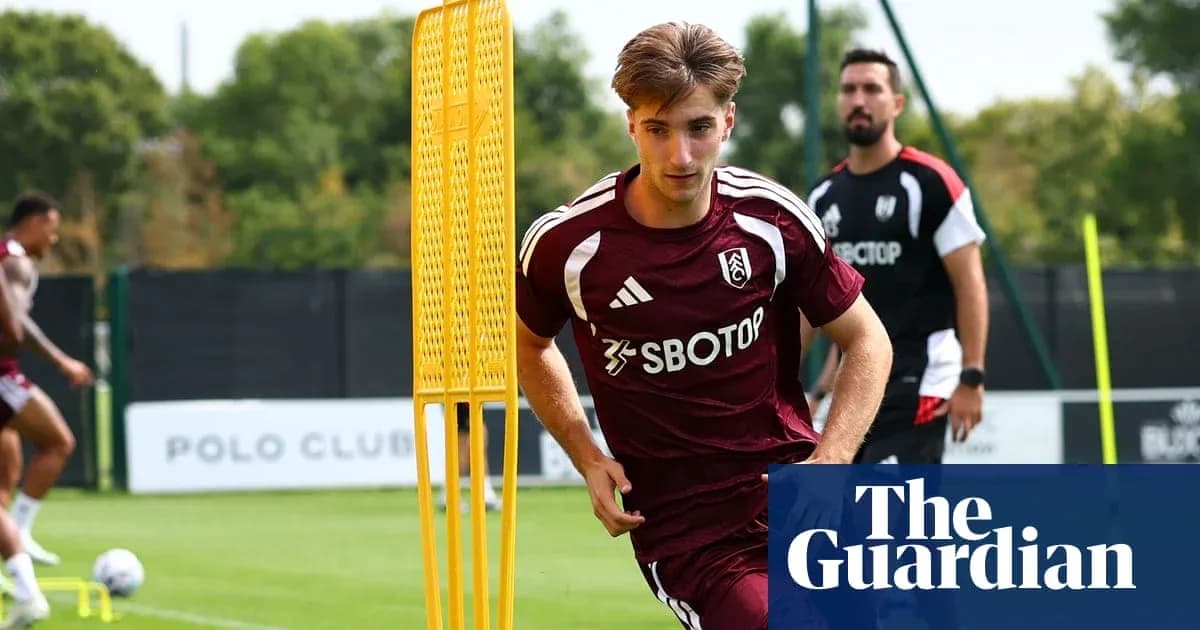
Gonzalo García and César Palacios have followed him from the Bernabéu system, players he knows and trusts. All three share the same agency, a detail that underlines how tightly woven this new relationship is. Talk has already swirled around further Real prospects such as Endrick and Thiago Pitarch. Craven Cottage, suddenly, looks like it could become a finishing school for Madrid’s next wave, a kind of satellite campus on the Thames.
If that pipeline flows, Fulham’s identity shifts again. From Silva’s hardened pros to Arbeloa’s starlets-in-waiting. From a team built to scrap in the here and now to one that might be asked to grow into itself.
From hard-bitten pros to polishing projects
Silva trusted experience. He liked players who had been around the block, who knew how to manage games and grind out results. Two of his key lieutenants, Raúl Jiménez and Harry Wilson, have now gone. Jiménez leaves behind a heavy workload at centre-forward; Wilson exits after arguably the best season of his career, tempted away by Leeds.
The new brief is clear: buy younger, polish harder, sell smarter. Fulham want to join the Brentford, Brighton and Bournemouth bracket – clubs who have made a science out of spotting undervalued talent early. The difference is that those models are heavily data-driven, refined over years. Fulham are trying to accelerate into that lane while changing manager and squad profile at the same time.
Can they pull it off without sliding back into the relegation conversation? Will fans still be glancing towards Europe or anxiously counting points to 40? A club that has long felt enigmatic has just added another layer of mystery.
Money, marble and a £44.5m question
Off the pitch, Fulham are a paradox. In May they were runners-up at the football business awards for stadium experience, a nod to the gleaming Riverside Stand and its high-end hospitality that completed its first full season. The club needs that stand to work. The 2024‑25 accounts showed a pre-tax loss of £44.5m, softened only by the sale of João Palhinha in July 2024. There has been no equivalent windfall since.
The Khan family’s commitment is undeniable on paper. Overall investment is estimated at around £900m, with staff costs running at 117% of turnover. Those numbers explain the brakes that were applied to Silva’s transfer wishes. They also explain the pivot towards younger, potentially appreciating assets.
Yet while the balance sheet tells one story, the matchgoing support hears another. The most expensive season ticket at Craven Cottage now stands at £3,084 for access to the Riverside facilities – the priciest in the Premier League. Shahid Khan and his son Tony, vice-chair and director of football operations, face growing anger over rising prices and a sense that the club is courting tourists at the expense of its core fanbase.
Khan’s superyacht Kismet, named superyacht of the year in 2025 and modelled in part on the Palace of Versailles, can be chartered for more than $3m a week. It is a detail that jars when set against fans being priced out of their traditional seats. The owners have paid heavily to keep Fulham in the top flight. Many supporters now want them to show they understand not everyone lives at superyacht level.
Arbeloa’s football: continuity with a twist
If Silva’s playing career was modest, Arbeloa’s was anything but. He has shared dressing rooms with the game’s biggest names and lifted the sport’s biggest trophies. He is used to elite standards and high-pressure environments. What he is not used to is the grind of a Premier League season from the technical area.
At Madrid, he was a respected youth coach, trusted enough that Pérez sounded him out when Alonso departed mid-season in 2025‑26. That move fell through, and Fulham have given him his first job outside the Bernabéu bubble.
Shahid Khan has been quick to stress one key point: Arbeloa “believes in giving young players a chance”. It fits the recruitment shift and the club’s desire to lower the age and wage profile. It also dovetails with tradition at Craven Cottage. Arbeloa believes in open, attacking football, a thread of continuity with the Silva era that should prevent a total stylistic rupture.
How he marries that with the physical demands of the Premier League and a squad in transition will define the season.
Gonzalo García: the headline act
Gonzalo García arrives as the new star attraction. His breakout came at last summer’s Club World Cup, where he took the Golden Boot and drew comparisons with Raúl – a name that carries serious weight in Madrid. He backed that up with Champions League goals against Juventus and Borussia Dortmund before running into the brutal reality of Real’s hierarchy, squeezed out by Vinícius Júnior and Kylian Mbappé.
In Spain, García is known as much for his work without the ball as for his finishing. That should serve him well in England. Fulham needed a new focal point. Rodrigo Muniz’s injuries left the ageing Jiménez to carry the load last season. García is younger, fresher and, crucially, arrives with a reputation that will follow him into every ground.
The hype is real. So is the pressure.
The numbers: from oldest legs to a new press?
Last season, Fulham fielded the oldest side in the Premier League. It showed. They posted the fewest high turnovers in the division – those moments when a team wins the ball back in the final 40 metres and launches a new open-play attack. For a side that often looked bright on the ball, they were strangely passive without it.
Real Madrid are hardly poster boys for gegenpressing, yet even they comfortably outperformed Fulham on that metric. Arbeloa knows that world. He also knows the energy levels required to change it.
With younger legs coming in and a manager schooled in modern elite football, the question is not whether Fulham will try to press more, but how far and how fast they can push that transformation.
Kusi-Asare and the next wave
Jonah Kusi-Asare is another bet on potential. Fulham picked him up from Bayern Munich last summer, initially on loan, and made the move permanent after the German club inserted a buy-back clause. Bayern had themselves taken him from AIK, and he is already a Sweden Under‑21 international.
At 6ft 5in, Kusi-Asare offers a very different profile to García. He made seven Premier League appearances off the bench last season without scoring, but his work at under-21 level turned heads. Hayden Mullins, then Fulham’s under-21 coach and now in charge at Newport, watched him hit five goals in six games.
The comparison to Alexander Isak is already out there. Fulham will hope the next step in that trajectory plays out in front of the Riverside Stand rather than sending him back to Bavaria as a polished product.
World Cup bounce
Fulham’s squad did not just spend the summer resting. García made his senior Spain debut in a pre-World Cup friendly against Iraq, even if he ultimately missed the cut for the champions’ final squad. Others went deep into the tournament.
Antonee Robinson impressed for the USA until the co-hosts were knocked out in the last 16 by a Belgium side featuring Timothy Castagne. Luc de Fougerolles, still awaiting his Premier League bow, showcased his composure and defensive instincts in Canada’s run to the knockouts. Sander Berge capped the club’s involvement with a standout campaign as Norway reached the quarter-finals.
Those experiences matter. They bring confidence, rhythm and a taste of high-stakes football back into the dressing room.
Fulham stand at a crossroads: the safety of Silva’s seasoned campaigners traded for Arbeloa’s promise of youth, energy and Madrid-infused glamour. The writers’ average prediction has them slipping to 15th. The numbers, the turnover, the ticket prices – they all point to risk.
What they do not yet tell us is whether this bold reset will drag Fulham back towards danger, or light a new path to something far more ambitious.