FIFA Revises World Cup Bottle Policy After Fan Outcry
FIFA has rowed back on its controversial World Cup water bottle policy, allowing fans to bring a single disposable bottle into stadiums in the USA and Canada after a wave of criticism over safety and cost.
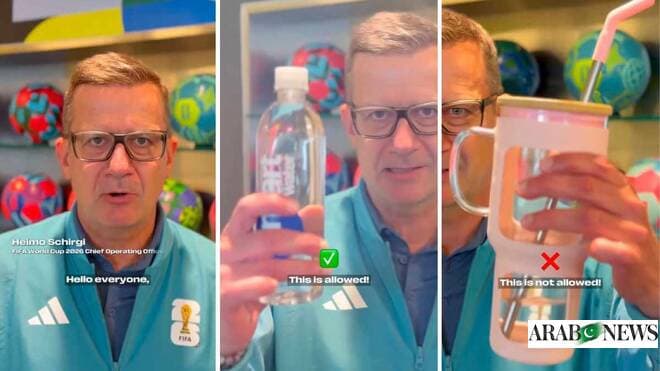
In a video posted on FIFA’s X account, World Cup chief operating officer Heimo Schirgi confirmed that supporters will now be allowed to carry “one, soft, plastic 20 ounces (590ml), factory sealed disposable water bottle” into any FIFA World Cup 2026 match in the United States and Canada.
The governing body framed the move as a “clarification” rather than a U-turn, but the timing tells its own story. The announcement landed just two days after FIFA confirmed that refillable bottles would be banned, a decision that immediately sparked anger from fans already bracing for soaring temperatures and soaring concession prices.
The original change to the stadium code of conduct meant anyone wanting a drink inside the ground would have to buy water on site. That struck a nerve, especially with forecasts warning of punishing heat at several open-air venues across the tournament co-hosted by the USA, Canada and Mexico.
FIFA has stood firmly by its safety rationale. In a statement to AFP, it stressed that outside bottles are already prohibited at several World Cup venues on security grounds, and that the same standard would apply across all tournament stadiums “to prevent risk and injury to players and attendees.”
Those concerns, Schirgi insisted, “remain valid.” The concession only goes so far. Hard-sided, reusable bottles will still be turned away at the gates. In the video, Schirgi held up examples of which containers will be allowed and which will not, underlining that only soft, disposable plastic bottles make the cut.
The debate is not just about security. It is about heat. A report from the World Weather Attribution research group last month estimated that 26 of the 104 World Cup matches are likely to be played in conditions where the Wet Bulb Global Temperature (WBGT) exceeds 26 degrees. That metric blends temperature, humidity, wind and sunlight into a single measure of heat stress on the human body — and anything above 26 is a serious warning sign.
Fans in the United States have seen this movie before. At last year’s FIFA Club World Cup on American soil, supporters complained of searing temperatures and were still barred from bringing water bottles into venues. The images of sweltering stands and long queues for drinks have lingered in the buildup to 2026.
This time, FIFA is keen to point to its mitigation plan. The organization says “misting stations, fans, hydration stations and cooling tents” will be set up in what it calls “the stadium footprint” to help spectators cope with the conditions. Inside the grounds, bottled water will be on sale at prices that, according to FIFA, “remain consistent with other events held at each stadium.”
So the line is drawn. One soft, sealed disposable bottle per fan. No hard-sided flasks. No metal or rigid plastic. Safety over convenience, but with just enough flexibility to ease the outcry.
Whether that compromise satisfies supporters once the mercury climbs and kick-off approaches is another question entirely.