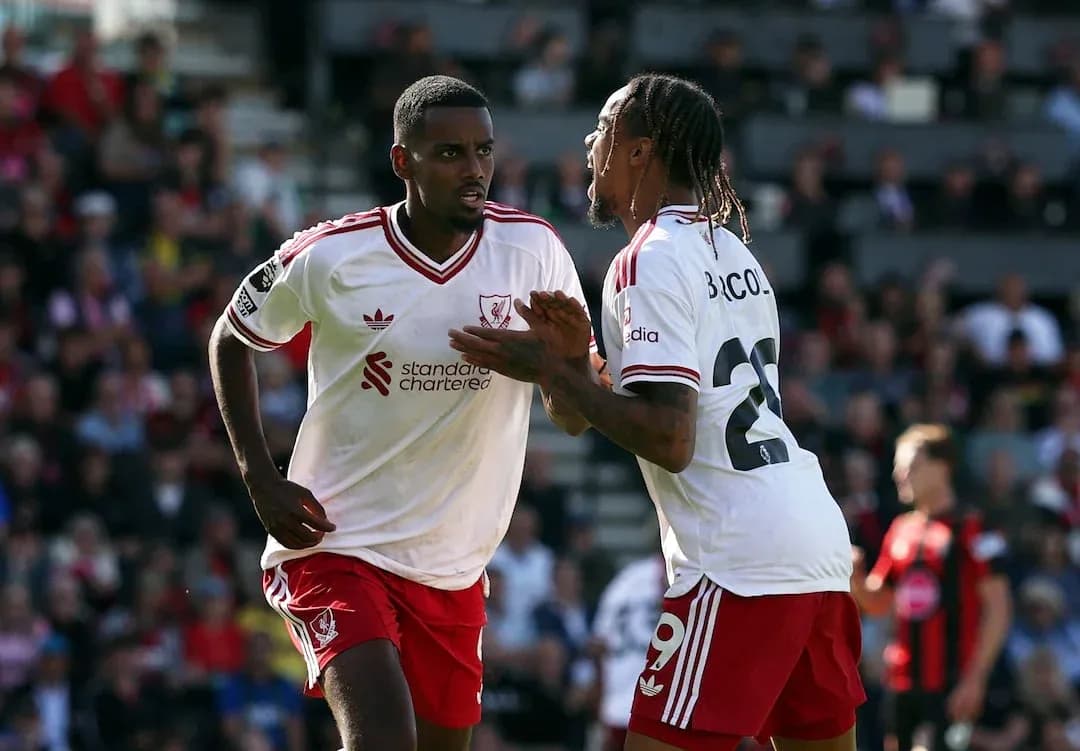
Everton vs Sunderland: Premier League Showdown at Hill Dickinson Stadium
Everton host Sunderland at Hill Dickinson Stadium in a late‑season Premier League fixture where the table is extremely tight: Everton sit 10th on 49 points, Sunderland 12th on 48, both after 36 matches. With only two rounds left, this is effectively a direct battle for a top‑half finish, and the market clearly leans towards the home side.
From a form perspective, the raw league sequences suggest both are inconsistent, but the prediction model’s “last five” snapshot is revealing. Everton’s last five show a form index of 20%, yet an attacking index of 75% and a defensive index of just 8%, with 9 goals scored and 11 conceded (1.8 for, 2.2 against per match). This points to open, chaotic games where Everton create plenty but leave spaces. Sunderland’s last five are slightly better in terms of results (form 33%), but with a weaker attack index of 42% and defence 17%, scoring 5 and conceding 10 (1.0 for, 2.0 against). So both back lines are vulnerable, but Everton are carrying the greater attacking threat.
Across the full league campaign (standings data), Everton are 13‑10‑13 with a 46:46 goal record, while Sunderland are 12‑12‑12 with 37:46. Everton’s attack is clearly more productive (46 vs 37 goals), and at home they average 25 goals for and 24 against in 18 matches, compared with Sunderland’s 14 for and 27 against away. Sunderland’s away profile is that of a cautious side (0.8 scored per away game) that still concedes heavily (1.5 per away game). Everton’s goal‑timing data also show a strong late surge: 14 of their 46 league goals (30.43%) come from the 76th minute onwards, suggesting they remain dangerous deep into matches.
The prediction model’s comparison panel tilts towards Everton: overall index 60.0% vs 40.2% for Sunderland, with Everton superior in attack (64% vs 36%) and marginally behind in defence (48% vs 52%). The Poisson‑based distribution gives Everton 62% vs 38%, reinforcing the expectation that the home side generate the better chances over 90 minutes.
Head‑to‑Head Data
Head‑to‑head data, excluding friendlies, paint a nuanced picture when competitions are separated. In the Premier League, the most recent meeting was on 2025‑11‑03 at Stadium of Light, ending Sunderland 1–1 Everton. Earlier league clashes show an Everton 2–0 home win on 2017‑02‑25, a 3–0 away win at Stadium of Light on 2016‑09‑12, a 3–0 home defeat for Everton at Stadium of Light on 2016‑05‑11, a 6–2 Everton home win on 2015‑11‑01, a 0–2 Everton home loss on 2015‑05‑09, a 1–1 draw at Stadium of Light on 2014‑11‑09, and a 0–1 Everton away win there on 2014‑04‑12. In the cups, Everton beat Sunderland 3–0 at Goodison Park in the League Cup on 2017‑09‑20, but most recently in the FA Cup on 2026‑01‑10 at Hill Dickinson Stadium it finished 1–1 after 90 minutes before Sunderland advanced on penalties (Everton 0–3 in the shootout). The pattern is that league meetings are often competitive, but Everton have repeatedly produced strong home performances against this opponent.
Betting Market Analysis
Turning to the betting market, the 1X2 odds are tightly clustered: home win between 1.79 and 1.90, draw around 3.45–3.86, away win roughly 3.80–4.36. Implied probabilities put Everton near 52–55%, the draw around 26–28%, and Sunderland roughly 20–24%, depending on the book, which aligns closely with the model’s 45% home, 45% draw, 10% away split (the model is more conservative on Everton and more pessimistic on Sunderland).
The official prediction explicitly advises “Double chance: Everton or draw” with a “Win or draw” comment for the home side. Given Everton’s superior attacking numbers, Sunderland’s weak away scoring, and the historical strength of Everton at home in league play, backing Sunderland outright is against both data and model.
Betting verdict: the value‑aligned, model‑backed play is Everton double chance (1X), fully consistent with the official advice. For those seeking more risk, the market odds suggest a justified lean towards an Everton home win in a game where Sunderland are more likely to be contained than to exploit Everton’s defensive frailties.