England vs Ghana: A Crucial Clash in Group L
On a humid June evening in Foxborough, two very different stories converge on the same tightrope. England arrive at Boston Stadium (Gillette Stadium) with goals in their boots and questions at their backs. Ghana turn up with a clean sheet, a late hero, and a goalkeeper conundrum. Both carry three points. Neither can afford a misstep.
Kick-off is set for 23 June 2026 at 20:00 GMT, 16:00 EST. By full-time, Group L could be all but decided – or blown wide open.
England’s Fireworks, England’s Flaws
Thomas Tuchel’s World Cup debut as England manager was a spectacle. A 4-2 win over Croatia in Dallas sounded emphatic on the scoreboard and looked even more chaotic on the pitch.
Harry Kane was ruthless. A penalty on 12 minutes, another composed finish before half-time – the captain walked off with a brace and the air of a man who has seen every defensive trick in the book. Jude Bellingham took control after the break, gliding through the Croatian lines and restoring England’s lead almost as soon as the second half began. Marcus Rashford, off the bench, slammed the door shut in the 85th minute.
Yet for all that attacking fluency, England bled chances. Croatia struck back through Martin Baturina and Petar Musa, twice dragging themselves level. Each equaliser exposed the same issues: a high defensive line that wobbled when full-backs surged forward, a midfield that occasionally let runners burst straight through its core.
Tuchel doesn’t need to rip up his blueprint. He does need to tighten the screws. Declan Rice becomes central to that mission. His job is no longer just to recycle possession – he must lock down the middle third, close the gaps that Croatia exploited, and shield John Stones and Ezri Konsa when England lose the ball high up the pitch. Lose that battle against Ghana, and England’s attacking swagger could quickly become a liability.
The system remains a fluid 4-2-3-1. Jordan Pickford stays in goal, demanding a quieter night than the one he endured in Dallas. Stones and Konsa continue as the centre-back pairing, flanked by Reece James and youngster Nico O’Reilly. Rice partners Elliot Anderson in midfield, tasked with giving Bellingham the freedom to roam.
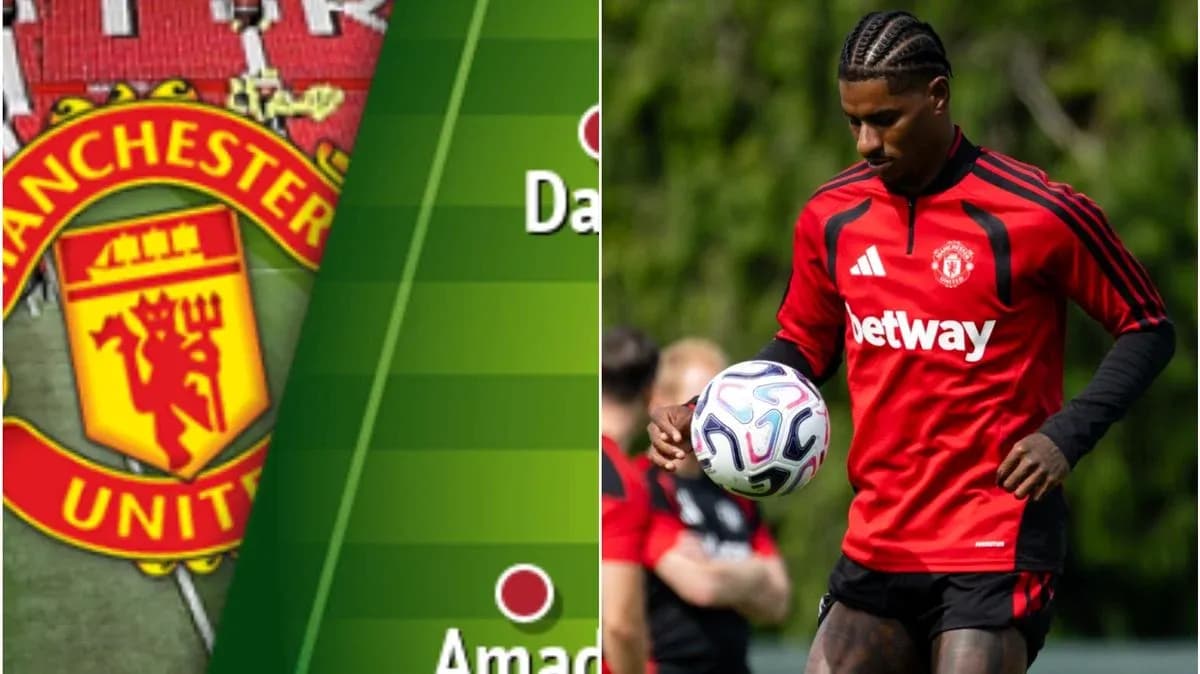
Ahead of them, Bellingham owns the No.10 role after his statement performance on Matchday 1. Anthony Gordon and Noni Madueke offer direct running from the flanks, while Kane leads the line with his usual blend of movement, hold-up play and cold-blooded finishing. The twist lies on the bench: Rashford and Bukayo Saka, who combined brilliantly for England’s fourth against Croatia, are pushing hard for promotion to the starting XI. Tuchel has a full squad, no injuries, no suspensions – and real selection pressure in his forward line.
Ghana’s Steel, Ghana’s Sting in the Tail
If England’s opener was a rollercoaster, Ghana’s was trench warfare in the rain.
Carlos Queiroz’s side spent long stretches of their 1-0 win over Panama in Toronto digging in, trusting their structure, and relying on goalkeeper Lawrence Ati Zigi to keep them alive early on. It was a grueling, attritional contest, the kind that usually drifts towards a goalless shrug.
Then came the 95th minute.
Caleb Yirenkyi, a driving force from midfield, forced the ball over the line for a dramatic winner. In one moment, Ghana’s discipline was rewarded and their World Cup campaign transformed. Instead of a frustrating point, they walked away level on three points with England and riding a wave of belief.
Queiroz’s hallmark remains obvious: organisation first, risk calculated rather than embraced. His 4-2-3-1 is drilled, compact, and stubborn. But against England, he knows that simply surviving waves of pressure won’t be enough. He has already criticised the “naive” lack of aggression in Ghana’s first-half approach against Panama. That won’t fly in Foxborough.
The plan now is sharper, more assertive. When Ghana win the ball, they must move it faster. Direct, vertical passing through the lines. Wide runners bursting into the space that England’s adventurous full-backs leave behind. The Black Stars cannot afford to pass sideways and invite Kane, Bellingham and company to camp in their half.
Team selection, though, is complicated. The biggest concern is in goal. Ati Zigi was withdrawn at half-time against Panama, and his replacement, Benjamin Asare, picked up a knock in stoppage time. Both are being assessed, and Queiroz may have to make a late call on who starts behind his central pairing of Jerome Opoku and Jonas Adjetey.
Gideon Mensah and Marvin Senaya are set to continue at full-back, charged with tracking England’s wide threats and picking their moments to break forward. In midfield, Elisha Owusu anchors alongside Yirenkyi, who keeps his place not just for that 95th-minute winner, but for his energy and willingness to surge beyond the forwards.
Further up, Antoine Semenyo, fresh from a Player of the Match display, knits attacks together behind veteran Jordan Ayew. Kamaldeen Sulemana and Ernest Nuamah stretch the game from the flanks. Brandon Thomas-Asante, the direct forward who delivered the crucial late assist in Toronto, is banging on the door for a start.
Ghana’s form before the tournament was grim – four defeats in five, including heavy losses to Austria and Germany, plus setbacks against Mexico and South Africa. Only a 1-1 draw with Wales offered any respite. That run raised serious questions. Matchday 1 answered some of them. The rest will be asked by England.
Kane vs Opoku: The Battle for the Box
Strip the tactics away and one duel still looms larger than the rest: Harry Kane against Jerome Opoku.
Kane comes into this contest already in stride, his two goals against Croatia a reminder that he needs only half a chance. He drops deep to link play, spins in behind, and occupies defenders with his sheer presence. When he pulls centre-backs out of position, space opens for Bellingham, Gordon, Madueke – and whoever Tuchel unleashes from the bench.
Opoku’s job is as simple to describe as it is brutal to execute: stay tight, stay switched on, and refuse to be dragged into Kane’s orbit. Against Panama, he marshalled the middle of the pitch with authority, protected by a compact block. Against England, the angles change. Kane will drift into pockets, demand the ball to feet, then suddenly appear in the box with a half-yard of room.
If Opoku loses that duel, Ghana’s structure could crack. If he wins it, England’s attack suddenly looks far less inevitable.
Bellingham vs Yirenkyi: The Pulse of the Game
The real tempo of this match may be decided a few metres further back, where Jude Bellingham and Caleb Yirenkyi will repeatedly cross paths.
Bellingham was the heartbeat of England’s opener. He dictated the rhythm, switched the point of attack, and drove through the Croatian midfield with power and purpose. When he turns with space in the middle third, defenders retreat, lines bend, and panic creeps in.
Yirenkyi must stop that at source. His task is twofold: track Bellingham’s movements between the lines and manage his own positioning so that Ghana are never stretched when they lose the ball. He cannot simply chase. He has to anticipate. Press Bellingham’s first touch. Block the passing lanes into him. Deny him the time to lift his head and run.
If Bellingham finds room to glide into the final third, England will tilt the pitch. If Yirenkyi can harass him into rushed decisions, Ghana’s transition game – those vertical bursts Queiroz craves – will come alive.
Group L on a Knife Edge
The table is simple. The stakes are not.
England sit top of Group L with three points and a +2 goal difference after that 4-2 win over Croatia. Ghana are second, three points and +1 after edging Panama. Croatia and Panama trail with zero points.
This fixture is the hinge on which the group swings.
If England win, they surge to six points and stand on the brink of the Round of 32. Depending on Croatia vs Panama, they could wrap up qualification with a game to spare, easing the pressure ahead of their final group match and dumping the weight of expectation onto Ghana’s shoulders for a decisive showdown with Croatia.
If Ghana win, the hierarchy flips. The Black Stars would reach six points and likely secure progression, perhaps even seize control of the race to finish top. England would be stranded on three, staring at a must-get-result finale against Panama, with the spectre of third-place calculations looming.
If they draw, the tension simply rolls forward. Both sides would move to four points, still unbeaten, still in strong shape to advance. But nothing would be settled. Goal difference would start to matter. England would face Panama knowing victory should secure first place; Ghana would confront Croatia in a parallel drama, eyes half on their own match, half on the group table.
Old History, New Stakes
The history between these nations is thin: just one previous meeting, a 1-1 friendly draw in March 2011. That night felt like a curiosity, a glimpse of two football cultures briefly intersecting.
This time, the stakes are sharper. England arrive with a recent record of W-W-L-D-W, seven goals scored and just two conceded across those five games, including comfortable warm-up wins over Costa Rica and New Zealand. Ghana step in with bruises from Mexico, Germany, Austria and South Africa, but with the confidence that only a 95th-minute World Cup winner can bring.
One side is chasing confirmation of its status as group favourite. The other is hunting a statement that would rewrite the narrative of its tournament in a single evening.
In Foxborough, something has to give.