England's Tactical Comeback Against Congo DR: A 2-1 Victory
England’s 2-1 comeback win over Congo DR at Mercedes-Benz Stadium was shaped by clear structural ideas on both sides: England in a 4-2-3-1 under Thomas Tuchel, Congo DR in a 4-3-3 under Sebastien Desabre. The match evolved from Congo DR’s early direct punch to England’s territorial suffocation and controlled second-half surge, with the tactical battle reflected cleanly in the numbers: 60% possession, 16 shots and 2.04 xG for England against Congo DR’s 40% possession, 7 shots and 0.8 xG.
England's Structure
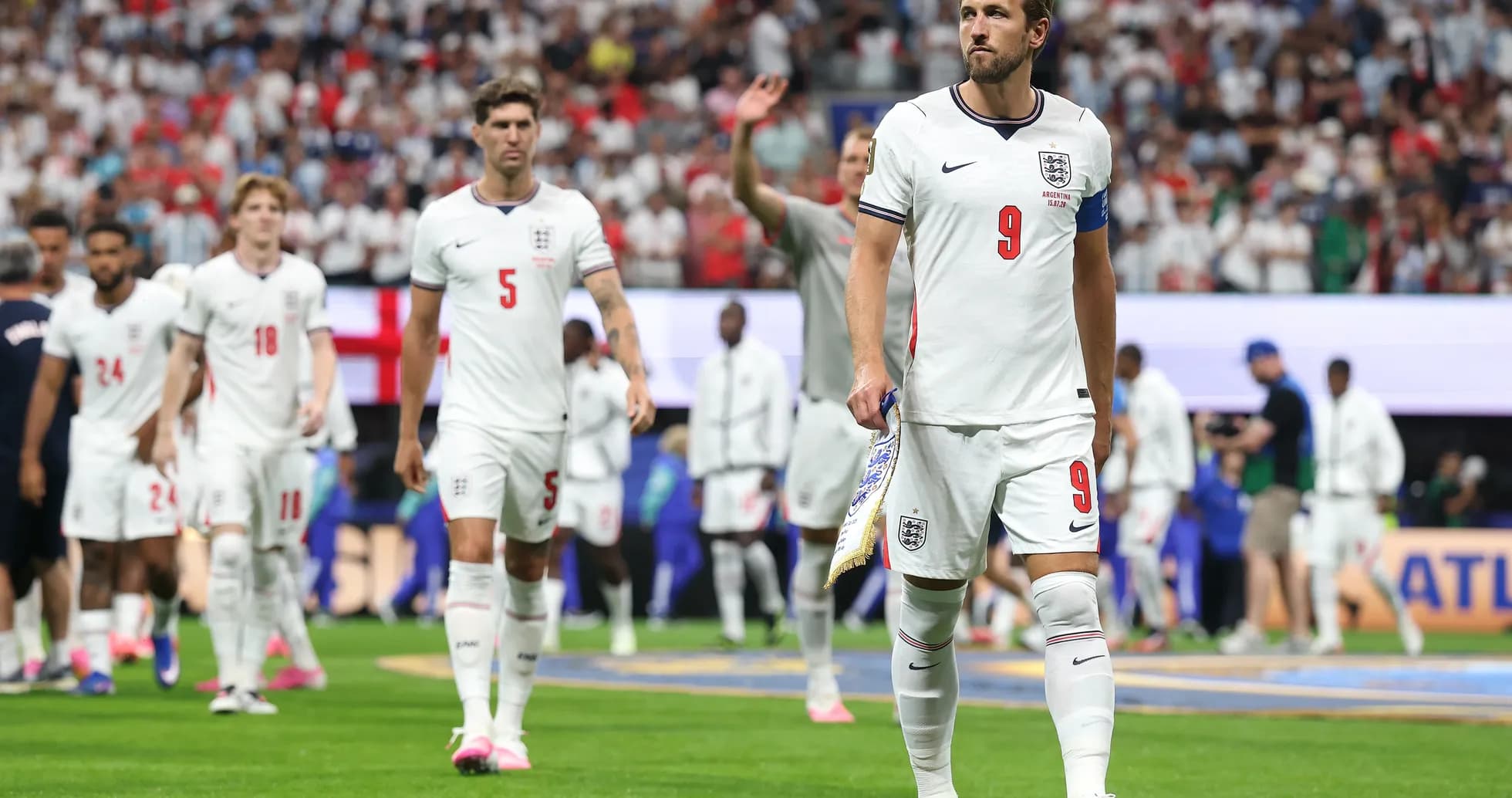
England’s base structure had Declan Rice and Elliot Anderson as a double pivot in front of a back four of Djed Spence, Ezri Konsa, Marc Guéhi and Nico O’Reilly. In-possession, this often morphed into a 2-3-5: the full-backs pushed high, Rice held the central lane, and Anderson supported the first phase, allowing Noni Madueke and Marcus Rashford to stretch the width while Jude Bellingham operated between the lines behind Harry Kane. The 517 passes with 91% accuracy (468 accurate) underline how England sought to progress patiently, drawing Congo DR’s midfield three out of shape.
Congo DR's Approach
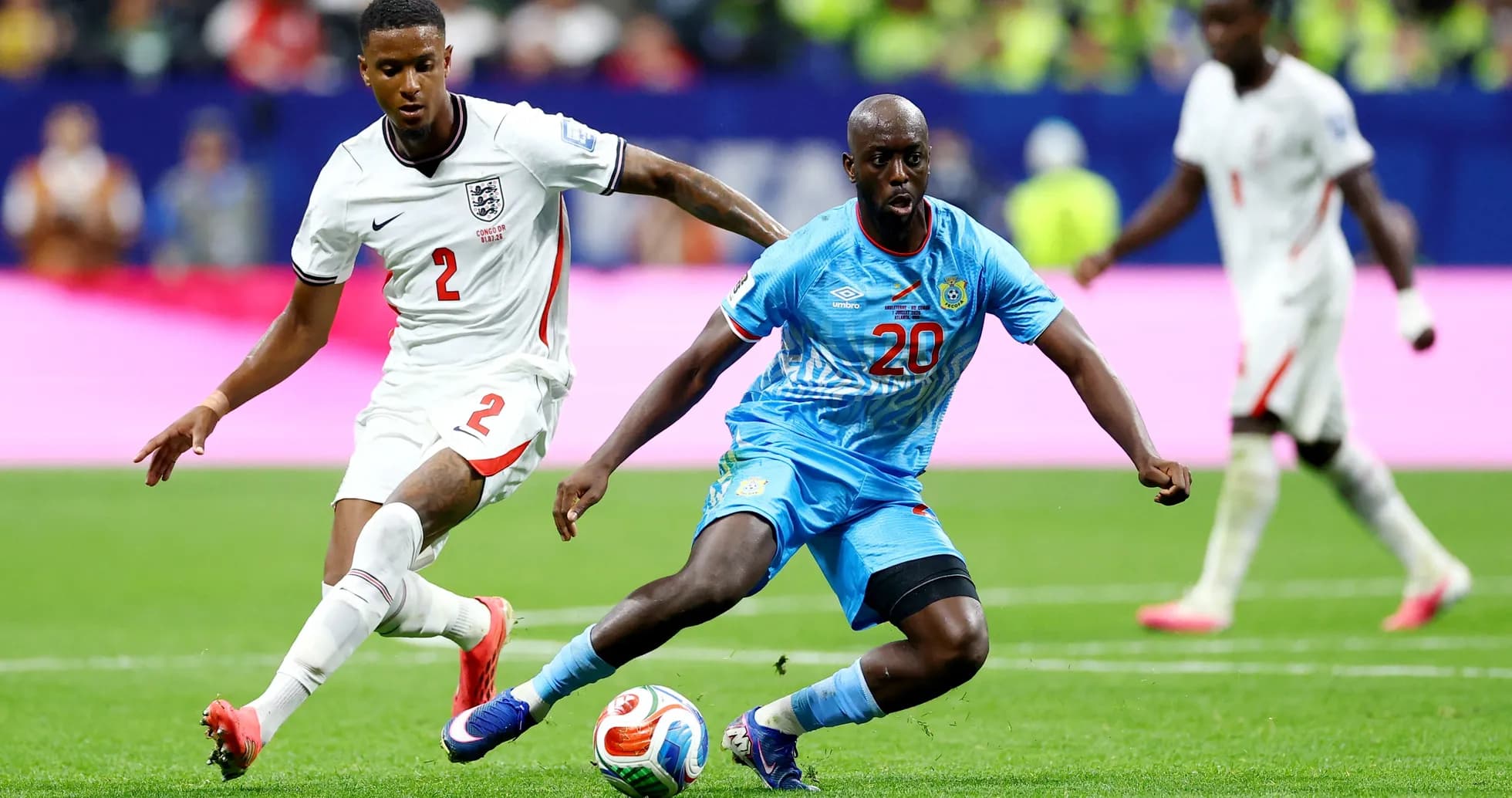
Congo DR’s 4-3-3 was more compact and vertically oriented. Arthur Masuaku and Aaron Wan-Bissaka stayed relatively conservative early, while the centre-backs Chancel Mbemba and Axel Tuanzebe defended a narrow box. In midfield, Ngal’ayel Mukau, Samuel Moutoussamy and Noah Sadiki were tasked with screening central zones and jumping onto England’s pivots. The front three of Nathanaël Mbuku, Yoane Wissa and Brian Cipenga focused on quick transitions rather than sustained possession, reflected in only 365 passes at 82% accuracy (299 accurate) but a respectable 7 total shots from limited ball.
First Half Highlights
The early goal at 7 minutes, Brian Cipenga finishing from a Chancel Mbemba assist, showcased Congo DR’s plan: win it, go forward quickly, exploit space before England could settle into their rest defence. England’s high line and advanced full-backs left room to attack the channels, and Congo DR were ruthless with one of their two shots on target.
Out of possession, England counter-pressed aggressively after turnovers, which helped pin Congo DR back and contributed to a 13–2 edge in shots inside the box. The downside was exposure to direct balls, but Congo DR lacked the volume of possession to repeatedly exploit it. England’s 3 blocked shots versus Congo DR’s 2 underline how often England managed to sustain pressure and force last-ditch defending near the Congo DR box.
Second Half Changes
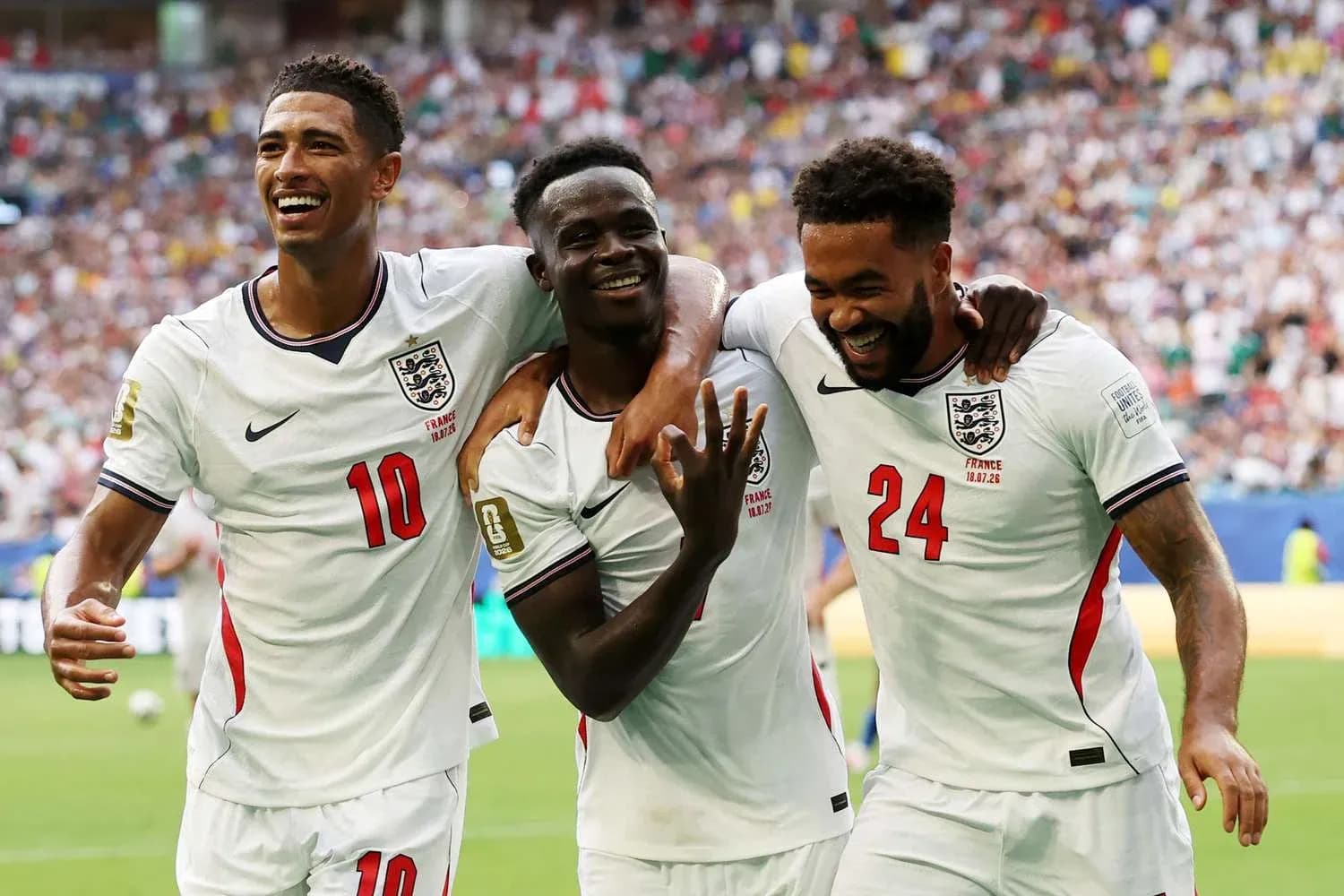
The key inflection point came with Tuchel’s double change on 60 minutes: Bukayo Saka (IN) came on for Noni Madueke (OUT), and Anthony Gordon (IN) came on for Marcus Rashford (OUT). This refreshed the wide lanes and sharpened England’s final-third dynamics. Saka offered more direct one‑v‑one threat and inside movements, while Gordon provided aggressive runs beyond Kane and a higher tempo in combination play. From that moment, England’s attacks had better depth and variety, and Congo DR’s back four were forced to defend facing their own goal more often.
Desabre responded with Meschak Elia (IN) for Nathanaël Mbuku (OUT) and Edo Kayembe (IN) for Ngal’ayel Mukau (OUT) at 64 and 76 minutes, aiming to regain some verticality and midfield legs. However, by then England’s positional dominance was entrenched. Rice and Anderson increasingly controlled second balls, and Bellingham found more pockets between Congo DR’s midfield and defence.
Kane's Impact
Harry Kane became the central tactical reference in the comeback. His equaliser at 75 minutes, assisted by Anthony Gordon, was a product of England’s improved wide play: stretching Congo DR horizontally, then attacking the penalty area with multiple runners. Kane’s second at 86 minutes, again assisted by Gordon, highlighted a repeated pattern: Gordon attacking the half-space and delivering into a crowded box where Kane’s movement and timing outmatched Congo DR’s centre-backs. England’s 7 shots on goal versus Congo DR’s 2 encapsulate that shift in penalty-box control.
Defensive Strategy
Defensively, England relied on their structure more than last-ditch heroics. Jordan Pickford (England) was only required to make 1 save, a reflection of how effectively the back four and double pivot restricted Congo DR to low-volume, mostly low-quality efforts. On the other side, Lionel Mpasi Nzau (Congo DR) made 5 saves and faced 7 shots on target; his workload, combined with England’s 2.04 xG and Congo DR’s negative goals prevented figure, underlines how sustained the pressure became in the second half.
Discipline and Set Plays
Discipline and duels were finely balanced: England committed 10 fouls to Congo DR’s 12, each side collecting a single yellow card (Jude Bellingham and Noah Sadiki, both for “Foul”). That symmetry hints at a competitive midfield battle rather than a one-sided physical contest. The 0 offsides for England versus 4 for Congo DR also speak to England’s more controlled occupation of advanced zones, while Congo DR frequently tried to break the line with early runs and direct passes.
Set plays offered only a marginal edge: England had 5 corners to Congo DR’s 3, another marker of territorial control without being the primary route to goal. The cancelled penalty for Harry Kane after a VAR intervention at 44 minutes was an important psychological moment; England did not allow that setback to derail their structure, and instead doubled down on their patterns after the break.
Statistical Verdict
In statistical verdict, the 2-1 scoreline aligns closely with the underlying metrics. England’s 60% possession, 16 total shots, 13 efforts inside the box and 2.04 xG describe a side that methodically constructed chances and eventually imposed its attacking model. Congo DR’s 0.8 xG from 7 shots, with only 2 on target, confirms that their threat was sporadic and heavily front‑loaded around Cipenga’s opener. Both goalkeepers’ goals prevented figures at -0.04 suggest that finishing, rather than extraordinary shot-stopping, decided the match.
Ultimately, this was a tactical victory of control and adaptation. England’s structural dominance, intelligent in‑game substitutions and refined wide play overturned Congo DR’s early advantage, sending England through the Round of 32 with a performance that was as methodical as it was resilient.