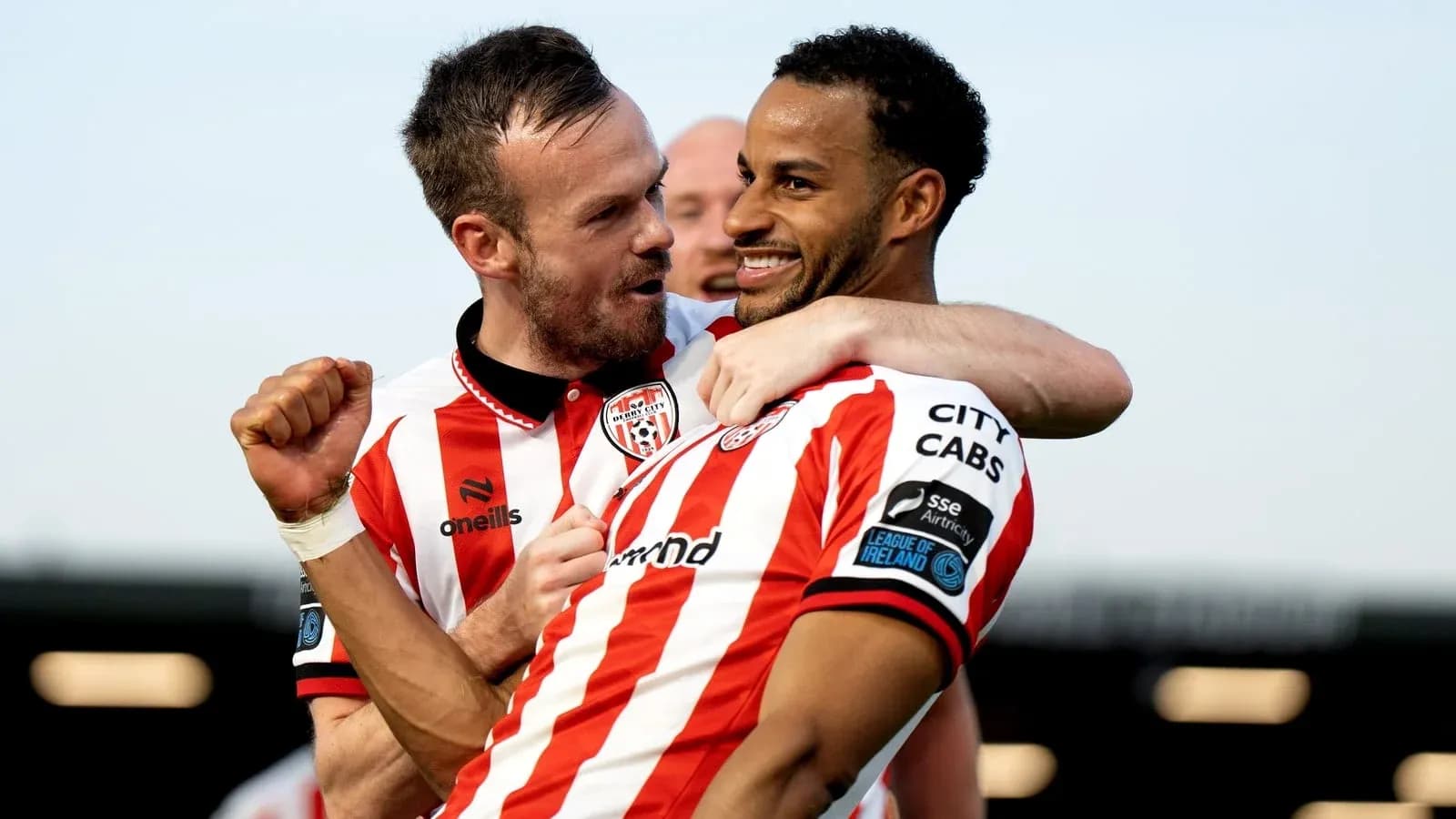
Derry City Defeats Sligo Rovers 2–0: Cotter and O’Reilly Shine
Derry City walked into the Ryan McBride Brandywell Stadium carrying a week’s worth of upheaval on their backs and walked out with something far more useful: three points and a touch of clarity.
Manager Tiernan Lynch and his assistant – and brother – Seamus had departed by mutual consent in the days leading up to this game. Director of football Mark Connolly stepped out of the boardroom and onto the touchline on an interim basis. The club needed a response. Against bottom side Sligo Rovers, they got one.
The drama wasn’t confined to the dugout. Before a ball was kicked, James McClean added a fresh layer of intrigue. The former Republic of Ireland international, long the emotional heartbeat of his hometown club, posted a picture on social media that suggested he was at home watching Wrexham versus Middlesbrough in the Carabao Cup. Not at the Brandywell. Not with Derry.
McClean had publicly criticised the club during Lynch’s reign. His absence here, on a night when the club reset its course, throws a harsh light on his long-term future.
On the pitch, Derry’s players set about restoring order.
They started with intent. After just five minutes, Liam Boyce should have done better when he rose unmarked but headed over from a promising position. Ten minutes later, the Brandywell groaned in unison as the woodwork denied them for the first time.
Brooklyn Lyons-Foster, operating out of position at left-back, shaped an audacious outside-of-the-boot cross to the back post. James Clarke attacked it superbly, his diving header leaving Sam Sargeant stranded, only for the ball to cannon back off the upright. It was the kind of moment that can sour a restless crowd. Instead, it sharpened Derry’s edge.
The home side kept coming. Darragh Burns threaded a clever pass in behind for Michael Duffy, who wriggled free of Jeannot Esua but dragged his left-footed effort just past the far post, Clarke inches away from turning it in. The patterns of play were crisp, the movement slick, but the finish kept eluding them.
On 39 minutes, another flowing move almost brought the breakthrough. Duffy slipped Burns into space, the winger cutting across the ball with his left foot, only to fire straight at Sargeant, who batted the shot away with minimal fuss. Sligo clung on, offering little going the other way, content to survive to the interval.
The pressure finally told.
Nine minutes into the second half, Burns whipped in an inswinging corner from the right. It arced towards the back post, where Barry Cotter bullied his marker and met it with a thumping header. Sargeant got a look at it, but that was all. The ball flew past him and into the net, a goal born of aggression and timing rather than artistry.
The Brandywell exhaled. Derry, at last, had a lead that matched their dominance.
They almost doubled it within moments. Duffy, increasingly influential, stepped inside and unleashed a ferocious 25-yard strike. Sargeant was beaten again, this time by the crossbar, as the ball smashed against the woodwork and ricocheted clear. The frame of the goal had now denied Derry twice; Sligo were hanging on by nails and paint.
The second goal arrived on 63 minutes and with it, the contest effectively ended. Boyce, who had led the line intelligently all evening, cushioned a neat lay-off into the path of the onrushing Adam O’Reilly. The midfielder didn’t hesitate, side-footing calmly from 12 yards into the corner. No flourish, no doubt. Just a clean, decisive finish.
From there, Derry managed the game with the assurance of a side determined not to let chaos creep back in.
Connolly began to turn to his bench. Barry Cotter and Nick Twisk made way for James Olayinka and Tyler Smith on 74 minutes, fresh legs to preserve control. Burns, who had provided the set-piece for the opener, departed earlier for Conor Barr. Boyce later gave way to Ellis Chapman as the clock wound down.
Sligo, for their part, never looked like mounting a serious recovery. Their attacks were sporadic and blunt, and when they did test Brian Maher, the Derry goalkeeper stood firm behind a largely untroubled back line of Cotter, Cameron Dummigan, Patrick McClean and Lyons-Foster.
Sargeant, by contrast, remained Sligo’s busiest and best performer. On 78 minutes he flung himself full length to his right to beat away a rising strike from Barr that threatened to add a third. Deep into stoppage time he produced one more save, springing to push aside Duffy’s stinging 20-yard drive. The scoreline stayed at two, but only because of him.
Derry’s XI – Maher; Cotter, Dummigan, Patrick McClean, Lyons-Foster; Twisk, O’Reilly, Clarke; Burns, Boyce, Duffy – had done their job. Sligo’s side – Sargeant; Sebastian Quirk, Jack Shorrock, Cian Kavanagh, Oliver Denham, Carl McHugh, Trey George, Kyle McDonagh, Ryan O’Kane, Esua, Gareth McElroy, with James McManus, Alex Nolan, Jamie McGonigle and Sean Stewart introduced from the bench – never found a way to disrupt them.
By the final whistle, the narrative had shifted. The week that began with a managerial exit ended with a measured, professional home win and a reminder that Derry’s squad still carries enough quality to impose itself on the division.
The unanswered question lingers over McClean and his place in that story. As Connolly steadies the club on an interim basis, does one of Derry’s most famous sons still see himself in the picture, or was this the night the paths quietly began to diverge?