
Democratic Republic of the Congo's Historic World Cup Journey Amid Ebola Crisis
The Democratic Republic of the Congo will head to their first World Cup in 50 years without the emotional send-off they had planned at home, after an Ebola outbreak forced the cancellation of their Kinshasa training camp.
Farewell cancelled, plans torn up
The federation had mapped out a three-stage build-up: three days in Kinshasa to say goodbye to the public, then friendlies in Belgium and Spain, before a final camp in Houston. Only the first act has been scrapped, but it was the one that would have tied the team to its people.
An outbreak of Bundibugyo, a rare strain of Ebola, in the east of the country has already been blamed for more than 130 deaths and nearly 600 suspected cases. The World Health Organization has declared it a public health emergency of international concern. Against that backdrop, the idea of a celebratory camp in the capital became untenable.
“The re were three stages of preparation: in Kinshasa to say goodbye to the public, Belgium and Spain with two friendly matches … and the third stage from 11 June in Houston. Only one stage was cancelled – the one in Kinshasa,” team spokesman Jerry Kalemo said, laying out the revised plan.
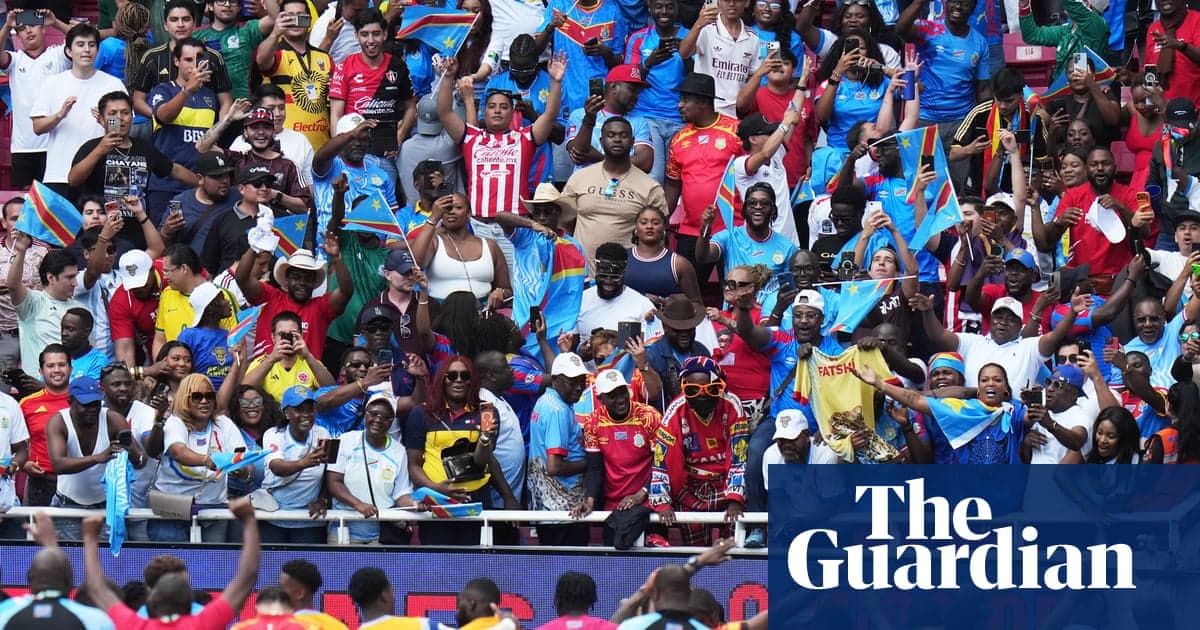
So the Leopards will continue their work away from home, their connection with supporters reduced to television pictures and social media posts, rather than a roar from the stands in Kinshasa.
Warm-ups go ahead, eyes on Portugal
On the pitch, the sporting schedule remains intact. The DRC will face Denmark in Liège on 3 June and Chile in southern Spain on 9 June, fixtures Kalemo confirmed are going ahead as planned.
From there, the squad will fly to the United States, where their World Cup opens in Houston on 17 June against Portugal. Colombia await in Guadalajara on 23 June, then Uzbekistan in Atlanta on 27 June in Group K.
It is a historic return. The country last appeared on this stage in 1974, under the name Zaïre. Half a century on, they arrive with a 26-man squad shaped largely in Europe and led by French coach Sébastien Desabre.
Newcastle forward Yoane Wissa, Sunderland midfielder Noah Sadiki and West Ham full-back Aaron Wan-Bissaka headline a group built to compete, not just participate. The Hibernian centre-back Rocky Bushiri was initially named but withdrew with a suspected achilles injury, prompting a call-up for Kilmarnock’s Aaron Tshibola.
Health crisis, travel rules and a narrow exemption
The Ebola crisis has not only reshaped the team’s preparations; it has also triggered international restrictions. The US Centers for Disease Control and Prevention announced this week that foreign nationals who have been in the DRC, Uganda or South Sudan in the previous three weeks will be barred from entering the United States for 30 days.
That could have thrown the Leopards’ World Cup into chaos. Instead, a crucial detail saves them. A US official confirmed the DRC squad will not be affected because players and coaching staff have been based in Europe for several weeks and have not recently returned to the country.
Those within the wider World Cup delegation who have been in the DRC during the 21-day window will face the same quarantine rules as US citizens returning from affected countries. They can still come, but only after meeting strict health protocols.
Fans will not be so fortunate. The exception carved out for the team does not apply to supporters hoping to travel, a hard line that underlines how seriously Washington is treating the outbreak.
Inside government, the White House World Cup taskforce, operating under the Department of Homeland Security, has stressed it is coordinating closely with health and security agencies and is “closely monitoring” developments. Fifa, for its part, has said it is aware of the situation and is in regular contact with Fecofa to ensure the team receive all medical and security guidance.
A federation under new leadership
While the national team adapts to a changing landscape, there has been a significant shift off the pitch. Véron Mosengo-Omba, the former general secretary of the Confederation of African Football, has been elected president of Fecofa.
He stood unopposed and secured 60 of a possible 65 votes, taking over the federation just months before the biggest tournament in its modern history. Mosengo-Omba, a long-time ally of Fifa president Gianni Infantino since their university days and subsequent work together at Uefa and Fifa, stepped down from his Caf role in March after five years.
His arrival comes at a moment when the federation must juggle competitive ambition with public health responsibility and complex international regulations. It is a demanding in-tray: guide the Leopards through a World Cup, navigate an Ebola emergency and rebuild the domestic game’s bond with a fanbase denied the chance to say goodbye.
The team will soon gather in Europe, then in Houston, carrying the weight of a nation that has waited since 1974 to see its colours on the World Cup stage again. The question now is not whether they will make it to the United States. It is what kind of mark they can leave once they get there.




