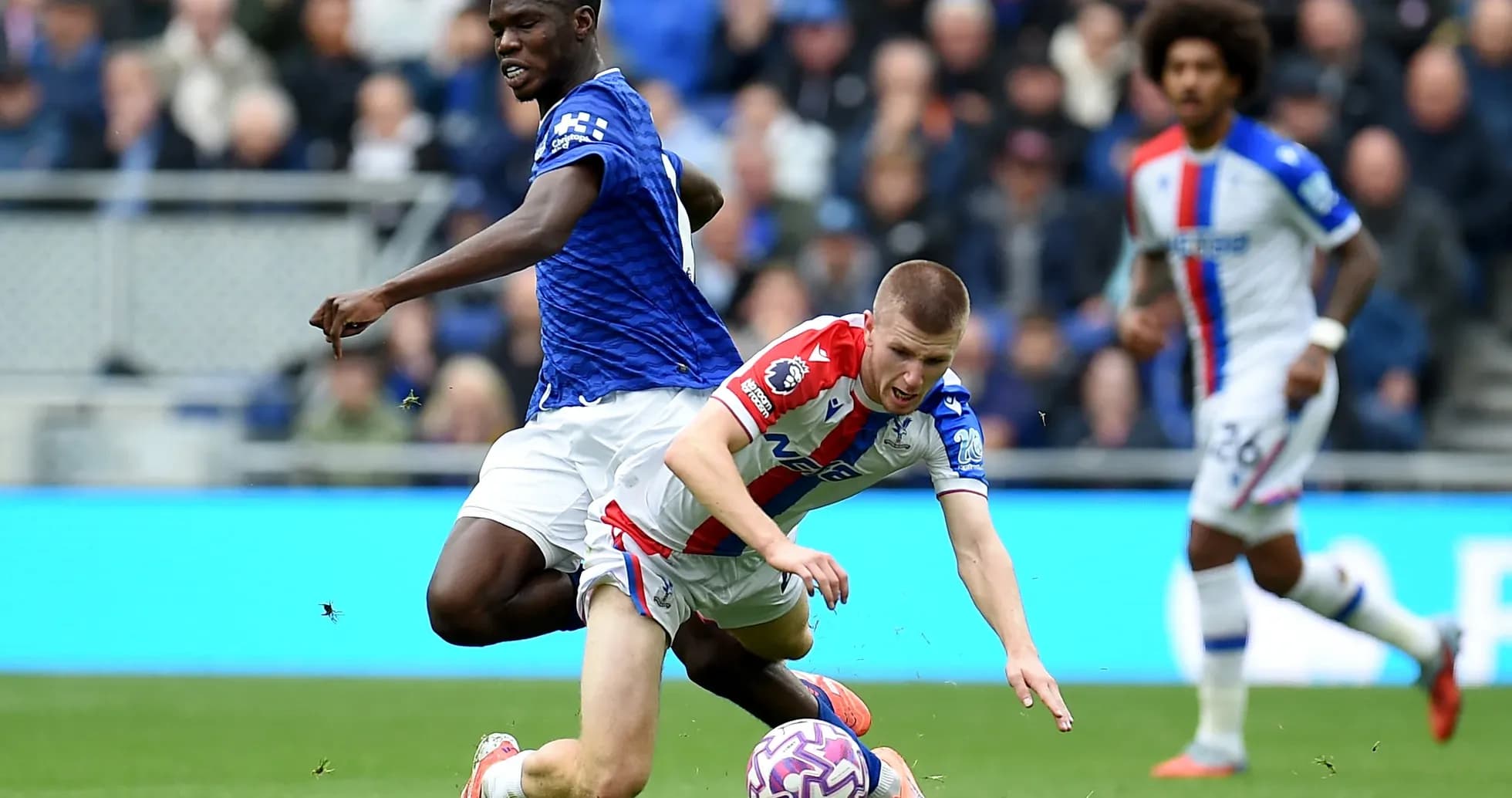
Crystal Palace vs Everton: Mid-Table Clash Preview
Selhurst Park stages a mid-table chess match on 10 May 2026, as 15th-placed Crystal Palace host 10th-placed Everton in the Premier League. The stakes are quieter than the relegation or European races, but they are real: Everton are pushing to cement a top-half finish, while Palace still need points to ensure they do not get dragged back towards the pack in the final weeks.
Context and stakes
In the league, Crystal Palace sit 15th on 43 points after 34 matches, with a goal difference of -6 (36 scored, 42 conceded). Their recent form reads “LLDWD” – a wobble that has checked what was previously a steady accumulation of points. At home, they have been hard to beat but not especially explosive: 4 wins, 8 draws and 5 defeats from 17, with just 16 goals scored and 19 conceded.
Everton arrive in London 10th in the table on 48 points from 35 games, with a neutral goal difference (44-44) and a form line of “DLLDW”. They have been competitive both home and away, and their away record is solid: 7 wins, 4 draws and 6 defeats from 17, scoring 19 and conceding 20. That profile – slightly negative goal difference away but a positive points return – underlines a side that can manage tight games and edge them.
For both teams, this fixture is about closing the season with clarity: Palace looking for one more statement home performance to put distance between themselves and the bottom, Everton eyeing a platform to finish in the top half.
Tactical overview: structure vs punch
Across all phases, Palace’s identity under the numbers is clear. They have leaned heavily on a back three: the 3-4-2-1 has been used in 30 league matches, with a 3-4-3 appearing 4 times. The shape is built on defensive stability and compactness, but it has come at the cost of attacking volume: just 1.1 goals for per game (36 in 34), and an average of 0.9 at Selhurst Park.
Defensively, Palace are relatively stable, conceding 1.2 goals per game overall (1.1 at home). The clean-sheet count – 12 across all phases, 7 of them at home – supports the idea of a side comfortable in low-scoring, attritional contests. However, they have also failed to score in 11 league games, including 7 at Selhurst Park, which is a concern against an organised Everton.
Everton, by contrast, have been more balanced but equally reliant on structure. Their most common shape is a 4-2-3-1 (21 matches), with a 4-3-3 used once. They average 1.3 goals for and 1.3 against per game, with away figures of 1.1 scored and 1.2 conceded. They are not a high-variance side; they keep games in the balance and trust their moments of quality.
Both teams are comfortable in matches decided by fine margins. Palace’s biggest home win is 2-0, and their heaviest home defeat 0-3; Everton’s biggest away win is 0-2, and their worst away loss 2-0. Expect a contest where one goal either way feels decisive.
Key players and attacking threats
For Palace, the headline figure is Jean-Philippe Mateta. Across all phases in the league this season, he has 10 goals in 28 appearances (24 starts, 2,095 minutes). He has taken 53 shots, with 30 on target, and has scored 4 penalties from 4 attempts. His profile – 192 cm, strong in duels (274 contested, 104 won) and capable of holding the ball up – makes him central to how Palace build attacks from their 3-4-2-1.
With E. Nketiah ruled out by a thigh injury, Palace’s depth at centre-forward is thinner, which only increases Mateta’s importance. The absence of B. Sosa removes a natural left-sided outlet, while C. Doucoure’s knee injury deprives them of a key presence in midfield screening. E. Guessand is also out with a knee injury, further limiting rotation options in the attacking and wide areas.
Everton’s squad picture is mixed. Jarrad Branthwaite is out with a hamstring injury, weakening their central defensive options and potentially impacting how high they are willing to hold the line. J. Grealish is also missing with a foot injury, taking away a creative and ball-carrying threat in the final third. Idrissa Gueye and T. Iroegbunam are both listed as questionable; if Gueye in particular is unavailable, Everton lose a significant portion of their ball-winning and positional discipline in midfield.
Both sides have shown composure from the spot this season. Palace have scored 7 penalties from 7 at team level, while Everton have converted 2 from 2. Individually, Mateta’s 4-from-4 record is a significant detail in a fixture that could be decided by a single incident.
Head-to-head: Everton’s edge
Looking at the last five competitive meetings (excluding friendlies), Everton hold a clear upper hand.
- On 5 October 2025 in the Premier League (Regular Season – 7), Everton beat Crystal Palace 2-1 at Hill Dickinson Stadium in Liverpool.
- On 15 February 2025 in the Premier League (Regular Season – 25), Everton won 2-1 at Selhurst Park.
- On 28 September 2024 in the Premier League (Regular Season – 6), Everton again defeated Palace 2-1 at Goodison Park.
- On 19 February 2024 in the Premier League (Regular Season – 25), Everton and Crystal Palace drew 1-1 at Goodison Park.
- On 17 January 2024 in the FA Cup 3rd Round Replays, Everton beat Palace 1-0 at Goodison Park.
Across these five matches, Everton have 4 wins, Crystal Palace have 0, and there has been 1 draw. Palace have been competitive on the scoreline – never losing by more than one goal in this run – but they have struggled to turn performances into results against this opponent.
Discipline, game state and tempo
Card data suggests both teams can become more combustible as matches wear on. Palace’s yellow cards cluster between 31-60 minutes and 61-90, while Everton see a notable spike in bookings from 46-90 minutes and have had red cards across several late-game intervals. In a tight match, the battle for midfield control and how each side manages transitions after the hour mark could be decisive.
Palace’s tendency to grind through low-scoring games at home, combined with Everton’s balanced away record, points towards a cautious opening. Palace’s 7 home clean sheets and Everton’s 5 away clean sheets hint that both managers may prioritise defensive structure and set-piece organisation over early risk-taking.
The verdict
On paper, Everton arrive with the stronger league position, a better overall record, and a dominant recent head-to-head record. Their ability to win away – 7 victories from 17 – contrasts with Palace’s struggle to turn draws into wins at Selhurst Park.
However, injuries complicate the picture for the visitors, particularly the absence of Branthwaite at the back and Grealish in attack. If Gueye is also unavailable, Everton lose a key component of their midfield stability. Palace, for their part, are missing several important pieces, but retain their main focal point in Mateta and a defensive structure that has delivered 7 home clean sheets.
The data points towards a tight, low-to-mid scoring contest, likely decided by a single goal or a set-piece. Everton’s recent habit of edging Palace by 2-1 scorelines underlines their knack for finding that extra moment, but Palace’s need for a stabilising home result and their defensive numbers at Selhurst Park suggest they are capable of halting the sequence.
A narrow Everton advantage on underlying trends is balanced by Palace’s home resilience and the visitors’ injury list. A draw – with either side capable of nicking it late – feels the most logical outcome.