City's WSL Title Reset: A Culture Shift Under Jonas Jeglertz
For years, City were the nearly team. The talent was there, the predictions rolled in every August, and Chelsea’s crown always looked within reach. Then came the stumbles – late-season slips, odd collapses, a sense that something in the wiring wasn’t quite right.
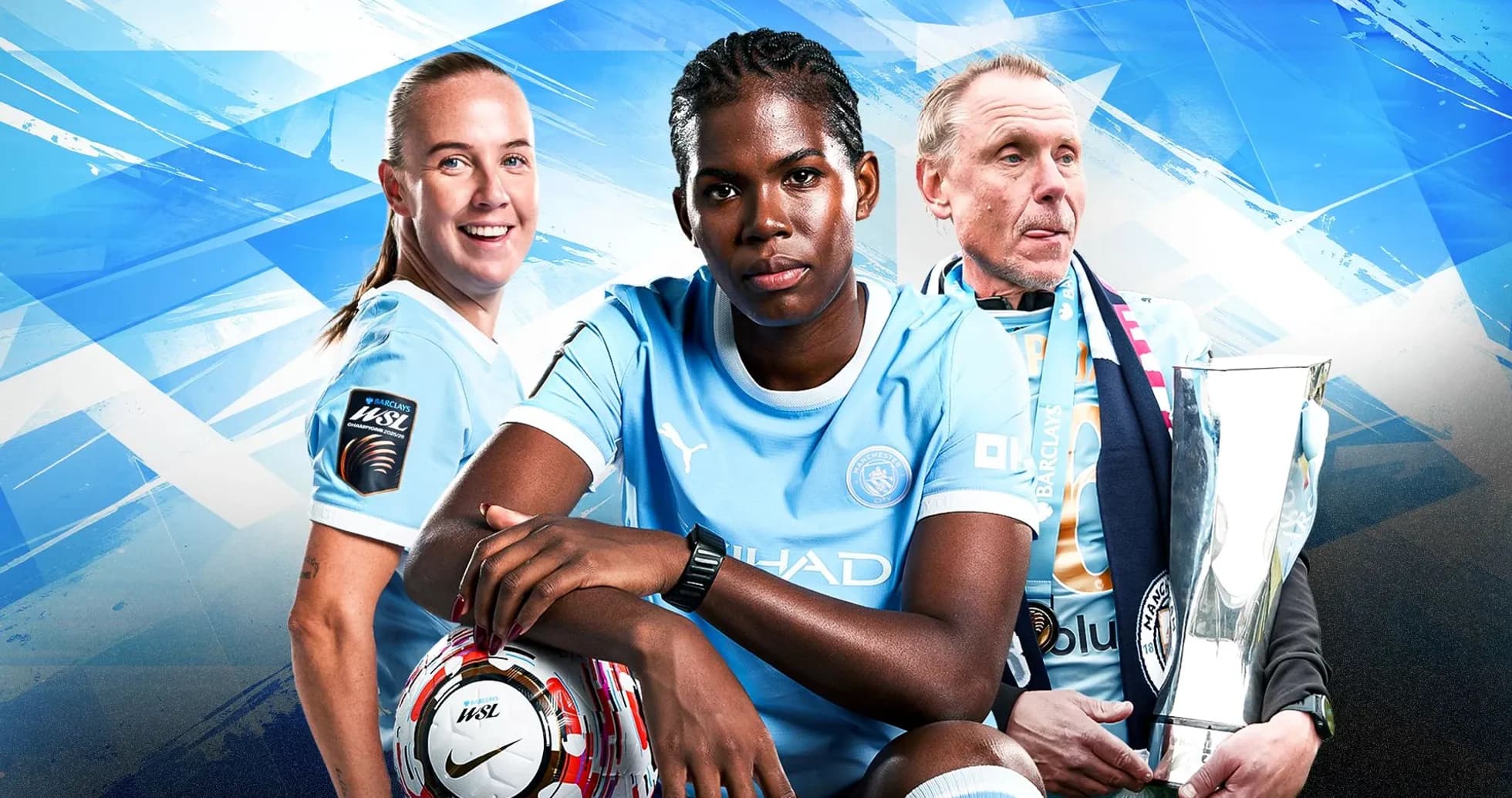
Jonas Jeglertz changed that.
A culture shock that stuck
What he delivered in his first season in charge should not be brushed aside as inevitable progress. It was a reset. Alex Greenwood called it a “shift in culture”, and that phrase has stuck around the training ground. Players started talking differently about pressure, about trophies, about what “success” actually meant. As Greenwood put it, even changing “the language used” became part of the work.
It wasn’t always comfortable. That was the point. Pushing through that discomfort, she explained, “shifted so many mindsets in this building”.
The payoff was brutal for the rest of the WSL. City finally snapped their four-year trophy drought and took the title. This time, it doesn’t feel like a one-off surge. It feels repeatable.
Mary Fowler has sensed it too. “In previous seasons, maybe we fell short because there was a bit of a lack in the mindset where we felt we were really capable of winning,” she told GOAL. “But I think now that we've done it, it feels like, 'You are very capable and you can do that again'.”
The belief is no longer theoretical. It has a medal to point at.
Hunger, not relief
After a short summer break, Jeglertz walked back into a dressing room that looked very different in one key way: nobody seemed satisfied.
He hasn’t found a group easing off after finally climbing the mountain. Quite the opposite. “I've seen it already in the players,” he told GOAL. “They already have a confidence that is great, that is calm, but curious about how we take the next step. What do we do to become a little bit better? I already see it and that's something that we need to keep having the whole year.”
This is not a squad treating last season as a destination. It feels like a launchpad.
Two summer arrivals reinforce that message. Niamh Charles comes in from Chelsea, where winning became routine: five straight WSL titles, seven domestic cups in six years. That kind of CV does not just bring experience; it brings standards.
“That means that she has a little bit of a leader in her,” Jeglertz believes. He sees her influence stretching into training sessions and into the subtle, season-to-season habits that separate champions from contenders.
Beth Mead adds another layer of pedigree. Back-to-back European Championship wins with England, a Champions League crown with Arsenal after beating Barcelona in the 2025 final – her résumé speaks for itself. Yet Jeglertz’s focus was on her appetite. “You can see in her eyes, she's still very eager to be part of this and to learn more,” he noted.
On the intangibles – culture, mentality, environment – City look built to defend their WSL title. The question now is whether the squad can withstand what’s coming.
Champions League returns – and so do the questions
Last season’s title charge came without the strain of European football. While Chelsea, Arsenal and Manchester United juggled midweek nights, City had a clearer runway. That luxury has gone. The Champions League is back on the calendar, and with it a heavier load on a group that has actually shrunk.
Beyond Mead and Charles, the only other senior addition is Carlotta Wamser, a versatile full-back who offers cover on both sides. Nine first-team players have gone. For a club heading into a busier schedule, this is not the sweeping reinforcement some expected, even if there was never an intention to rip things up.
“The depth is there,” director of football Nicky O’Neill insisted at the end of last season. “It’s not about a squad transformation. It’s about adding in the key positions we need.”
The injuries have already started to probe that conviction. Vivianne Miedema’s situation is the most alarming. The Guardian understands she may not be back until 2027, a huge blow for any hopes of easing the scoring load and rotating at the very top end of the pitch. City tried to move on deadline day to bring in more help and failed to get anything over the line. That alone hints at internal concern.
They have at least covered specific gaps. Charles and Wamser arrive to plug the left-back hole left by Leila Ouahabi’s departure. Mead strengthens the forward line after Kerolin’s move to Barcelona. Beyond that, Jeglertz is betting on growth from within.
Banking on internal upgrades
Risa Shimizu returns from a loan at Liverpool to bolster full-back options. Sydney Lohmann and Grace Clinton are both expected to deliver more after stop-start first seasons disrupted by injuries and missed opportunities. They were signings with high ceilings; City now need them to actually reach them.
Fowler, coming into her first full campaign after an ACL injury, is another key piece. She flashed her quality after returning in February. A full, uninterrupted season from her would change the texture of this attack.
There is also flexibility up front. Mead, Fowler, Lauren Hemp, Aoba Fujino and Iman Beney can all operate in multiple roles, including through the middle. That versatility makes it easier to justify not signing a pure back-up striker to sit behind Khadija Shaw all year.
Below them, the academy conveyor belt is starting to feed into the senior setup. Sacha Lewis, Amelia Oldroyd and Aoibhe Brennan have all signed their first professional deals this summer. Mayzee Davies, already a senior Wales international, did so last year and could emerge as a depth option as the season wears on.
At the top of the tree, the core remains intact. Shaw, Greenwood, Hemp, Kerstin Casparij, Jade Rose and Yui Hasegawa anchor one of the strongest starting XIs in the WSL. When Miedema finally does return, the frontline could look frightening.
Built for more games – but how many blows can they absorb?
So, is it enough?
City enjoyed an almost spotless injury record last season, a rarity in recent years. Replicating that while adding Champions League minutes is a huge ask. O’Neill is adamant they’re ready. “We’ve learned and we will absolutely be ready next season,” she said.
Jeglertz, for his part, actually felt the squad was too big last year. From his perspective, the expanded schedule is a blessing, not a threat. “We have too many good players to play these few games we are playing,” he said back in May. “Next year will be different because it's more games. The squad is built for that.”
The theory is sound. The reality is less forgiving. Certain positions look alarmingly thin if injuries bite. The pressure grows if those pencilled in for breakout seasons – Lohmann, who has undergone hip surgery, or Clinton – fall short again. Starting a campaign with several doubts and the knowledge that Miedema will be sidelined for a long stretch is hardly ideal.
Other WSL sides may boast deeper benches, but many of them are wrestling with issues City are not: fractured dressing rooms, new managers, tactical overhauls. This group knows exactly who it is.
Replicating Chelsea’s era-defining dynasty in a league that grows stronger every year is a tall order. But City have put themselves in the bracket of teams who can realistically chase – and lift – the biggest trophies again this season.
They were the best team in England by a distance last year. Now they carry something even more dangerous than talent or form: the certainty that comes from finally winning. With that belief, and a handful of hardened winners added to the mix, the question isn’t whether City can avoid another 10-year wait for a WSL title.
It’s how many they can cram into the next decade.