Chelsea’s Midfield Issues Highlighted in Arsenal Loss
Chelsea walked out of the Emirates with a 2-1 defeat and a familiar feeling: when the game tilted into chaos, they no longer had a midfield that looked like a midfield.
By the end, Reece James and Malo Gusto – two players who grew up as right-backs – were standing side by side in the centre of the pitch, trying to hold back the Premier League champions. This, from a club that spent £349m in the summer. The optics were brutal.
James vs Ødegaard – and the moment that decided it
Xabi Alonso had been bold. Before kick-off, he talked up James’s qualities, telling BBC Sport the England international had the tools to become one of the best midfielders in the world. At the Emirates, he handed him the job of tracking Martin Ødegaard.
For long spells, James coped. He has, after all, already spent almost half of last season operating in midfield. He pressed, he covered ground, he used the ball reasonably well.
Then came the sequence that mattered.
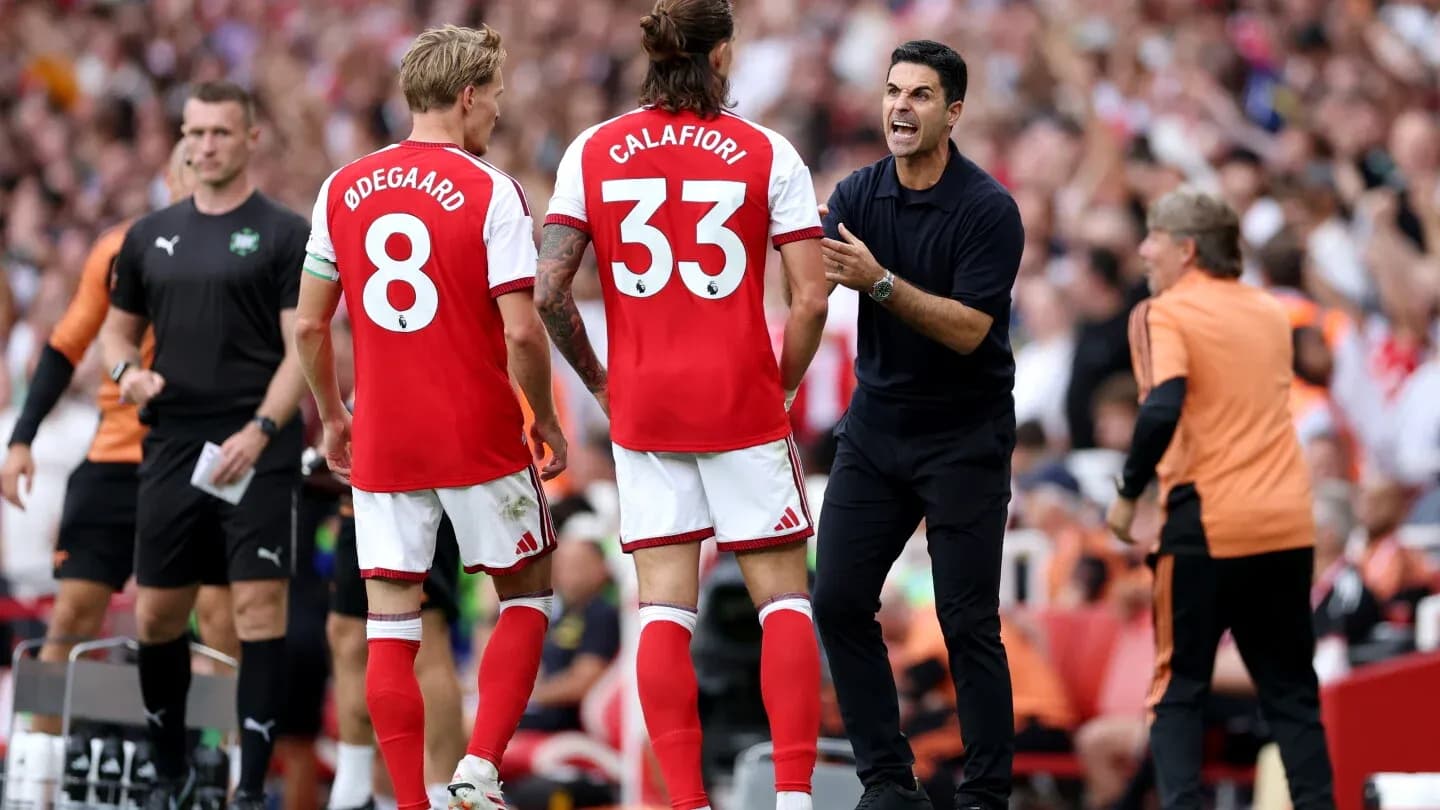
As Arsenal cranked up the pressure, Ødegaard drifted into space, James lost him, and the Norwegian punished Chelsea with the winning goal. One lapse, one elite playmaker unmarked, and the champions had all they needed.
James’s overall display was respectable. The way he was used was the real story. When Alonso turned to his bench in the second half, he chose Gusto, not Romeo Lavia, to reinforce the middle of the pitch. That decision said as much about Chelsea’s current reality as the final scoreline.
Arteta’s bench bites, Chelsea’s doesn’t
Arsenal’s substitutions underlined the gap.
Where Chelsea’s options looked short on invention, Mikel Arteta’s changes shifted the tone of the match. He injected energy and variety, and Arsenal gradually pinned Chelsea back until the contest belonged to them.
Ashley Young, on BBC Sport duty, did not hide his concern.
“Chelsea are not competing in European competitions this season, so they play fewer matches and can focus more on the Premier League,” he said. “But the cause for concern is that they end a match against the reigning champions with two right-backs in midfield.”
He pointed straight at the imbalance.
“Look at Lavia, who suffered a lot from injuries last season. The attacking line will frighten many teams in the league, but behind it we find the midfield, where two right-backs are being deployed.”
The tactical pattern will not have gone unnoticed around the league.
“Other teams will watch today’s match, and they will notice that Chelsea rely on defensive compactness and putting as many players as possible behind the ball, yet there are still spaces between the lines, and that is what Arsenal exploited,” Young added.
Chelsea also leaned heavily on transitions.
“They concede possession a lot and rely on counter-attacks. Today, there was perhaps only one chance, through Pedro Neto on the right side, during which they succeeded in exploiting a counter-attack.”
One counter. One real threat. Against the champions, it was never going to be enough.
Caicedo’s shadow over Alonso’s plans
Strip it back and one issue towers over the rest: Moisés Caicedo is missing.
The Ecuadorian midfielder, usually an iron man in terms of availability, picked up an injury after an 11-minute cameo against Brighton last week. No one at Chelsea has publicly specified what the problem is. No one has put a date on his return.
For Alonso, it is a new kind of headache. Across the past three seasons, Caicedo has only missed two games through a minor injury and illness, aside from suspensions. Now, in the early weeks of a new project, his absence is forcing improvisation.
Asked about Caicedo, Alonso said: “It is not about a long-term absence, but about risk assessment. We may have brought him back to play too early last week, and I do not want to repeat the same mistake.”
Did that uncertainty push Chelsea into a frantic late search for another midfielder on deadline day? Inside the club, they are not saying.
Deadline day swings and misses
What is clear is that Chelsea tried to reinforce the middle of the pitch in the final hours of the window – and failed on every front.
Monaco pulled the plug on a £47m move for Lamine Camara at the last moment, infuriating officials at Stamford Bridge. Bournemouth refused to budge on Alex Scott, turning down offers that rose to £64m earlier in the summer.
A move for French midfielder Manu Koné also collapsed, with Roma manager Gian Piero Gasperini blocking the transfer.
Chelsea’s line is that Camara was an opportunistic move, not a necessity. They insist they are satisfied with their summer business and trust the current group.
The evidence on the pitch is less reassuring.
Enzo sold, no replacement, more questions
If the Camara saga raised eyebrows, Enzo Fernández’s departure ripped them off entirely.
On the final day of the window, Chelsea sold the Argentina international to Manchester City for £125m, matching the British transfer record – and did not sign a direct replacement.
The timing has left Alonso exposed. Caicedo is injured. Jordan Henderson is also sidelined, still recovering from a broken arm suffered in a freak fall onto an advertising board while on World Cup duty, when he did not even get on the pitch.
Valentín Barco, a natural midfielder signed from Strasbourg in the summer, has yet to feature. Alonso has instead trusted Gusto in all three Premier League matches.
The consequence? A squad that looks stacked in some areas and strangely thin in the one zone that controls games.
A historic low in possession
The warning signs were already flashing in the 4-3 win over Brighton.
With Gusto deployed in midfield, Chelsea had just 25.6% of the ball – their lowest possession figure since such data began in 2003-04. They escaped with the points thanks to their attack, not their control.
On paper, if Caicedo’s injury is as minor as Alonso suggests, Chelsea should have enough to navigate a season without European football. No midweek fixtures. More time on the training ground. Fewer minutes to spread across the squad.
Alonso himself said as much before facing Arsenal, insisting he had sufficient numbers in midfield.
Sunday’s finale, with two right-backs patrolling the centre, told a different story.
Attack shines, defence frays
If Chelsea are wobbling in the middle, their front line is doing its best to drag them forward.
Across the first three league matches, Morgan Rogers has been electric, Cole Palmer has rediscovered his edge, and João Pedro has provided a cutting threat in front of goal.
Rogers, signed in a record deal, struck again inside two minutes at the Emirates. That made him the first Chelsea player to score or assist in each of the club’s first three league games of a season since Eden Hazard in 2018-19. That is serious company.
But the numbers at the other end are just as stark. Seven goals conceded in three games. Alonso did not hide from it.
“We want to be more cohesive and solid defensively,” the Spaniard said.
The performance against Arsenal did offer encouragement. In stretches, this was one of Chelsea’s more convincing displays in a run that has now stretched to 10 matches without a win over their London rivals.
Still, the gap remains wide. Chelsea finished 33 points behind Arsenal last season, slumping to 10th. That is the distance Alonso must somehow erase.
“We came to win,” he said after the game. “We knew we were not far off them in terms of level, but the match went their way, it is painful, and we certainly feel disappointed, but this is the first defeat, the journey is still long, and it will not greatly affect our morale or our mentality.”
Arsenal set the bar, Chelsea chase clarity
Right now, Arsenal are the measuring stick. Chelsea may have beaten them to the signature of Rogers, but the champions still represent the standard for what a complete, title-chasing squad looks like in London and across the league.
Sunday underlined a simple truth: money alone has not solved Chelsea’s structural issues. Ten first-team signings in one window, yet no midfielder secured on the final day, and a glaring gap left by Enzo Fernández’s exit.
Alonso has called this summer “the first stage” of his Chelsea project. The next phase will not be defined by another spending spree, but by how he manages this imbalance.
If Caicedo’s return stabilises the centre of the pitch, the noise will die down. If it does not, the questions will grow louder: why was there no direct replacement for Enzo, and how deep will Chelsea have to dig again when January comes around?