Chelsea vs Hull City: Tactical Insights from Premier League Clash
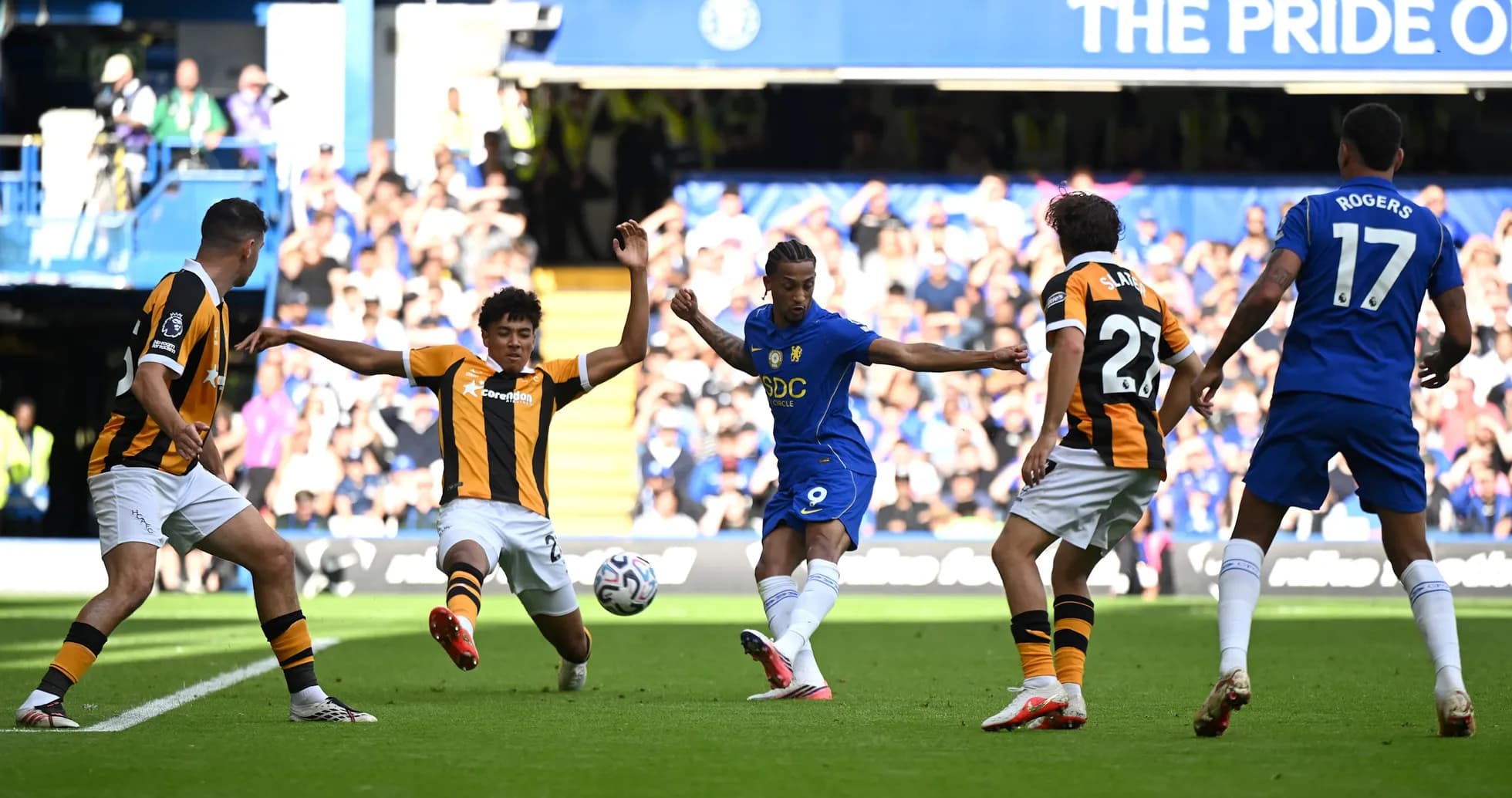
The late summer light over Stamford Bridge had barely begun to soften when this one closed out as a 2-2 draw, a scoreline that felt like a fair reflection of two sides whose identities are already sharply defined four games into the Premier League season.
I. The Big Picture – Two projects with clear DNA
This was Round 4 of the Premier League’s regular season, and it arrived with both teams punching high in the early table. Heading into this game, Chelsea sat 5th with 7 points and a goal difference of +1, built from 10 goals scored and 9 conceded overall across 4 matches. Hull City, improbably but deservedly, came to London in 3rd place with 8 points and a goal difference of +3, having scored 5 and conceded only 2 overall.
The full-time 2-2 at Stamford Bridge extends those storylines rather than rewriting them. Chelsea remain one of the division’s great entertainers: at home they had already scored 6 and conceded 5 in 2 league fixtures, averaging 3.0 goals for and 2.5 against at Stamford Bridge. Hull arrived as the opposite archetype: compact, hard to break, with just 2 goals conceded overall in 4 games, including only 2 on their travels and an away average of 1.0 goal conceded per match.
The formations told their own tale. Xabi Alonso went with a 4-2-3-1 that looked, in possession, like a high, aggressive 2-3-5. S. Jakirović doubled down on Hull’s structural discipline with a 5-4-1, a shape that has started all 4 league games and underpinned 3 clean sheets overall.
II. Tactical Voids – Who was missing, and what it cost
Chelsea’s squad sheet came with notable absences. M. Caicedo, E. Emegha, J. Henderson and M. Palestra were all ruled out through injury. Caicedo’s absence in particular changes the geometry of Alonso’s double pivot. Without his ball-winning and press-resistance, the responsibility to shield transitions fell heavily on R. Lavia and R. James, both listed as midfielders here. Chelsea’s season statistics already hinted at a fragile balance: no clean sheets at home or away overall, and 9 goals conceded in 4 league games, an overall average of 2.3 per match.
Hull, too, were patched together. I. Ansah, J. Butland, D. Gyabi, C. Hughes, E. Matazo and H. Morita all missed out with various injuries. That is effectively an entire rotation’s worth of depth removed from Jakirović’s options. Yet the defensive unit remained intact enough to hold its 5-4-1 shape: K. Tzolakis behind a back five of L. Coyle, S. Ajayi, J. Egan, N. Mendy and R. Giles.
Disciplinary patterns added another layer of tension. Chelsea’s yellow-card profile this season is front-loaded and frantic: 33.33% of their cautions have come in the opening 0–15 minutes, with another 22.22% in each of the 46–60 and 76–90 windows. Hull’s bookings are most concentrated just after half-time, with 30.77% of their yellows arriving between 46–60 minutes. That shared volatility around the restart was always likely to tilt the emotional rhythm of the match, even if neither side carries any red-card baggage into this fixture.
III. Key Matchups – Hunter vs Shield, Engine Room vs Enforcer
The headline duel was always going to be Chelsea’s front four against Hull’s low block.
The “Hunter vs Shield” narrative centred on João Pedro. Heading into this game he had 3 goals and 3 assists overall in 4 league appearances, with 8 shots (4 on target) and 7 successful dribbles. Operating as the lone forward in the 4-2-3-1, he was supported by M. Rogers, C. Palmer and Pedro Neto – a trio that has already dominated the league’s attacking metrics. Rogers arrived with 3 goals and 1 assist overall, Palmer with 2 goals and 2 assists overall, both among the league’s top-rated attackers.
Their task was to unpick a Hull defence that had conceded only 2 goals overall all season, with 3 clean sheets and an away goals-against average of just 1.0. S. Ajayi and J. Egan, flanked by Coyle and Giles with N. Mendy as the left-sided centre-back, formed a compact line of five in front of Tzolakis. The plan was clear: compress the central lane where Palmer likes to receive between the lines, funnel Chelsea wide, and trust numbers in the box.
In midfield, the “Engine Room” duel pitted Chelsea’s hybrid pivot and advanced full-backs against Hull’s workmanlike four. Lavia and James were tasked with both initiating build-up and smothering transitions, while J. Hato stepped up from the back line with the confidence of a player who has already contributed 2 assists overall and 7 tackles this season. His ability to step into midfield, win duels (15 won from 23 overall) and play forward passes is a key plank of Alonso’s structure.
Opposite them, M. Crooks and R. Slater had to be both enforcers and outlets. Crooks, who has already collected 2 yellow cards overall in just 159 league minutes, brings edge and vertical running; Slater and E. Stroud shuttle wide to protect the channels. Ahead of them, M. Belloumi is Hull’s all-action connector: 2 goals, 1 assist, 10 tackles and 9 interceptions overall. He is both creator and first presser, the one tasked with jumping out of the block to disrupt Chelsea’s rhythm.
Up front, O. McBurnie led the line for Hull, a classic reference point whose 2 yellow cards overall and 74 duels contested underline how much of his game is about occupying centre-backs and drawing fouls. Against W. Fofana and L. Colwill, his job was to make every clearance and long ball into a contest, to give Hull’s midfield time to push up.
IV. Statistical Prognosis – Chaos vs control
The numbers heading into this game painted a clash of philosophies. Chelsea’s attack is prolific: 10 goals overall in 4 matches, with an overall scoring average of 2.5 per game and no failures to score home or away. Hull’s defence is parsimonious: only 2 conceded overall, with 3 clean sheets and an overall goals-against average of 0.5. On their travels, Hull had scored 3 and conceded 2 across 2 games, an away scoring average of 1.5 and an away defensive average of 1.0.
Overlay that with discipline and tempo, and the key intersection emerges around the restart and the final quarter of the match. Chelsea’s card spikes in the 46–60 and 76–90 windows suggest emotional surges, just as Hull’s own bookings peak at 46–60. Those are precisely the phases when a high-possession side can over-commit and a counter-punching team can exploit space.
The 2-2 final scoreline ultimately fits the statistical balance: Chelsea’s attacking firepower was always likely to find a way through even this Hull rearguard, while their own defensive openness – 9 conceded overall before kick-off and no clean sheets – meant that Hull’s efficient, low-volume attack would not be shut out easily.
Following this result, both projects feel validated. Chelsea remain a high-ceiling, high-variance side whose front four can trouble anyone but whose structure still invites jeopardy. Hull leave Stamford Bridge with their identity intact: a disciplined, well-drilled unit capable of surviving long spells without the ball and still landing meaningful blows. In a season that is already shaping up as a tactical arms race, this felt less like two points dropped for either side and more like a statement that both belong in the league’s early conversation.