Charleston Battery Edges Pittsburgh Riverhounds in USL League One Cup Shootout
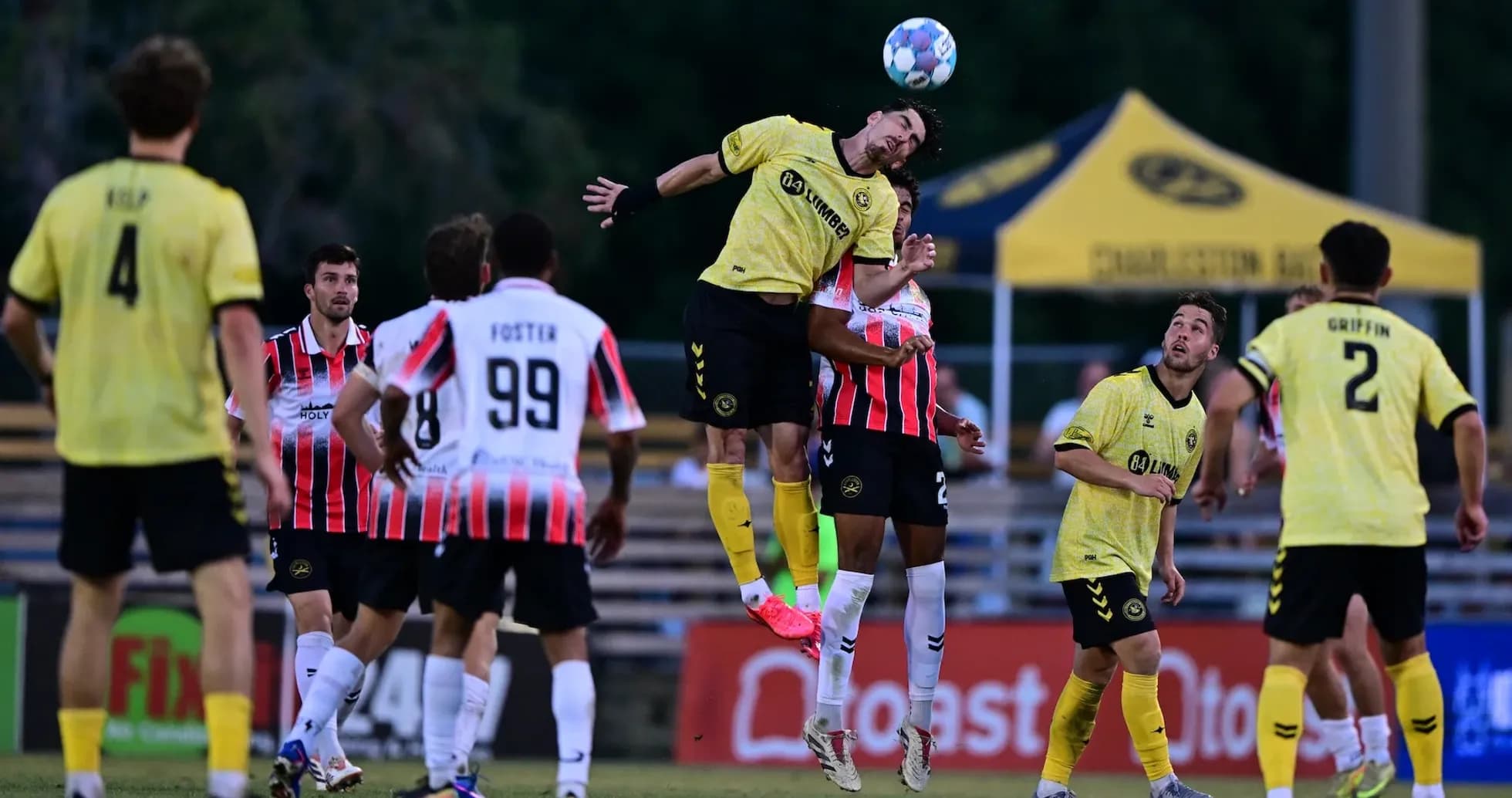
Under the lights at Patriots Point Soccer Complex, Charleston Battery and Pittsburgh Riverhounds played out 120 minutes of stalemate football, only for the hosts to finally bend the narrative their way from the penalty spot, edging the shootout 4–2. Following this result in the USL League One Cup Group Stage, the numbers and lineups paint a story of a Battery side whose seasonal dominance was tested by a Riverhounds team still searching for an away identity.
I. The Big Picture – Group 6 power vs. away fragility
Heading into this game, Charleston were the clear Group 6 standard-bearers. They sat 1st with 8 points and a goal difference of 7, built on an overall record of 3 wins, 1 draw and 0 defeats, and an attacking profile that looked ruthless on their travels: 6 away goals from 2 matches at an average of 3.0, while still finding the net at home at 1.0 per game. Defensively, they had conceded just 1 goal overall, with a total average of 0.3 against and a perfect home record of 0.0 goals conceded.
Pittsburgh arrived in a very different state. Their Group 6 standing – 3rd with 5 points and a goal difference of -1 – spoke to inconsistency and imbalance. Overall they had 1 win and 2 defeats, scoring 4 goals at an average of 1.3 while allowing 3 at an average of 1.0. The split was stark: at home, they had been impressive, scoring 3.0 and conceding 0.0; away, they had managed just 0.5 goals for and allowed 1.5, losing both matches on their travels.
Against that backdrop, a 0–0 after 120 minutes, decided only from the spot, feels like a moral victory for the Riverhounds’ defensive structure – but also an affirmation of Charleston’s resilience and tournament nous.
II. Tactical Voids and Discipline – Edges in the margins
There were no listed absentees, so both coaches could lean fully into their preferred personnel profiles, even if the formations were not explicitly defined. Ben Pirmann’s Charleston XI looked like a balanced spine: J. Berner in goal, a defensive line anchored by D. Martinez, G. Smith, J. Akpunonu and N. Messer, and a midfield built around the energy of K. Pakhomov and S. Suber with the creative thread of E. Ycaza. Up front, the combination of M. Foster, L. Blackstock and M. Berry hinted at vertical running and penalty-box presence.
Rob Vincent’s Riverhounds answered with their own structural clarity. M. Sheridan guarded the posts, screened by a back unit including P. Barnes, V. Souza, O. Mikoy and L. Kelp. In midfield, the technical craft of E. Goldthorp and R. Mertz was married to the industry of D. Griffin and C. Ahl, while S. Bassett and T. Amann offered movement between the lines and in behind.
From a disciplinary standpoint, the season data suggested the real battle would be fought in the middle third of the second half. Charleston’s yellow-card profile showed a clear spike between 46–60 minutes, where 50.00% of their cautions have been picked up. Pittsburgh mirrored that volatility: 42.86% of their yellows also arrive in that same 46–60 window. Add in the Riverhounds’ red-card flashpoint – 100.00% of their reds this season have come in the 76–90 range – and this fixture was always likely to tighten and fray just as legs tired and space opened.
That pattern fits the narrative of a match that remained goalless but grew increasingly tense, with both sides having to manage not only fatigue across 120 minutes but also the risk of a single mistimed challenge tilting the tie.
III. Key Matchups – Hunter vs Shield, and the engine rooms
Hunter vs Shield
Charleston’s season-long attacking “hunter” has been their collective ruthlessness, particularly away from home where they average 3.0 goals. At home, their 1.0 goals-for average is more modest, but when paired with a defensive “shield” that has yet to concede at Patriots Point, it creates a suffocating platform. In total this campaign, they have scored 7 and conceded 1, a profile of control rather than chaos.
Pittsburgh’s shield on their travels has been more porous – 3 goals conceded in 2 away games, at 1.5 per match – but this night they managed to blunt a Battery side that usually finds a way. Holding Charleston to 0 in regulation and extra time is a significant outlier against the hosts’ seasonal averages.
On the flip side, the Riverhounds’ own “hunter” has been largely a home phenomenon: 3 goals from their single home fixture at an average of 3.0, compared with 0.5 on their travels. Against a Charleston defence that averages 0.0 conceded at home and 0.5 away, the Riverhounds’ frontline of S. Bassett and T. Amann, supported by C. Ahl, were always going to be fighting uphill for clear chances. The eventual 0–0 underlines just how firmly the Battery’s defensive identity held.
Engine Room – Playmakers vs Enforcers
In midfield, the contest was defined by contrasting but complementary pairs. For Charleston, K. Pakhomov and S. Suber provided the legs and aggression to protect the back line and spring transitions. Ahead of them, E. Ycaza’s presence between the lines was key to linking play to the front three of M. Foster, L. Blackstock and M. Berry, who thrive on early service and quick combinations.
Pittsburgh’s response came through the technical axis of E. Goldthorp and R. Mertz, with D. Griffin adding bite and coverage. Their task was to slow Charleston’s tempo, deny vertical passes into Berry’s feet and cut off the wide channels for Foster and Blackstock. The fact that the Battery, who have failed to score in 0 matches overall this season, were finally held scoreless across 120 minutes suggests the Riverhounds’ engine room executed that brief with discipline.
On the benches, both sides had options to tilt the balance. Charleston could call on the defensive security of C. Allan and the fresh legs of A. Cabrera, D. Kuzemka and A. Hughes. Pittsburgh’s depth included the attacking threat of A. Dikwa and the energy of M. Viera and B. Larsen, plus structural cover from J. Walti and J. Garcia. In a match that went the distance, those substitute vectors – [IN] replaced [OUT] – would have been about preserving intensity as much as changing shape.
IV. Statistical Prognosis – Why penalties felt inevitable
From an Expected Goals lens – even without explicit xG values – the pre-match profiles pointed toward a low-scoring but territorially controlled Charleston performance. The hosts’ total average of 2.3 goals for against 0.3 against, combined with Pittsburgh’s total averages of 1.3 for and 1.0 against, suggested a narrow home win on the balance of probabilities.
Yet the Riverhounds’ clean-sheet capability at home (1 match, 0.0 conceded) hinted that, structurally, they could organize a compact block when required. Translated to an away context and layered over their disciplinary risk in the 76–90 band, the likeliest paths were either a late Charleston breakthrough or a deadlock stretched to extra time.
Instead, both defences held. Charleston maintained their perfect home record of not conceding in open play, while Pittsburgh produced their best away defensive display of the campaign. When the shootout finally came, it merely amplified the underlying theme: the Battery are built on control, resilience and a capacity to hold their nerve. The Riverhounds, still winless away and with a negative goal difference overall, showed they can now add stubbornness on their travels to their growing list of traits – but in a tournament defined by fine margins, Charleston’s penalty composure was the final, decisive statistic.