Celtic’s Champions League Collapse: A Grim Reality Check
Six attempts in eight years. Six failures. Celtic’s Champions League story has hardened into a grim routine – and this might be the worst chapter yet.
They had this tie won. Or so it seemed.
Three goals up from the first leg in Glasgow. Another goal in Linz to stretch the aggregate lead to 4-0. With an hour gone, Celtic still held a three-goal cushion. They stood on the brink of the group stage.
Then the floor gave way.
LASK battered them in the second half, wave after wave of attacks crashing into a Celtic side that shrank instead of standing tall. The equaliser on 90 minutes, to make it 4-4 on aggregate, felt less like a twist and more like an inevitability. The Austrians’ fifth – the winner – simply confirmed what the entire second half had been screaming.
This was a collapse, not a hard-luck story.
From perfect start to brutal reality
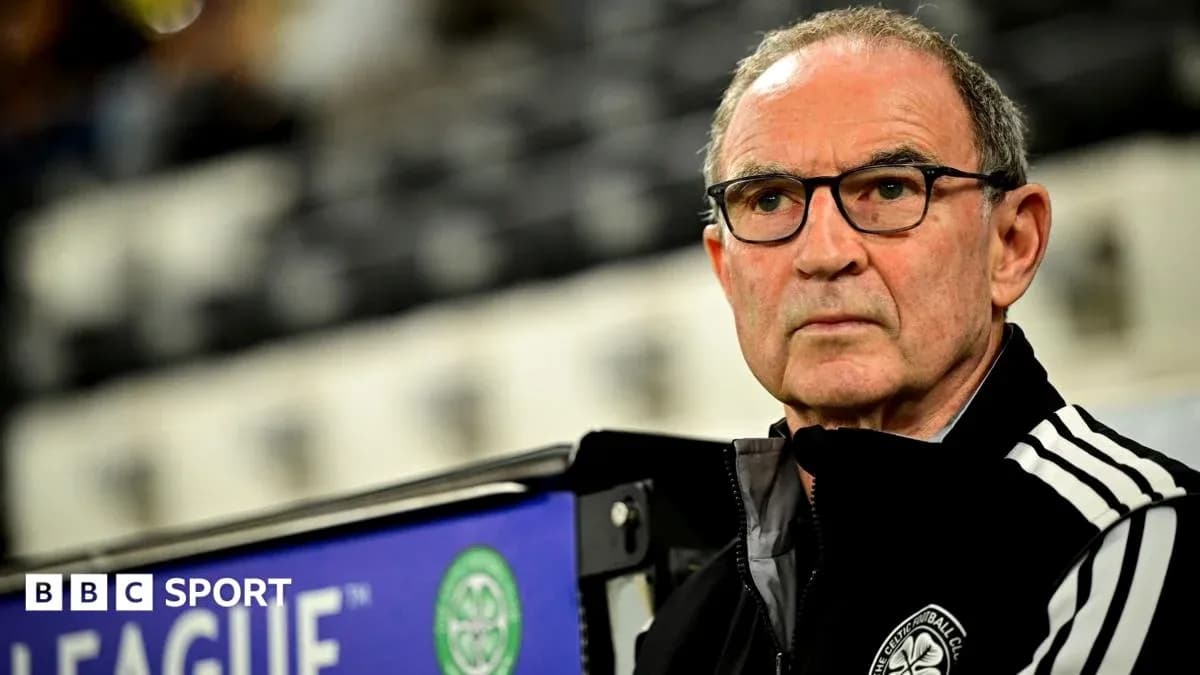
Martin O’Neill’s team had opened the season in cruise control. Four competitive wins, 13 goals scored, optimism flowing. The narrative was tidy: the old European scars, finally healing.
Linz shredded that script.
Captain Callum McGregor did not sugar-coat it. He said Celtic looked “scared” and “passive” as LASK turned up the pressure. The midfield vanished. The composure went with it.
Benjamin Nygren, Auston Trusty and Luke McCowan all made errors that led directly to goals. Each mistake chipped away at Celtic’s authority. Each one emboldened LASK.
By full-time, Celtic’s back line resembled something thrown together in a training drill, not a Champions League qualifier. Third-choice right-back Anthony Ralston. Trusty, who had missed training through illness. Academy defender Dane Murray, still untested at this level. Liam Scales shunted out of position at left-back.
It looked like a patched-up defence. It played like one too.
O’Neill fronted up and said the responsibility was his. Former Celtic captain Scott Brown, speaking to BBC Scotland, felt the manager was shielding his players.
“I feel for Martin because he's taking full responsibility,” Brown said. “I've been in Martin's situation. When you get humiliated in a game, you need to take that pressure off the players because in a week's time they've got another game.”
Depth exposed, strategy questioned
Brown’s sympathy came with a warning. In his view, Celtic’s depth is nowhere near the level required for Europe’s elite stage.
“The substitutes aren't Martin's players,” he said. “The strength and depth in areas still needs a little bit of quality because the players that came on didn't hit the same level as the ones that went off.”
The recruitment picture is muddled. Celtic have spent heavily on forwards Kasper Hogh and Camilo Duran, and added midfielder Mika Baur and winger Haissem Hassan. On paper, ambition. On the pitch, imbalance.
At the same time, they sold Daizen Maeda and Arne Engels, two key figures, to Ipswich Town and West Ham United. Former Celtic striker Chris Sutton publicly questioned the timing of those departures before such a defining qualifier. Brown agreed that Engels’ absence loomed large.
“What they're missing is probably another physical centre-midfielder that can be alongside [McGregor] in there to help him out,” Brown said.
“Because Arne Engels is a huge miss physically, not just for the battle, but his legs and running power as well, getting in behind, but his mentality as well.”
Celtic did not just lose a player. They lost a presence in the middle of the pitch on the very night they most needed it.
Fans turn on board, players and manager
The anger from supporters has been raw and direct.
“Callum McGregor says we'll now see what people are made of. Bit late,” wrote Gerry. “We are not a Champions League club. Simple. The board are a shambles and responsible for the club's failures again and again.”
Eamonn called the defeat “shocking but not surprised”, branding the current squad the product of “four or five disastrous windows”. Four recent signings, he argued, were never going to undo years of drift.
Martin – another fan – went straight for the club’s long-term strategy: “We are a club that have a board that wait until we get into the Champions League before spending any meaningful cash when we actually need a board that spends meaningful cash to ensure we have the best possible chance of negotiating these horrible qualifiers. Celtic were dead on their feet at the end - one of the worst results and performances in our modern history.”
On the pitch, only one man escaped serious criticism. “Viljami Sinisalo is the only player who showed up, everyone else was a passenger,” said Patrick, who called the defeat “another wasted effort” and wondered aloud about the odds on O’Neill being gone by Christmas.
Danny echoed the theme: “Sinisalo was great, but our lack of depth and quality was harshly exposed. We scored some screamers last week and got away with a couple. Reality came back to bite us. Credit to LASK.”
Paul’s verdict cut to the core of the tactical confusion. “Playing like that, it's probably best we're not in the Champions League,” he wrote, before insisting McCowan “should never get another game for Celtic” and that several others should be moved on. “Martin O'Neill needs to take his share of the blame for this. Team didn't know whether to go for it or defend.”
The frustration is not just about one tie. It is about a pattern. Another August, another inquest.
The cost of failure
The emotional cost is obvious. The financial hit might be even more punishing.
When Celtic reached the Champions League play-off round in 2024-25 before losing to Bayern Munich, their revenue of £143m placed them among Europe’s top 60 clubs. That same season, Ipswich Town – the smallest financial player in the English Premier League – still posted £155m.
LASK, by contrast, last reported a turnover of just £42m. Yet it was the Austrian club celebrating at Celtic’s expense.
Football finance expert Kieran Maguire estimates that missing out on the Champions League this time will cost Celtic upwards of £20m.
“For every £100 generated in the Champions League in terms of prize money, it works out at about £22 in the Europa League and about £11 in the Conference League,” Maguire told BBC Sport Scotland.
“Celtic made about £45m in season 2024-25 when they got to the Champions League knockout play-off - that's total prize money, including the SPFL money, but it's still indicative of how successful the competition can be.
“Aston Villa, who won the Europa League last year, probably made somewhere in the region of £30-35m and at least they have the benefit of automatically qualifying for the Champions League.
“It is a blow for Celtic. If you look at their share price today, it is down about 4-5%, reflecting that impact on future revenues.”
Matchday income takes a hit too. Two years ago, Celtic charged £44 more for an adult four-game Champions League ticket package than for the following Europa League campaign. Corporate and hospitality prices stretched even further apart.
O’Neill has already admitted that transfer plans will need to be reassessed. Maguire expects sponsor bonuses to shrink as well.
“Celtic's fans will buy tickets whether it's Real Madrid or Raith Rovers,” he said. “But in terms of the prices that can be charged - especially for corporate and hospitality - it's a licence to name your own price when big European clubs come to town.”
That licence has just been torn up.
Scotland’s slide, and a narrow path back
This is not just Celtic’s problem. It is Scotland’s.
Not long ago, between 2021 and 2023, Scotland sat as high as ninth in UEFA’s coefficient table. That lofty position guaranteed the Premiership champions a direct ticket to the Champions League group stage. The runners-up only had two qualifying rounds to navigate.
That world has gone. The decline has been sharp. Scotland now sit 18th, and this season’s champions will start in the second qualifying round of the Champions League. The runners-up drop into the Conference League qualifiers.
Celtic’s implosion against LASK is a brutal symbol of that slide. It is not, though, the end of the road.
When Celtic reached the Champions League knockout play-off round in 2024-25, they collected 17.70 coefficient points. Rangers, by reaching the Europa League last 16 that same season, actually scored more – 19.750.
So Celtic’s demotion to the Europa League does not have to be a write-off. If they regroup and go deep, it can still lift Scotland’s standing.
The live coefficient table already has Scotland down in 19th. There is no immediate danger of falling further this season, but hopes of climbing back hinge on more than Celtic. Rangers, Hibernian and Motherwell all face crucial qualifiers for the Conference League on Thursday. Failure across that trio would stall any recovery.
The realistic short-term target is clear: get back into the top 15. Do that, and Scotland’s runners-up return to the Champions League pathway.
For Celtic, though, the question is more urgent and more local. After another European collapse, another financial hit and another furious fanbase, how many more August autopsies can this board, this manager and this squad survive?