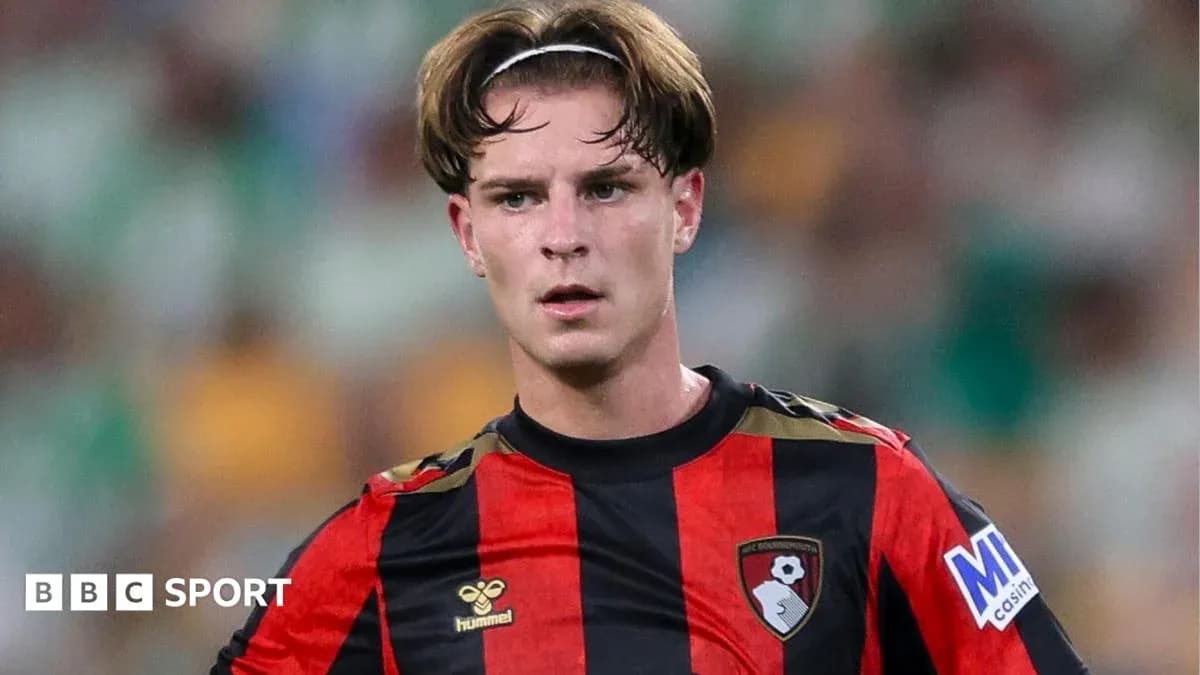
Bristol City’s Strategy: Cashing in on Alex Scott’s Rise
Bristol City stand to cash in again on Alex Scott’s rise – even if he never kicks another ball for them.
The Championship club built a lucrative safety net into the midfielder’s 2023 move to AFC Bournemouth, and owner Steve Lansdown has made it clear: if the Cherries eventually sell, the Robins will be waiting for their slice.
From Guernsey gamble to Premier League gold
Scott arrived at Ashton Gate from non-league Guernsey FC in December 2019, a teenager plucked from obscurity and backed with time, coaching and trust. Three-and-a-half years later, Bristol City sold him to Bournemouth in a deal worth about £25m.
Now he is an England Under-21 international, established in the Premier League and firmly on the radar of the division’s elite. Chelsea and Arsenal have both been linked, with Bournemouth rejecting a £64m offer from Chelsea last month.
Bournemouth insist Scott, under contract until 2028, is not for sale. The midfielder has already turned down a new deal, but the south coast club are holding their line.
Back in Bristol, they can afford to be patient.
“We’d never let a player go without a sell-on”
“We would never let a player depart without having a sell-on clause,” Lansdown told BBC Guernsey, spelling out the club’s strategy.
Bristol City did exactly that with Antoine Semenyo, who also moved to Bournemouth and has since joined Manchester City, triggering another payday for the Robins.
“So we'll be hopeful that Alex will be sold by Bournemouth at some point in the future because we will then get a share of some of the proceeds,” Lansdown said.
He would not reveal the specific percentage in Scott’s deal. But the principle is clear. Championship clubs like City rely on this model: identify talent, develop it, sell smart – and keep the tap running for the next move.
“You take a player on, you invest in their future, their training, their medicals and all the other aspects, and you want them to play for you,” Lansdown explained. “And if they can't play for you and you can move them on to somewhere else, you hopefully get a fee, an ongoing fee, if they go to a bigger club again.”
Play-off push powered by Premier League money?
Sell-on clauses are usually calculated on the profit a club makes. So if, for example, Bristol City held a 20% sell-on and Bournemouth eventually matched their reported £80m valuation, the Championship side could bank around £11m.
That kind of figure changes a season.
It would significantly bolster Bristol City’s push for the Championship play-offs and feed into Lansdown’s long-stated ambition: to turn the club into a serious Premier League contender, not just an occasional flirt.
The money would not just be about transfer fees. It would help underpin wages, infrastructure and the ability to hold on to their next Alex Scott a little longer.
Lansdown opens the door to new investors
Lansdown, who made his fortune as co-founder of financial giant Hargreaves Lansdown, became Bristol City chairman in 2002 after already establishing himself as majority shareholder. In 2012 he took control of Bristol Rugby as well, later uniting both clubs under the Bristol Sport umbrella, with Ashton Gate at the heart of the project.
Now, he is openly inviting fresh capital.
“I've made it perfectly clear that I've been looking for investment into Bristol City to go either alongside me or basically take me out of it at some point in the future,” he said.
“We're not at that point yet, but we're looking, we're talking to people and we'll see where it leads us.
“But it's a big business football and if we want to be at the top of the game we need to have that investment.”
That tension runs through every decision: ambition versus sustainability.
“Obviously, your supporter base wants you to spend money and wants you to be successful, that's the outside pressures,” Lansdown said. “The inside pressures are keeping a balanced budget as much as you possibly can.
“You can't really do that without injecting capital in there, so the amount of capital you put in there dictates how well you do.
“So the more people who get to invest into the club, and that's why I'm saying we're looking for new investment, the better chances you have of being successful.”
For now, Bristol City’s model hinges on developing and selling players like Scott. The next big bid for their former midfielder might not just reshape Bournemouth’s plans – it could help decide how far, and how fast, the Robins can climb.