Beşiktaş Secures Narrow Win Against Hradec Králové in Europa League
Hradec Králové’s 3-4-2-1 at Malsovicka arena was built around territorial pressure and wide overloads, but the tactical story of this Europa League 3rd Qualifying Round tie is how Beşiktaş, in a 4-1-4-1, absorbed that pressure, survived a red card, and still found a way to win 1-0 through structure and transitions.
David Horejs set Hradec Králové up with three centre-backs (F. Cech, F. Cihak, J. Uhrincat) and a four-man midfield band that pushed high early. The intent was clear from the opening minutes: compress the pitch, press Beşiktaş’s first line, and use the dual “tens” M. van Buren and T. Sloncik (initially supported by O. Mihalik) to receive between the lines. That front structure underpinned an aggressive attacking output: 9 shots on goal from a side with only 48% possession, plus 8 corners, shows a game plan geared towards direct penetration and set-piece volume rather than long passing sequences.
Beşiktaş, under Vincenzo Italiano, mirrored that by leaning into a controlled 4-1-4-1. The back four of K. Ouattara, E. Topcu, T. Djalo and M. Murillo was shielded by S. Ozcan as a single pivot, with an advanced midfield line of V. Cerny, J. Olaitan, O. Kokcu and I. Fakili behind lone forward Oh Hyeon-Gyu. With 52% of the ball, Beşiktaş’s priority was to stabilise circulation and draw Hradec Králové’s press out of shape, then attack the spaces behind the wing-backs. Their shot map (5 shots on goal, 11 off target, 6 blocked) reflects a team consistently reaching the final third but often forced into lower-quality or hurried efforts by the density of Hradec’s back line.
The disciplinary pattern shaped the tactical rhythm. Hradec Králové’s early yellow for Mick van Buren at 2' and another for Jakub Uhrinčať at 29' slightly tempered their aggression in duels, but did not change the overall high-press posture. Beşiktaş’s issues were more structural: K. Ouattara’s booking at 65' and then a second yellow plus red in the 71st minute forced an emergency reshuffle. Reduced to ten men, Italiano had to re-balance his defensive line and protect the flanks without his starting left-back. The immediate triple substitution at 76' — W. Ndidi (IN) for O. Kokcu (OUT), R. Yilmaz (IN) for I. Fakili (OUT), and S. Kilicsoy (IN) for V. Cerny (OUT) — was a clear tactical pivot: Ndidi added defensive ballast in midfield, R. Yilmaz offered fresh legs and defensive security on the flank, and Kilicsoy became a direct outlet in transition.
Horejs, by contrast, used his bench to maintain intensity and attacking thrust. J. Kucera (OUT) for D. Ludvicek (IN) at 42' and S. Dancak (OUT) for M. Valenta (IN) on 59' subtly rebalanced the midfield, injecting more energy and forward running. The key attacking switch came on 59' as well, when M. van Buren (OUT) made way for A. Umar (IN), giving Hradec a more vertical, pace-oriented threat up front. Later, T. Sloncik (OUT) for D. Trubac (IN) at 81' was a final attempt to refresh the creative zones behind the striker and sustain pressure against a ten-man Beşiktaş.
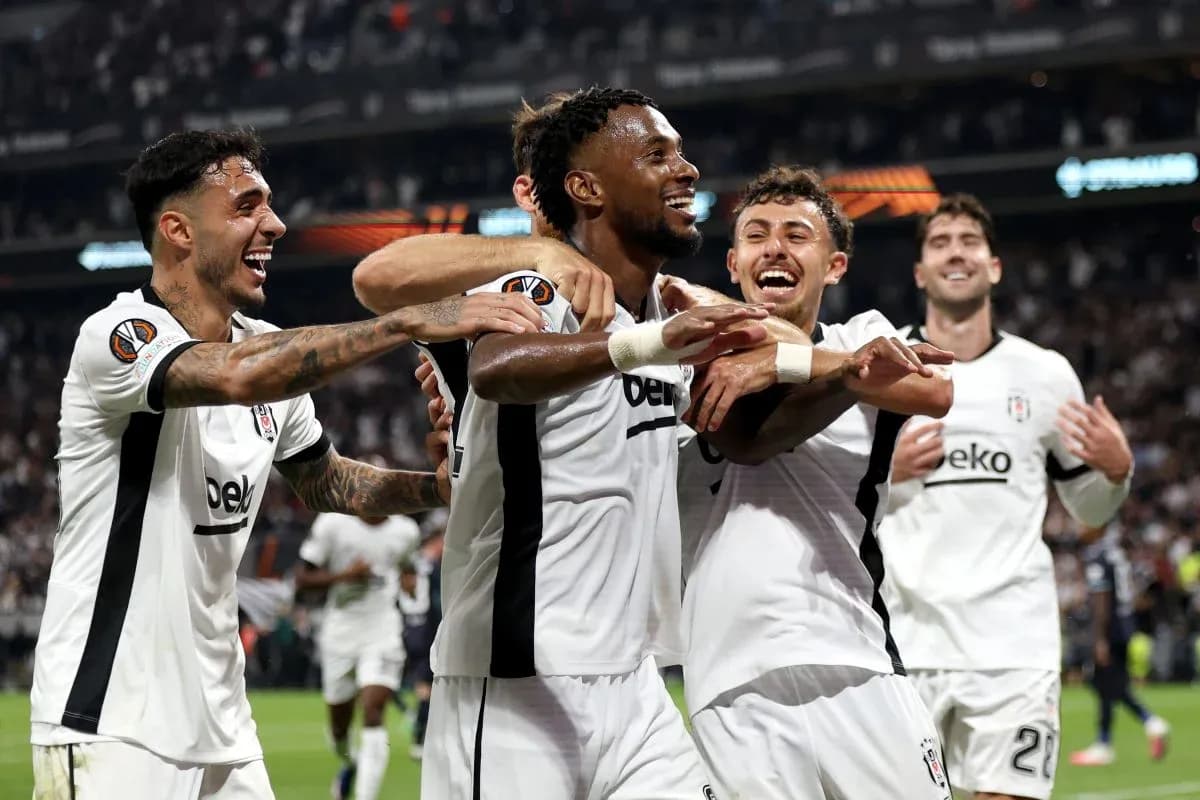
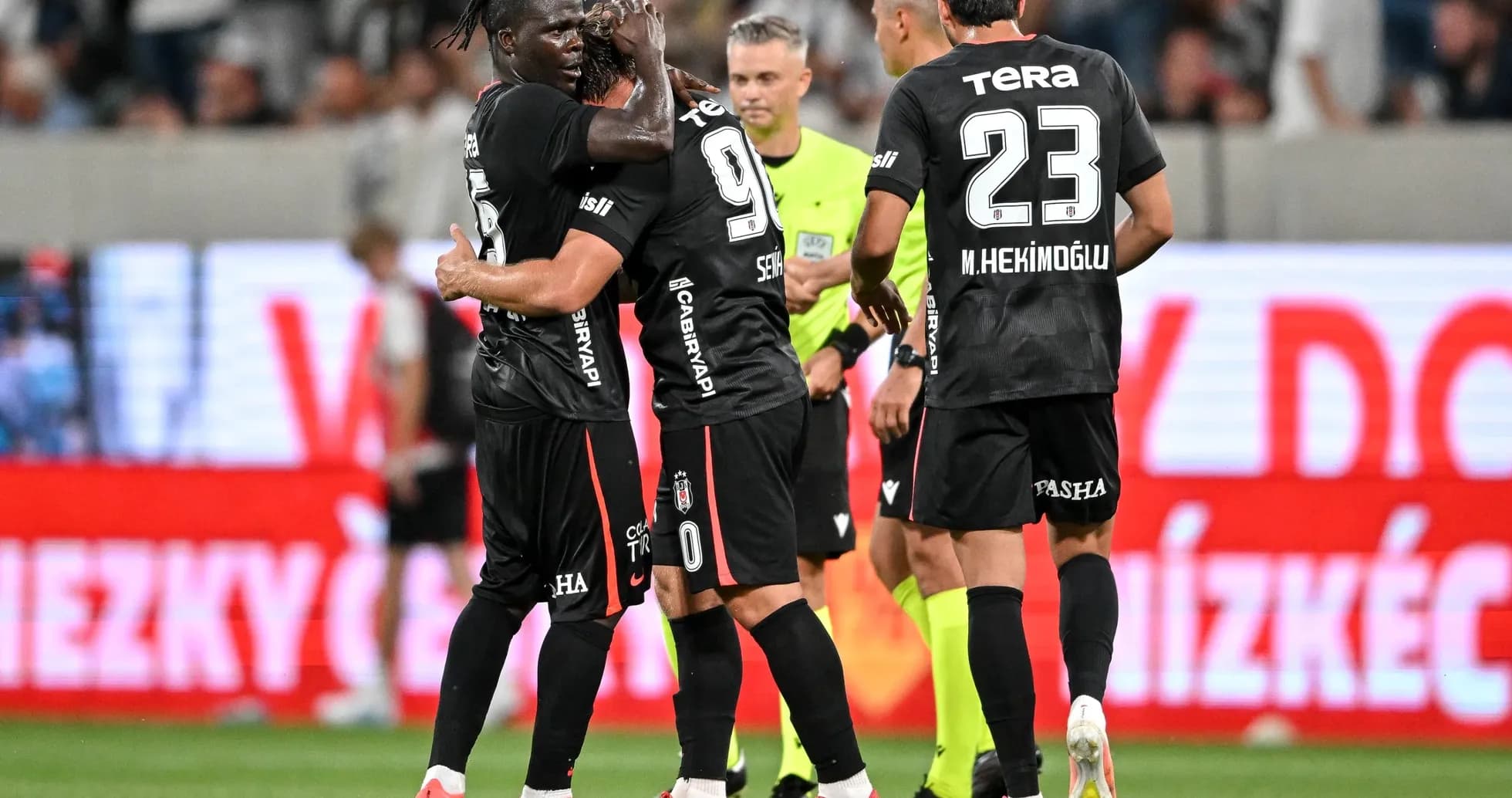
Yet the decisive moment belonged to Beşiktaş’s new attacking vector. At 80', S. Kilicsoy scored the only goal of the match, immediately validating Italiano’s transition-focused adjustment after the red card. With Hradec Králové pushing higher to exploit their numerical advantage, spaces opened for Beşiktaş to counter. Kilicsoy’s presence offered depth and a more direct running threat than the starting wide players, and the goal encapsulated Beşiktaş’s post-red-card strategy: compact mid-to-low block, then fast, vertical breaks once possession was regained.
Even with numerical superiority, Hradec Králové struggled to convert territory into clear breakthroughs. The statistic of 0 blocked shots for Hradec suggests most of their 9 efforts on goal were allowed to travel through to the goalkeeper or just wide, but the lack of recorded goalkeeper saves data prevents a detailed evaluation of A. Zadrazil’s (Hradec Králové) or A. Nubel’s (Beşiktaş) shot-stopping workloads. What is clear, however, is that Beşiktaş’s defensive structure, particularly after the red card, forced Hradec to rely heavily on volume rather than precision: lots of deliveries and efforts, but insufficient manipulation of the compact central block.
The card distribution (Hradec Králové 2 yellows; Beşiktaş 3 yellows, 1 red) underlines the different defensive demands. Beşiktaş’s wide defenders, especially Ouattara, were repeatedly exposed to one-on-one situations as Hradec’s wing-backs and inside forwards attacked the channels. The second-half bookings for Ouattara and Oh Hyeon-Gyu at 83' reflect a side increasingly forced into reactive defending. Nonetheless, the central axis, bolstered by Ndidi’s introduction, remained resilient enough to protect the box and allow Beşiktaş to see out the 0-1 scoreline despite playing with ten men for nearly 20 minutes.
Statistically, the match reads as a contrast between territorial initiative and scoreboard efficiency. Hradec Králové generated more shots on goal (9 vs 5), more corners (8 vs 5), and conceded more fouls (10 vs 6), consistent with a proactive, front-foot side chasing the game. Beşiktaş, with marginally more possession (52%) and a higher total shot volume when including off-target and blocked attempts, leveraged their technical quality to create enough dangerous moments, even if their finishing was often wasteful before Kilicsoy’s winner.
With expected goals and goals prevented not provided, the fine-grain quality of chances cannot be quantified, but the pattern is evident: Hradec Králové’s structure and substitutions produced sustained pressure without the final incision, while Beşiktaş’s tactical flexibility — especially after the red card — and the decisive use of their bench delivered a strategically hard-earned away win in the Europa League 3rd Qualifying Round at Malsovicka arena.