Beşiktaş Dominates Kauno Žalgiris 3-0 in UEFA Europa League
Beşiktaş’s 3-0 win over Kauno Žalgiris at Tüpraş Stadyumu was a textbook example of territorial dominance built from structure and intensity rather than chaos. The 4-1-4-1 chosen by Vincenzo Italiano gave Beşiktaş both width and control, while the visitors’ 4-2-3-1 was forced into a deep, reactive block that rarely escaped its own half.
The statistical profile is stark: Beşiktaş had 77% possession, 6 shots on goal, 8 shots off goal and 7 blocked shots, backed by 15 corner kicks. Kauno Žalgiris, by contrast, finished with 23% possession, no shots on goal, just 2 shots off goal and 1 blocked effort, plus only 2 corners. That imbalance frames the tactical story: Beşiktaş camped in the attacking half and attacked in waves; Kauno Žalgiris defended almost exclusively and could not convert their defensive work into any meaningful transition threat.
In Possession
In possession, Beşiktaş’s 4-1-4-1 behaved like a flexible 2-3-5. The back four of E. Topcu, M. Murillo, T. Djalo and R. Yilmaz stayed high and compact, allowing S. Ozcan, the lone pivot, to operate as the stabilising reference in front of them. With Ozcan anchoring, the advanced line of V. Cerny, J. Olaitan, O. Kokcu and L. Trossard could position themselves aggressively between and beyond the lines, while Oh Hyeon-Gyu stretched the last line vertically.
The early goals reflect that structure. At 6’, Oh Hyeon-Gyu finished a move assisted by R. Yilmaz, a typical pattern where the left-back advanced to provide width and final-third delivery. At 12’, M. Murillo scored, again from a R. Yilmaz assist, underlining how Beşiktaş’s full-backs were not just auxiliary passers but primary chance creators. Repeatedly, Beşiktaş used their territorial superiority and 15 corners to pin Kauno Žalgiris back, with the 7 blocked shots illustrating how frequently the home side managed to shoot from dangerous zones, only to be met by desperate last-ditch defending.
Kauno Žalgiris Setup
Kauno Žalgiris’s 4-2-3-1, with V. Slivka and A. Kalik as the double pivot and G. Debeljuh as the nominal centre-forward, was theoretically set up to offer counter-attacking potential through A. Benchaib and L. Krekovic in the band of three. In practice, the lack of sustained possession (23%) and the high foul count (16) reveal that their main function became damage limitation. The front four were pushed so deep that when the ball was recovered, they were too far from goal and too isolated to mount coherent transitions, leading to only 2 shots off target and none on goal.
Key Moments
The penalty converted by O. Kokcu at 59’ to make it 3-0 effectively sealed the tactical contest. By that stage, Beşiktaş had complete control of rhythm and territory, and Italiano began to manage minutes and roles. At 46’, V. Cerny (OUT) was replaced by I. Fakili (IN), a like-for-like change that preserved the 4-1-4-1 structure while injecting fresh energy between the lines. Around the hour, J. Olaitan (OUT) made way for A. Hadziahmetovic (IN) and Oh Hyeon-Gyu (OUT) for D. Vlahovic (IN) at 60’, subtle shifts that allowed Beşiktaş to maintain their pressing height and box presence without losing central stability.
Later, at 72’, L. Trossard (OUT) was replaced by M. Rashica (IN), ensuring the left flank continued to offer 1v1 threat and crossing quality. At 81’, R. Yilmaz (OUT) was substituted by K. Ouattara (IN), a move that preserved the attacking thrust from full-back while protecting one of the game’s key creative outlets. None of these changes altered the basic positional map; instead, they kept intensity high and prevented Kauno Žalgiris from exploiting any fatigue-induced gaps.
Adjustments
Eivinas Cerniauskas’s adjustments were more reactive. At 46’, J. Moutachy (OUT) was replaced by L. Kastrati (IN), and G. Debeljuh (OUT) by M. Burba (IN), hinting at a desire for more direct running and fresh legs in the back line and attack. Further changes followed: A. Kalik (OUT) for Renan Oliveira (IN) at 62’, L. Krekovic (OUT) for F. Ourega (IN) at 63’, and finally A. Benchaib (OUT) for I. Fiolic (IN) at 79’. Collectively, these substitutions cycled through attacking profiles, but without a platform of possession or field position, the structure remained pinned back and the front players were starved of usable service.
Discipline and Fouls
Discipline also reveals the territorial imbalance. Kauno Žalgiris collected 4 yellow cards, Beşiktaş just 1, reflecting how often the visitors had to resort to interventions to halt Beşiktaş’s circulation and counter-press. The fouls count – 16 for Kauno Žalgiris against 3 for Beşiktaş – matches the eye-test of a game where the hosts dictated the ball and the visitors chased it.
The absence of shots on goal for Kauno Žalgiris meant that the statistical blocks for goalkeeper saves and goals prevented remain unused; the contest was decided almost entirely in front of their own box rather than in either penalty area. For Beşiktaş, the lack of recorded goalkeeper actions underscores how effectively their high line and midfield screen suppressed any direct threat long before it reached the last man.
Conclusion
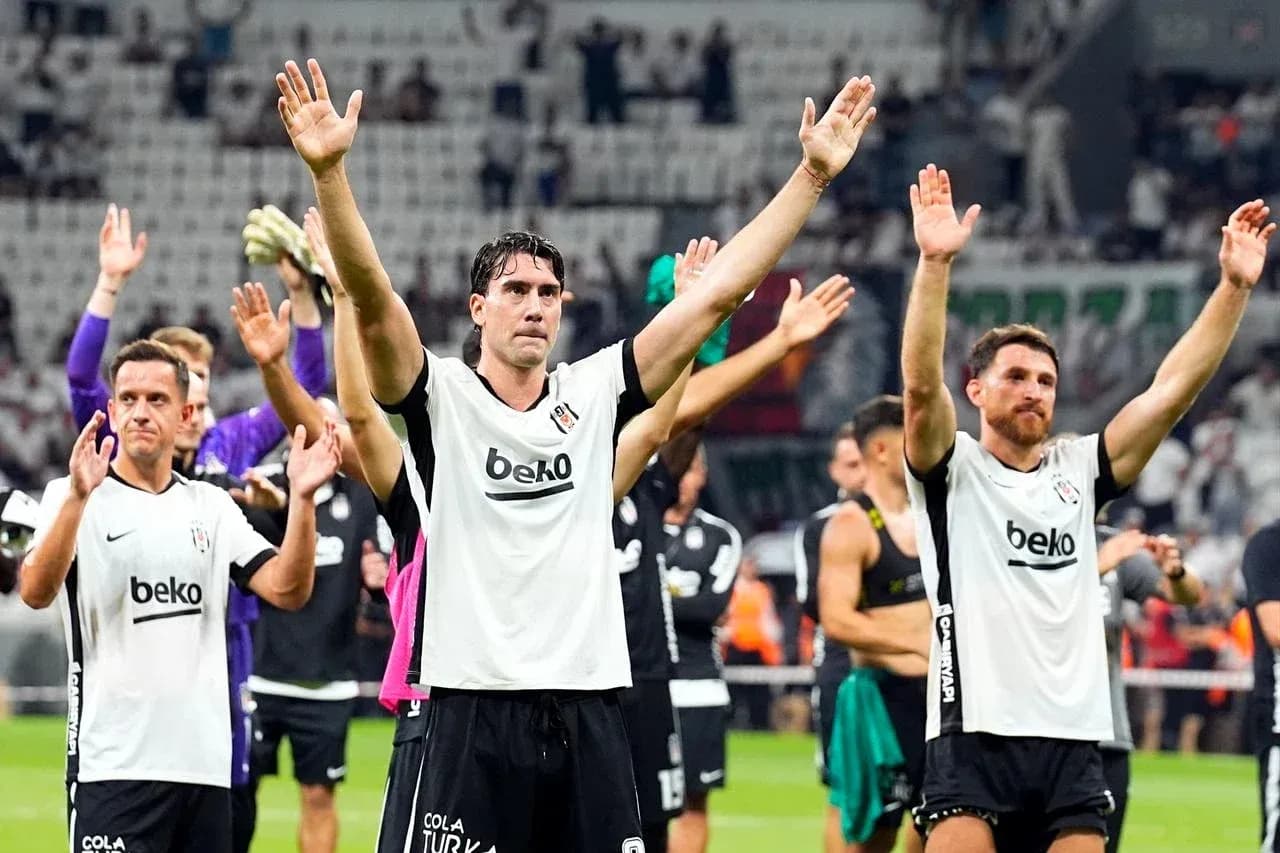
Overall, Beşiktaş’s 3-0 win in this UEFA Europa League Play-offs fixture was less about individual brilliance and more about systemic superiority. The 77% possession, 6 shots on goal, 7 blocked shots and 15 corners illustrate a side that imposed its structure relentlessly. Kauno Žalgiris’s 23% possession, 0 shots on goal and 16 fouls tell the complementary story of a team trapped in a low block, unable to translate defensive work into attacking phases. From kickoff to final whistle, the tactical pattern barely shifted: Beşiktaş in command, Kauno Žalgiris enduring rather than contesting.