Beşiktaş Dominates FC Midtjylland in UEFA Europa League
Beşiktaş’s 1-0 win over FC Midtjylland at Tüpraş Stadyumu was a clinic in territorial control and structure rather than raw scoreline dominance. In this UEFA Europa League 2nd Qualifying Round tie, Vincenzo Italiano’s 4-1-4-1 suffocated a Midtjylland side reduced to ten men after just 15 minutes, translating 75% possession and a 28–5 shot count into a narrow but tactically emphatic advantage to take into the return leg.
The key structural feature for Beşiktaş was the single pivot in front of the back four. With S. Ozcan anchoring beneath a line of four attack-minded midfielders, the hosts consistently created a 3-2 or 2-3 base in build-up, depending on which full-back advanced. The back line of M. Murillo, T. Djalo, E. Topcu and R. Yilmaz held an aggressive starting position, compressing the pitch and allowing the midfield line of V. Cerny, J. Olaitan, O. Kokcu and I. Fakili to play almost permanently in Midtjylland’s half.
Numerically, the control was overwhelming. Beşiktaş completed 606 accurate passes from 685 total, against Midtjylland’s 146 from 237. That volume and accuracy, combined with 75% of the ball, meant the home side could recycle patiently and immediately counter-press any loss. The shot profile underscores the territorial siege: 28 total attempts, with 15 from inside the box and 13 from outside. They forced 5 blocked shots and hit 7 on target, constantly testing the Danish block and goalkeeper E. Olafsson (FC Midtjylland), who registered 6 saves and was the primary reason the margin stayed at a single goal.
Decisive Tactical Moment
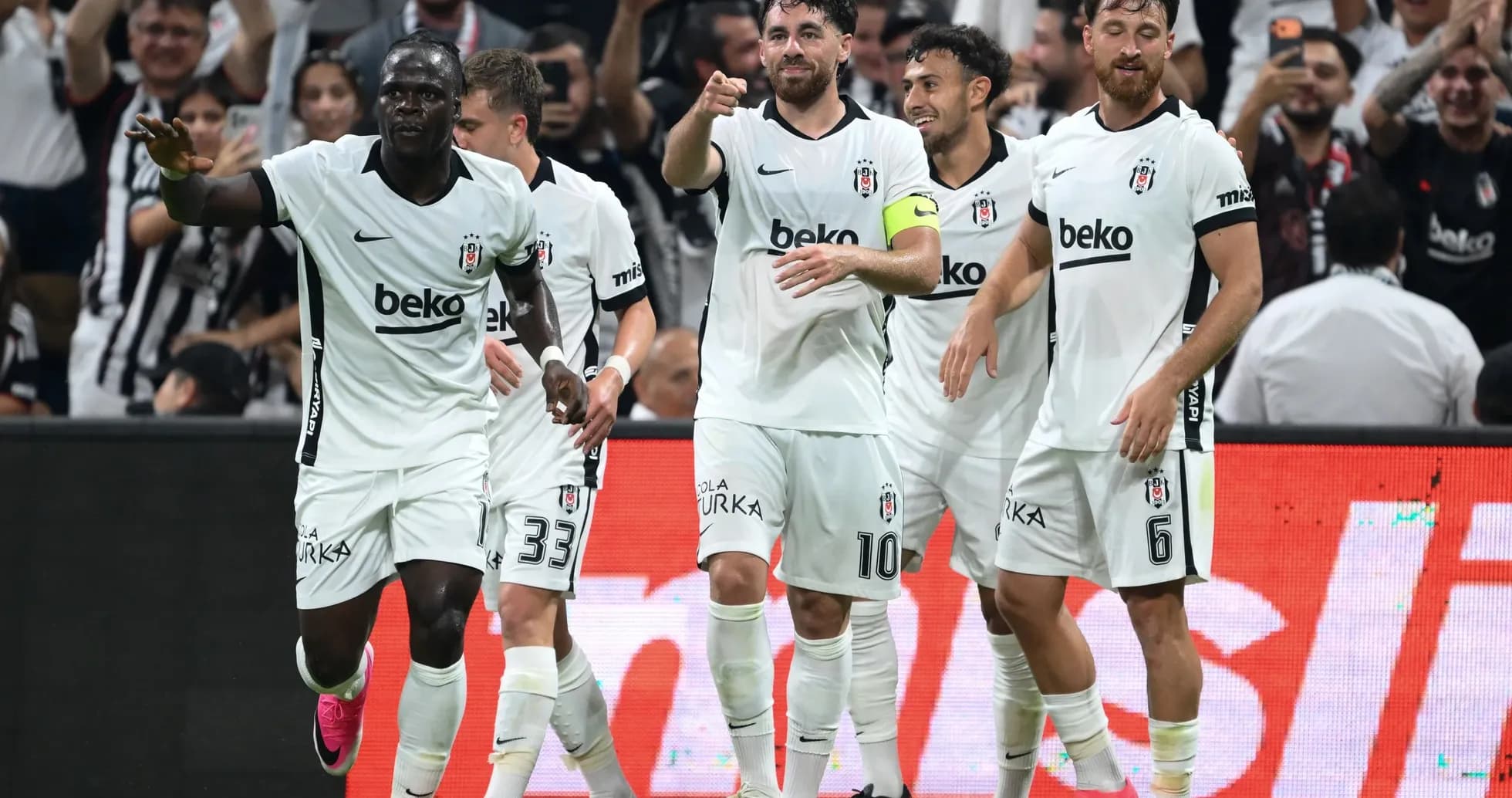
The decisive tactical moment came in the 26th minute, when O. Kokcu struck the only goal, assisted by V. Cerny. The pattern reflected the broader plan: Beşiktaş using their wide midfielders to stretch the 10-man 4-3-2/4-4-1 shape Midtjylland adopted after Friday Etim’s early red card, then attacking the half-spaces. Cerny’s contribution from the right side was emblematic of Italiano’s demand for width and final-third craft, drawing Midtjylland’s defensive line horizontally and opening the central lane for Kokcu.
Off the ball, Beşiktaş’s pressing was proactive but calculated. With such a heavy possession advantage, the main defensive task was counter-pressing rather than deep defending. The hosts committed only 12 fouls, indicating control rather than desperation. Their rest-defense structure—four defenders plus Ozcan—was rarely broken, limiting Midtjylland to just 5 shots (3 inside the box, 2 from distance) and a single effort on target. A. Nubel (Beşiktaş) had to make only 1 save all night, a reflection of how far from goal most of Midtjylland’s possession and transitions were forced to occur.
Midtjylland’s Tactical Shift
For Midtjylland, the early red card completely reshaped the tactical picture. Starting in a 4-3-3 with Franculino and F. Etim up front and a midfield of P. Billing, P. Bravo and V. Byskov, Mike Tullberg’s side initially aimed to compete in central areas and threaten in transition. Once reduced to ten men, they were compelled into a low, compact block with minimal attacking ambition. Their 25% possession, 237 total passes and 146 accurate passes show how rarely they could sustain sequences under Beşiktaş’s pressure.
Defensively, though, Midtjylland were disciplined in their own box. They allowed 15 shots inside the area but managed 3 blocked efforts and forced Beşiktaş into 16 shots off target. The back line of R. Kristensen, Lee Han-Beom, M. B. Sorensen and V. Bak, shielded by a hardworking midfield, narrowed the central channels and often conceded space in wide zones, trusting their central defenders to deal with crosses and cutbacks. Olafsson’s 6 saves were decisive in preserving a scoreline that keeps the tie alive.
The set-piece battle also reflected the flow: Beşiktaş earned 5 corners to Midtjylland’s 2, another indicator of territorial pressure. Yet despite that, they could not convert dead-ball dominance into further goals, partly due to Midtjylland’s compact zonal structure and strong first-contact defending.
Transition and Substitutions
In transition, Midtjylland’s threat was minimal. With only 1 shot on goal and 5 total attempts, their 4-3-3 was effectively reduced to a 4-4-1 or 4-5-0 block, with sporadic outlets rather than sustained counters. The low foul count (9) and absence of yellow cards suggest they defended more through positional discipline than repeated tactical fouling, but it also hints at how little they were able to step out and engage high.
Substitutions from Italiano were about managing energy rather than changing the game’s structure. With the hosts already in full control, the changes around the hour and beyond maintained the 4-1-4-1 framework and the same principles: wide occupation, high line, and constant circulation to probe a tiring ten-man defense. Tullberg’s substitutions, by contrast, were reactive and aimed at shoring up the block and adding fresh legs to chase without the ball.
Overall, Beşiktaş’s 1-0 win was a textbook example of how a possession-dominant side should manage a numerical advantage in Europe: compress the field, protect rest-defense, and relentlessly work the ball into dangerous zones. The only tactical criticism is the lack of additional goals to reflect their 28-shot, 7-on-target supremacy. For Midtjylland, the tie remains salvageable thanks to Olafsson’s performance and the resilience of their defensive structure, but the second leg will demand a radically different attacking plan if they are to overturn Beşiktaş’s narrow yet thoroughly deserved first-leg advantage.