Bayern Munich Claims Supercup Victory Over Dortmund
Bayern Munich have their first piece of silverware for 2026/27 – and they claimed it in Dortmund’s backyard. A 2-1 win over Borussia Dortmund in the Franz Beckenbauer Supercup at Signal Iduna Park brought an early statement from the champions, and a few sharp reminders for both sides about where they stand.
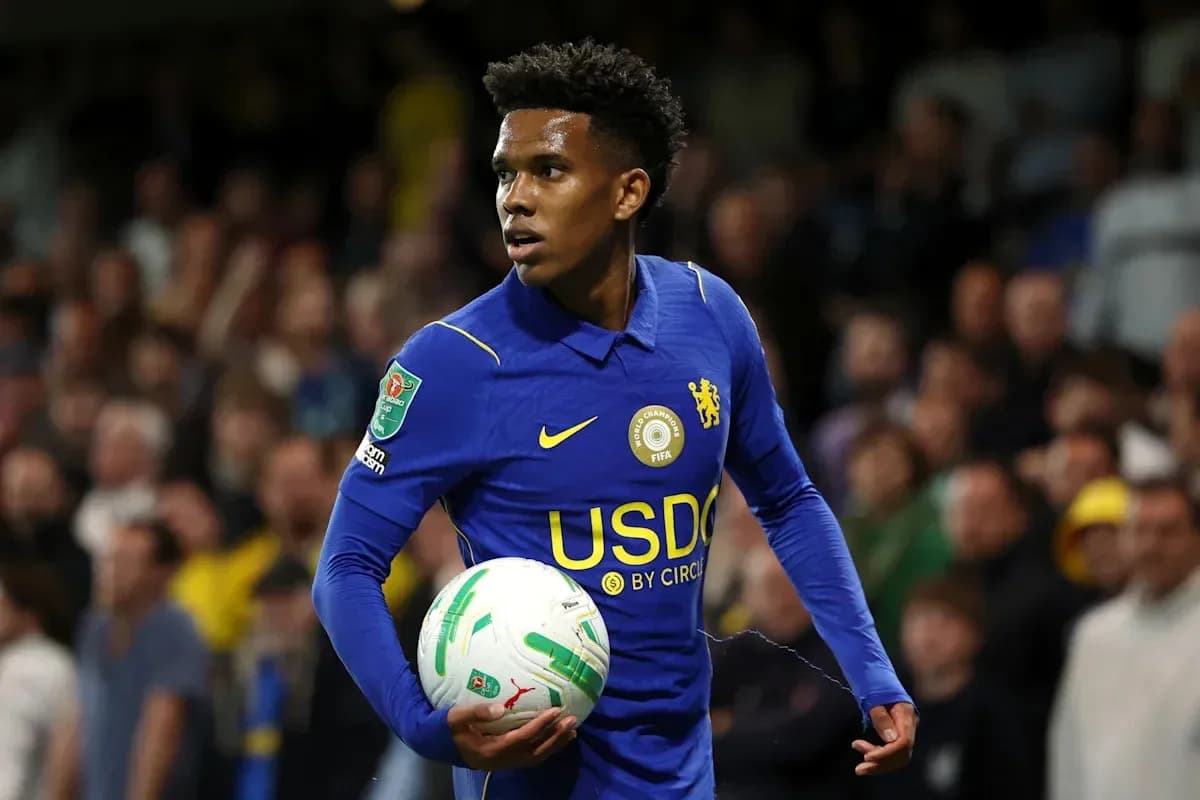
Nathaniel Brown (28') and Michael Olise (45+1') put Bayern 2-0 up by the break, a lead that felt fully deserved. Dortmund, flat and imprecise early on, only truly woke up after the interval and finally broke through via substitute Fabio Silva (75'). By then, Bayern had already done enough.
What lingered after the final whistle, though, went far beyond the scoreline.
Neuer: still world-class, still a risk
Manuel Neuer has built a career on walking the tightrope. His daring with the ball helped redefine goalkeeping. It still helps Bayern progress up the pitch. It also now regularly drags them to the edge of disaster.
The pattern has become too familiar. The glaring Champions League error in Madrid in April – that gift-wrapped pass to Arda Güler – was not an isolated lapse. It was a signpost.
In Dortmund, the warning lights flashed again.
After 15 minutes, Neuer fizzed a sloppy pass into Min-jae Kim, under pressure and facing his own goal. The ball almost handed BVB a free run at the opener. Only Kim’s sharp reaction spared his goalkeeper another headline-making mistake.
Late on, Neuer went one better – or worse. A simple backpass from Kim, a simple clearance available. Instead, he tried to let Jobe Bellingham run past him with a feint behind his standing leg. The trick failed, Bellingham pounced, and suddenly Dortmund had a golden chance to level. Neuer hurled himself at the shot and saved brilliantly, but he was cleaning up his own mess.
The contradiction is stark. On the line, he remains elite. Early in the second half, he produced a stunning reflex stop from close range to deny new signing Konstantinos Karetsas, a save that looked straight out of his prime years. His reactions are still sharp enough to win matches.
But the balance of risk and reward with the ball at his feet is shifting. Bayern know it. Neuer himself hinted again that this could be his final season. Waiting behind him is Jonas Urbig, 23, already earmarked as the heir and expected to see more minutes this year.
The plan is clear: Neuer for the biggest nights, Urbig eased in around him. Yet with every nervy touch and misjudged pass, the question grows louder. At what point does Bayern’s future No. 1 need to be trusted in the biggest games too?
Brown, the “left-back” who ran Bayern’s No. 10 role
Bayern signed Nathaniel Brown as a left-back. On Saturday, he lined up behind Harry Kane as a No. 10 – and scored the opener in Dortmund.
With Jamal Musiala absent as he continues to deal with neurological issues that caused worrying collapses in recent friendlies, and new arrival Ismael Saibari not yet ready to start, many expected Tom Bischof to take the creative role. Vincent Kompany went another way.
He pushed Brown into the heart of the attack, and the experiment worked.
Brown drifted smartly between the lines, pressed aggressively and, crucially, took his big moment. His first-half strike, hit with conviction, set Bayern on their way and gave the 23-year-old his first trophy with the club.
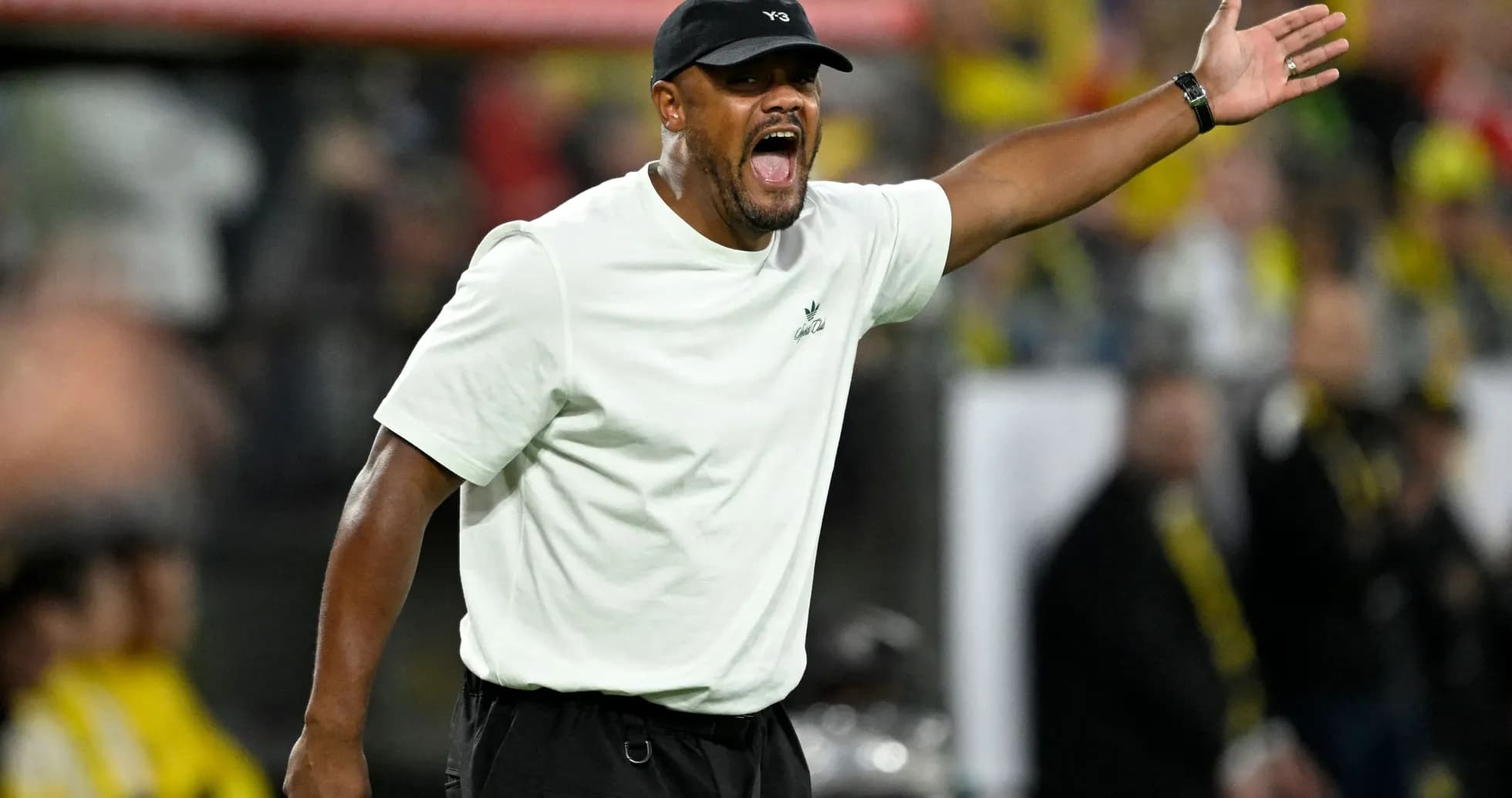
Kompany’s logic is clear. “For us, the spaces for full-backs are sometimes similar to those for a No. 10. He is unbelievably good between the spaces,” he told Sky after the game, pointing out that Brown’s versatility helped cover for the absences of Serge Gnabry, Lennart Karl and Musiala.
Brown is still learning Bayern’s patterns and the nuances of the role. A few moves broke down around him as he adjusted. But his performance underlined why the champions see him as far more than a conventional full-back. He can be a No. 6, as originally planned. He can be a No. 10, as pre-season hinted. He can be both in the same season.
He is not alone in that regard. Konrad Laimer can cover both defensive flanks and operate as a 6, 8 or even 10. Josip Stanisic can play either full-back role or tuck into central defence. For a Bayern side chasing trophies on multiple fronts, that kind of flexibility is no luxury. It is a weapon.
Kovac’s inverted wing-back gamble: promise and pain
On the opposite bench, Niko Kovac tried something of his own.
Dortmund started with left-footer Daniel Svensson on the right and right-footer Julian Ryerson on the left. The idea: wing-backs who could drive inside like wingers, threaten with shots and disguised passes, and drag Bayern’s back line out of shape.
“We always need a player from time to time who occupies someone out wide,” Kovac explained afterwards. With left on the left and right on the right, the play goes outside and the cross comes in. Switch them, and the cut inside is always on, mirroring what top teams get from their wide forwards.
At times, the tweak flickered. In the first half, Ryerson bent a dangerous cross from the left towards the far post with his stronger right foot, Ramy Bensebaini flicked it in, and Signal Iduna Park roared – only for the offside flag to cut the noise.
The structural downside appeared just as clearly. With the wing-backs on their “wrong” sides, the classic runs to the byline and natural-foot crosses were rare. One big chance summed it up: Bensebaini drilled low from the left, Svensson arrived centrally from the right but had to swing at it with his weaker right foot. He completely misjudged it. In that spot, Ryerson on his strong right would almost certainly have done more damage.
At half-time, Kovac abandoned the experiment. Svensson and Ryerson switched back to their usual flanks. The effect was immediate.
Dortmund’s attacks gained more depth, more direct running in behind, more conviction out wide. The move that led to Silva’s goal for 2-1 came straight from that change: Svensson, now on the left, burst to the byline and cut the ball back perfectly for the Portuguese forward to finish from close range.
Kovac’s tweak offered a glimpse of a more fluid, unpredictable Dortmund. It also showed the cost: fewer natural wide actions, more awkward finishing situations, and a team that only really looked dangerous once the wing-backs returned to type.
Fabio Silva changes the mood – and the market?
If one Dortmund player altered his short-term outlook in this Supercup, it was Fabio Silva.
Serhou Guirassy, whose transfer rumours have cooled in recent weeks, started up front and endured the kind of evening that frustrated Dortmund last season. He worked, he pressed, he battled. He never truly threatened. Bayern’s centre-backs contained him, and he drifted out of the game.
After just over an hour, Kovac turned to Silva. The 24-year-old had shown flashes in his first BVB season. This time, he delivered impact.
For his goal, Silva dropped off the last line at just the right moment, found the pocket of space, and then finished ice-cold from close range. One touch, one clean strike, and suddenly Dortmund believed again.
The performance will not go unnoticed – not in Dortmund, and not elsewhere. Several clubs are pushing for Silva, with Real Betis currently seen as the most serious suitor. The forward himself is reportedly not fixed on staying, and BVB’s hierarchy would be open to a sale if the offer is right.
That is where the Supercup complicates things. Silva’s cameo strengthened his case for more minutes in his second Dortmund season. It also sharpened the dilemma. At this late stage of the window, can BVB afford to cash in and still find a replacement who offers the same spark in the box?
Bayern left with the trophy and the early-season authority. Dortmund left with questions – about their system, their forwards, and a substitute who might just have played himself into, or out of, the club’s plans.