Barcelona's Transition: Replacing Legends and Building for the Future
Barcelona know how to celebrate a European title. They also know how to live with loss. This summer, though, the goodbyes cut deeper than usual.
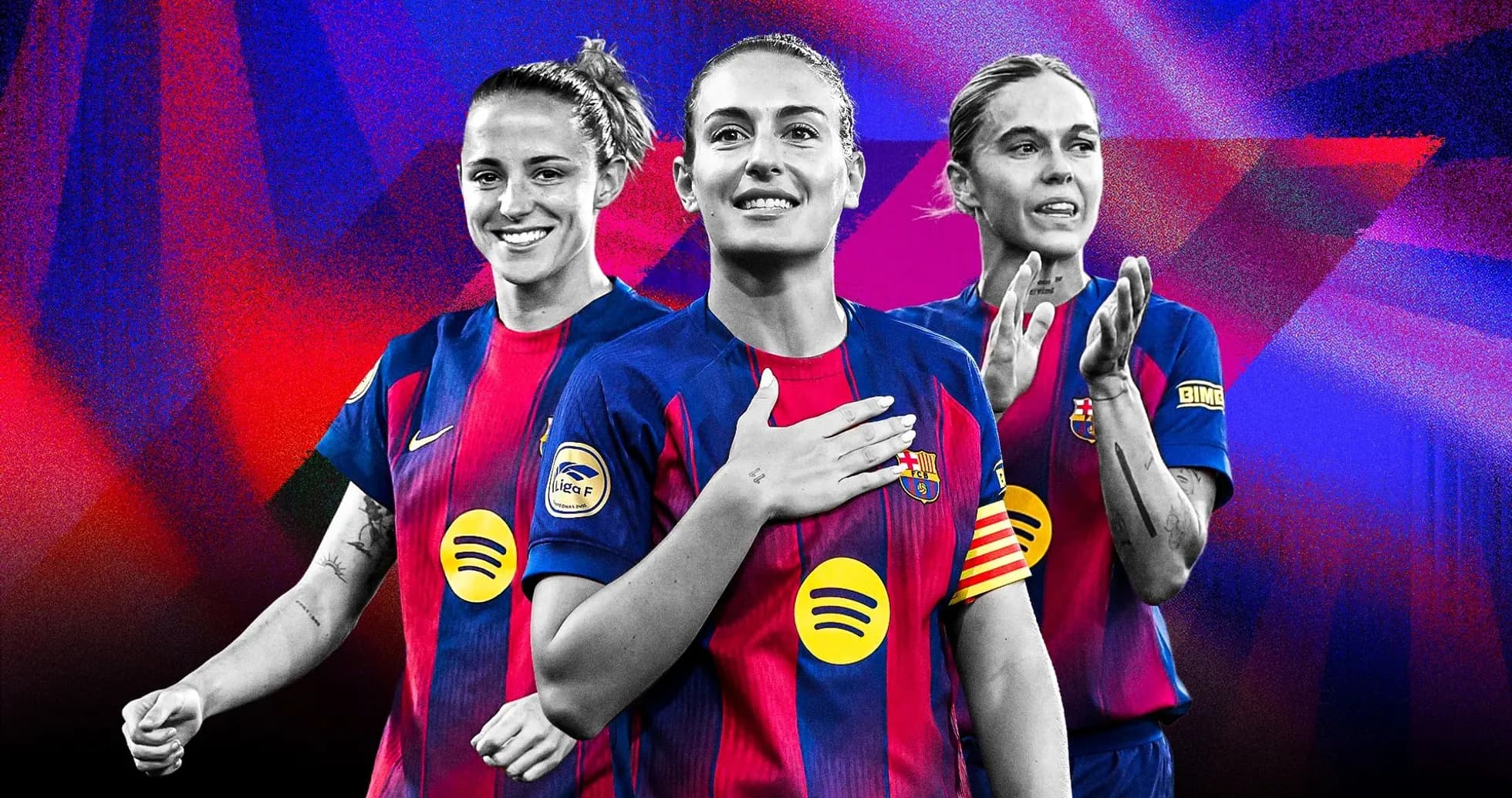
Alexia Putellas, the face of an era. Mapi León, the defensive rock. Ona Batlle, the relentless force on the flank. Three pillars of a dynasty, three holes ripped out of a team that has made dominance look routine. These are not just departures; they are structural changes.
Putellas leaves as more than a superstar midfielder. At 32, she has just delivered a season so good that a third Ballon d'Or feels entirely plausible. She has been the heartbeat, the reference point, the player everyone else orbits around. León goes as arguably the best centre-back in the women’s game, a defender who has made high lines and suffocating pressure look safe. Batlle exits as a world-class right-back, a constant outlet and a relentless competitor.
That is a spine, gone.
Barca’s rebuild instinct
Barcelona, though, have long treated departures as puzzles to be solved rather than disasters to be mourned. La Masia keeps churning out talent at a rate no other women’s club can match. When that hasn’t been enough, the transfer market has usually provided the rest.
This year, the market feels different. Twelve months ago, financial constraints bit hard. The men’s team’s issues with La Liga’s Financial Fair Play rules dragged the women’s side into the same storm, limiting what could be done and when. Plans were delayed, ideas shelved.
Now? Hansi Flick’s squad has just sanctioned a £69 million ($93m) move for Anthony Gordon. That single figure changes the mood. It hints that the handbrake might be off, that Barcelona might actually be able to act like the powerhouse they are, not just in prestige but in spending.
The question is not just whether they can spend. It’s whether they can get every euro right.
Because this is not a simple like-for-like exercise. Replacing a world-class right-back, a world-class centre-back and a world-class midfielder is hard enough. Replacing a captain, a mentor, a cultural reference point? That is something else entirely.
The void Alexia leaves off the ball
Putellas’ influence this season stretched far beyond her own performances. She became the bridge between generations. With the club forced to promote from within, the dressing room skewed younger, and she stepped into that space.
Clara Serrajordi and Aicha Camara, both teenagers, moved into regular first-team roles. Martine Fenger, Carla Julia and Adriana Ranera saw doors open that might otherwise have stayed closed. Sydney Schertenleib, Esmee Brugts, Vicky Lopez and Kika Nazareth all took on greater responsibility, asked to play not just minutes, but meaningful ones.
Inside that environment, Putellas set the tone.
"She's a player who always tries to help other girls, to get the best out of them," Brugts said recently. "When I talk about the experienced players taking those leading roles, she's, of course, the main example for this. It calms me down a lot to play next to her and she gives me the confidence to play a good game myself."
That is the gap Barcelona must now close: the reassuring presence, the calm in the noise, the leader who lifts the standard simply by sharing a pitch.
The good news for the champions is that leadership candidates are not in short supply. Patri Guijarro, Aitana Bonmatí and Irene Paredes all carry the authority, the medals and the respect required to take on more. This is still a dressing room stacked with players who know exactly what it takes to win everything.
And this is a club that has already weathered a steady drip of exits. Mariona Caldentey, Lucy Bronze, Keira Walsh and Sandra Paños have all gone in the last year or so. The predictions of decline came, as they always do. The response on the pitch was emphatic.
The system, the style, the standards have proved bigger than any one name so far. The belief inside the club is that this will not suddenly change.
Spain watching closely
The ripples spread far beyond Catalonia, though. Every move Barcelona make now has a knock-on effect for Spain.
León is expected to join London City Lionesses, who have just finished sixth in their first Women’s Super League season. Putellas could follow her to the same club. Batlle is set for Arsenal, the side that beat Barcelona in the 2024-25 Champions League final.
Batlle’s situation looks relatively straightforward. She leaves a Barca side fighting on four fronts and walks into an Arsenal squad that will be chasing three trophies, with League Cup rules now excluding teams involved in the Champions League. The WSL offers a stronger weekly challenge than Liga F, the competition is fiercer, the margins tighter. The overall load, though, should balance out: fewer competitions, but a higher level across the board.
For León – and potentially Putellas – the picture changes more dramatically. London City Lionesses will not be in the Champions League. The schedule will be lighter, the calendar less suffocating than Barcelona’s relentless march through domestic and European fixtures.
There will be fewer nights under the brightest lights, fewer dates with the continent’s elite. Yet the WSL remains a superior league to Liga F. Facing Arsenal, Chelsea, Manchester City and Manchester United still offers a sharp, unforgiving edge. The intensity will be there, even if the volume of games drops.
From Spain’s perspective, the equation is intriguing. Two of their most important players, both in their 30s, could end up playing fewer minutes, carrying less physical load, while still competing at a very high level week to week. All of this in the run-up to the 2027 Women’s World Cup.
That sounds like an advantage. Fresher legs. Longer careers. More controlled workloads for players Spain can scarcely afford to lose.
La Masia’s national footprint
Back in Barcelona, the solution to the outgoing stars might again be homegrown. If the gaps left by Putellas, León and Batlle are filled by more La Masia products, the national team will feel that benefit as well.
Serrajordi is the perfect example. She is already in the Spain squad for Friday’s clash with England, her rise since her senior international debut in October growing more impressive with each camp, each appearance. She represents a pathway that is becoming routine: develop in Catalunya, graduate to Barcelona, then step seamlessly into La Roja.
On top of the 11 players in the current Spain squad who already play for Barca, Jana Fernández and Lucía Corrales also came through the club’s academy before being sold last summer when finances demanded tough choices. The production line keeps feeding the national team, whether those players stay in Blaugrana shirts or not.
Barcelona’s internal health and Spain’s international strength are now tightly linked. When La Masia thrives, La Roja reaps the reward.
And so the summer ahead becomes one of the most intriguing in recent memory. Barcelona must reshape a champion squad without losing its soul. Spain, watching from a distance, could emerge from the same period better positioned to defend a World Cup title in 2027.
The champions of Europe are changing. The question is not whether they survive it. It’s how much stronger Spain might be by the time the dust settles.