Barcelona's Summer Rebuild: A Striker Shortage
Barcelona’s summer rebuild has looked ruthless, targeted and expensive. Yet for all the glittering additions, one glaring hole remains.
They still don’t have a striker.
A supercharged squad – with no number nine
The Spanish champions have spent the off-season reinforcing almost every line of Hansi Flick’s squad.
Rodri’s arrival from Manchester City dropped a Ballon d'Or winner and World Cup-winning captain into a midfield already overflowing with quality. That alone would have been a statement signing in most summers. At Barcelona, it was just the start.
Out wide, they have injected raw speed and directness. Anthony Gordon brings Premier League intensity and relentless running. Karim Adeyemi offers chaos, acceleration and the ability to rip through high defensive lines. Behind them, 18-year-old Belgian winger Jesse Bisiwu has been brought in as a project for the future, a long-term bet on potential.
It all points in one direction: more power, more pace, more threat.
But none of those players is a classic centre-forward.
With the first La Liga game away to Elche on Sunday, 23 August, Barcelona are staring at the possibility of going into the season without a recognised number nine if they fail to move before the window closes on 1 September.
Life after Lewandowski
This is the first campaign in years that will start without Robert Lewandowski leading the line.
The 37-year-old left for Chicago Fire in Major League Soccer when his contract expired at the end of last season, taking with him not just goals, but a reference point. A penalty-box presence. A structure.
Barcelona also allowed Ferran Torres to depart, selling him to Paris St-Germain for about 50m euros (£42.7m). Torres was not a pure striker, but he was productive: 21 goals in 49 appearances last season, often deployed centrally as an alternative to Lewandowski.
Both gone. Both difficult to replace.
Their exits leave Flick without an established senior centre-forward in the first-team squad. For a club that has built entire eras around great strikers, it is a jarring sight.
The Alvarez obsession
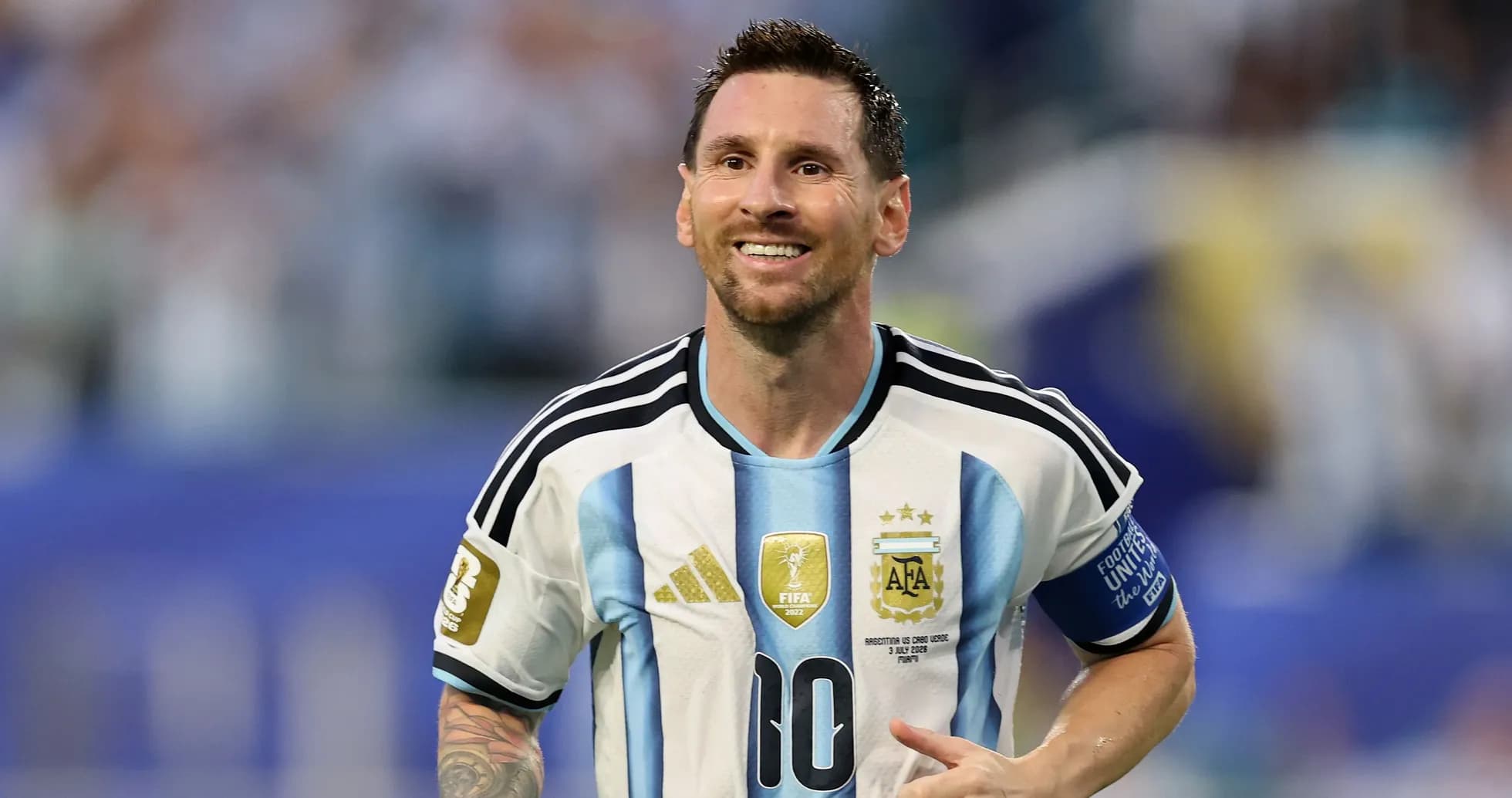
Inside the club, the preferred solution is no secret: Julian Alvarez.
Barcelona want the Atletico Madrid forward. The Argentina international, 26, made it clear during the World Cup that he would be open to a move away, a comment that sparked immediate interest across Europe.
But desire is one thing; prising him out of Atletico is another.
Atletico’s stance has been just as blunt. With Real Madrid also circling, chief executive Miguel Angel Gil Marin drew a hard line, insisting the club would not sell Alvarez, “not even for 200m euros” (£170.8m).
That is not a negotiating position. It is a locked door.
So Flick, a coach who likes structure and clarity, must plan for a scenario where the ideal solution never arrives.
Flick’s internal fixes
“We know we have to do something,” Flick admitted this month. The issue is not being ignored. It simply has no easy answer.
The German has started to look inward.
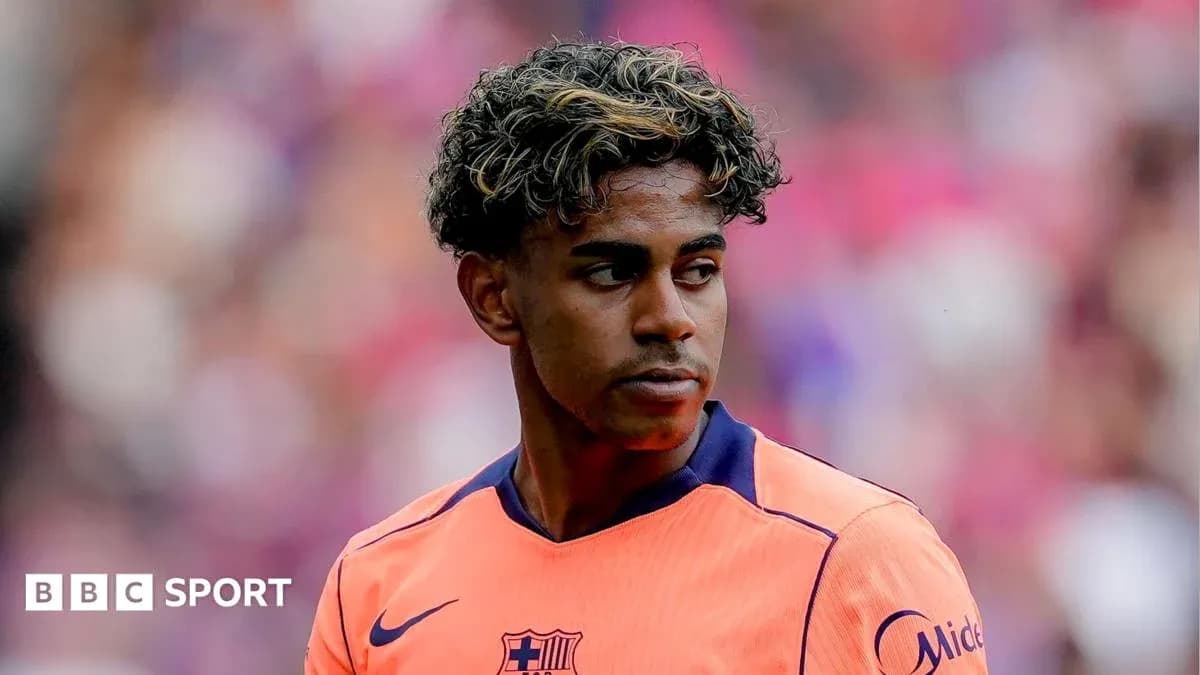
Teenage sensation Lamine Yamal is already the team’s attacking focal point. He is coming off a remarkable season in which he scored 24 goals and lifted the World Cup with Spain. Those numbers alone would tempt many coaches to move him centrally and build everything around him.
Yet that is not where Flick sees his greatest value.
Lamine Yamal’s most devastating quality is his ability to isolate a full-back on the right, cut inside and conjure chances from angles that seem to close before he even arrives. He stretches defences, then breaks them. Flick’s preference is clear: keep him wide, keep him facing up his man, keep him unpredictable.
Even so, the coach has acknowledged the youngster can play as a false nine if required. Gordon and Adeyemi, too, have the versatility to drift into central areas, attacking space rather than standing between centre-backs.
They are not Lewandowski. But they can tear at a back line in different ways.
Dani Olmo is another internal solution. Comfortable operating as a false nine, he offers intelligence between the lines and the ability to knit midfield and attack. Raphinha has also been used centrally by Flick, while Fermin Lopez has said he is happy stepping into an advanced, false-nine role.
None of them is a traditional striker. All of them can occupy that zone.
A new-look attack – or a calculated risk?
One option is obvious: abandon the idea of a fixed number nine altogether.
Barcelona could lean into a fluid front line, with constant rotations, interchanging positions and no permanent reference point. Centre-backs would have no one to mark, only spaces to guard. With Rodri anchoring midfield and a battery of runners in front of him, that shape could become a nightmare to defend.
On paper, it looks modern, aggressive, hard to predict.
But it is also a gamble.
La Liga seasons are long. Title races are often decided by the team that turns tight games into narrow wins, that finds a scruffy goal away to a low block in February. That is when a specialist striker, someone who lives between the posts, becomes priceless.
Barcelona know this. Flick knows it. The squad knows it.
For now, the champions have the look of a side built to run, press and overwhelm – but without the classic finisher to complete the picture. If they land the right number nine before 1 September, the puzzle snaps into place.
If they don’t, this season becomes a test of whether a club so rooted in the idea of the great centre-forward can win it all without one.