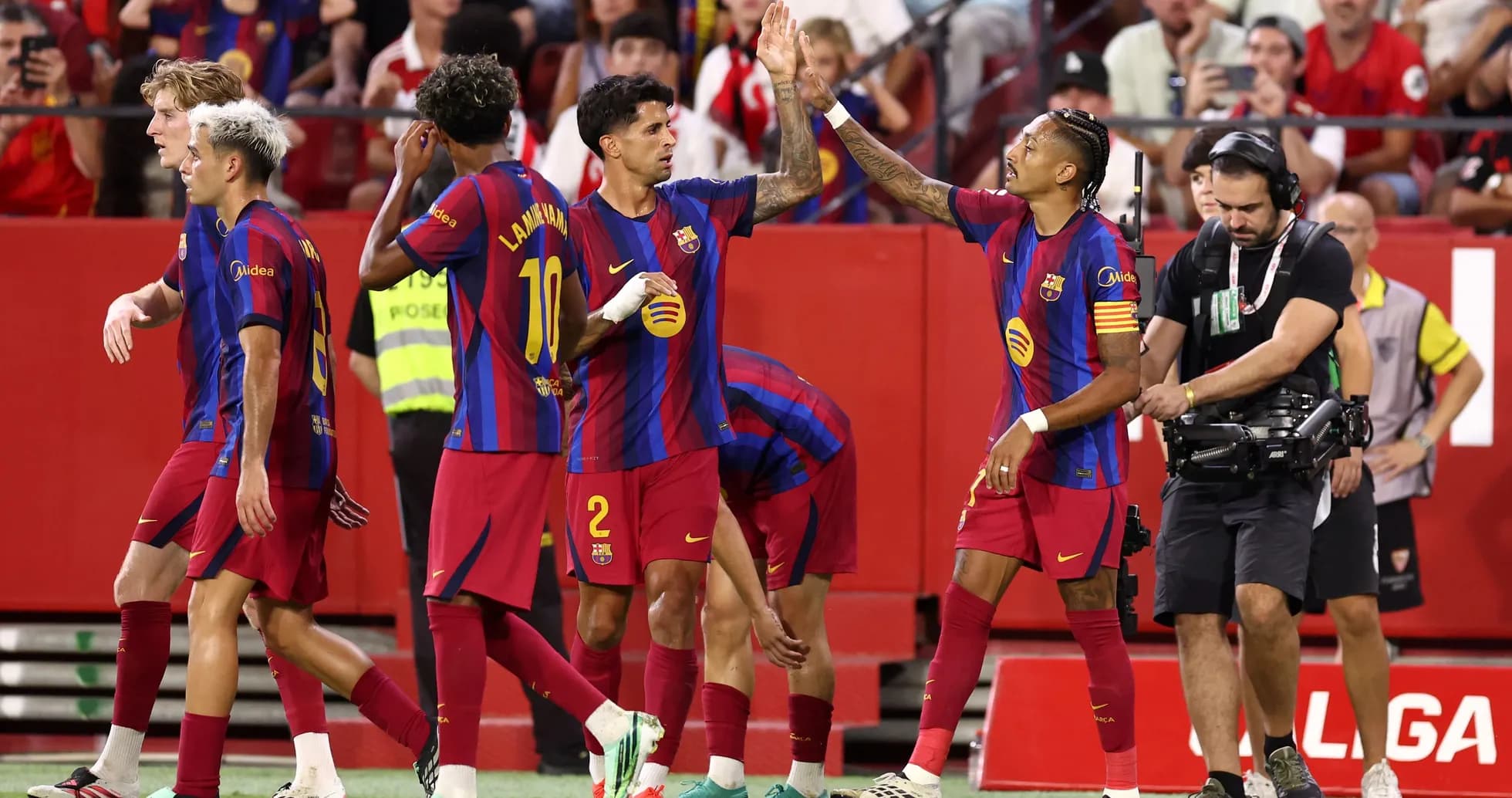
Barcelona Faces International Duty Challenge as 17 Players Depart
The training pitches at Barcelona are almost empty. The anxiety is not.
As the international break begins, Hansi Flick and his staff are left counting heads and crossing fingers. Seventeen first‑team players have left to join their national sides. Eighteen were due to go, until Andreas Christensen’s left thigh problem ruled him out of Denmark duty at the last moment.
The number is brutal for a coach trying to build rhythm. The risk feels even worse.
Flick admitted it bluntly a few days ago: he feels anxious when his players leave. He trusts the national team coaches, he said, and tries to stay positive. But trust does not protect hamstrings, and optimism does not shorten flights across the Atlantic.
Barcelona know this too well.
Spain take seven, others scatter across Europe and beyond
Luis de la Fuente has taken a heavy slice of Flick’s core. Seven Barcelona players are with Spain: Pau Cubarsí, Eric García, Rodri, Pedri, Fermín, Dani Olmo and Lamine Yamal. That is the spine of a future Barça, temporarily borrowed by La Roja.
They will meet a familiar face when Spain face Croatia: Dominik Livaković, also away on international duty, stands in their path.
The drain continues down the age groups. Xavi Espart and Marc Bernal step up to Spain’s under‑21s, who are in the thick of qualification for Euro 2027. Three fixtures await them: Finland, San Marino and Romania. Three more matches, three more chances for fatigue or something worse.
And the departures don’t stop there.
Karim Adeyemi has been recalled by Germany for their games against Serbia and Greece. Raphinha flies with Brazil. João Cancelo joins Portugal. Anthony Gordon links up with England. Jules Koundé reports to France. Hamza Abdelkarim travels with Egypt. Dean Bisseck joins Belgium’s under‑21s.
For a club that insists its players are in excellent physical condition, it is a lot of bodies to send into a crowded calendar.
Raphinha: Barça’s form player, and their biggest fear
Inside the club, one name triggers the sharpest concern: Raphinha.
He is the most in‑form player in Flick’s squad, with 14 goals in eight matches. The kind of run that can tilt a season. The kind of form that makes every sprint, every landing, every tackle feel like a gamble when he is thousands of kilometres away.
Brazil’s call‑up means long flights, heavy minutes and a familiar knot in Barcelona’s stomach. The winger has returned injured from previous international windows. The pattern is no longer a coincidence; it is a warning.
This is not just about what happens in the 90 minutes. The club fears the whole package: the travel, the jet lag, the change of training loads. The toll of being a global star.
Raphinha, like Lamine Yamal, Gavi and Frenkie de Jong, has already paid a price for that status. All four have come back from international duty injured on several occasions.
The most recent reminder still stings. During the last World Cup, Raphinha suffered pain in the tendons of his right knee. A few months earlier, in March, he had already hurt the same area in a friendly between Brazil and France played in the United States. He was dropped from the squad and sent straight back to Barcelona, then missed five weeks.
Last season, a series of scattered injuries disrupted his availability just when Barça needed continuity. Flick and the club are desperate for this campaign to be different, for their star forward to return from Brazil still flying, not limping.
Laporta rails against a “crowded” calendar
The tension is not confined to the dressing room or the medical department. It has reached the president’s office.
At Saturday’s general assembly, Joan Laporta did not hide his frustration with the timing and intensity of this break. He spoke of regret, of disruption, of a schedule that pulls his squad apart just as Flick tries to knit it together.
“This break affects the rhythm of our preparations. It harms us greatly,” Laporta told the assembly. He called for dialogue with international football organisations and pointed directly at the expanding competition list: Conference League, Nations League, and everything else packed into an already swollen calendar. “The schedule is extremely crowded,” he said.
Barcelona can do little now but wait. Seventeen players scattered across continents, one coach pacing through an almost empty training ground, and a president railing against a system he cannot control.
When they all come back, the real question will be simple: how many of them return ready to push Barça’s season forward, and how many arrive as the latest casualties of a game that refuses to slow down?