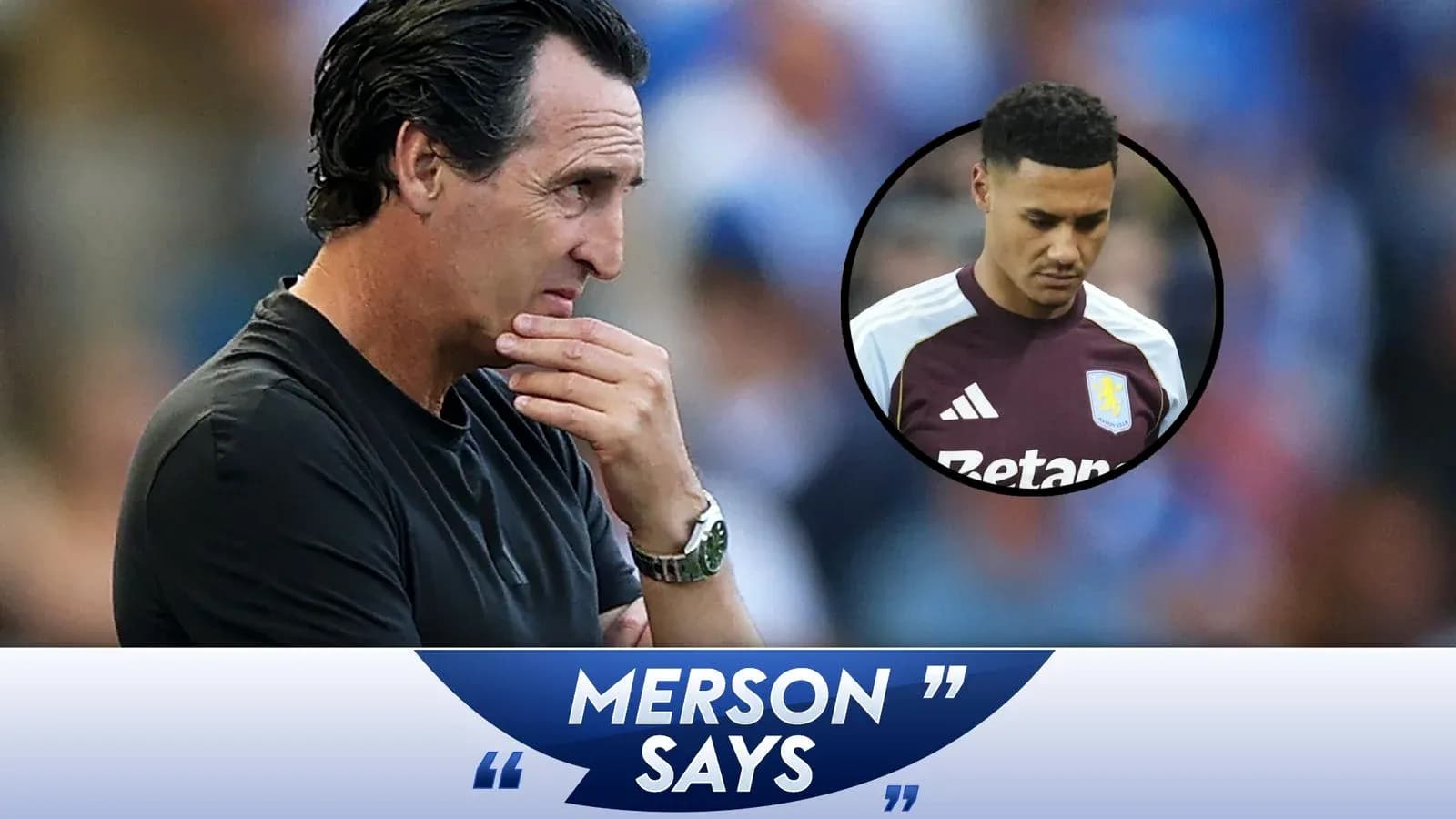
Aston Villa's Dismantling Leaves Unai Emery's Future in Doubt
Aston Villa didn’t just lose at Brighton. They unravelled. Four goals down inside half an hour, beaten 4-0, and stripped of the swagger that carried them into the Champions League and to a European trophy only a few months ago.
For Paul Merson, watching on as a former Villa player, the sense of shock is mixed with anger.
“You sell all your best players, what do you expect?” he wrote in his Sky Sports column.
He didn’t expect 4-0 down in 30 minutes. But he also didn’t expect Villa to beat Brighton. Not with this squad, not after this summer.
Because this isn’t a normal reset. Villa have sold the spine of a Champions League team: Ezri Konsa, Youri Tielemans, Morgan Rogers. They then travelled to Brighton without Ollie Watkins, amid strong interest from Saudi Arabia, and without Emi Martinez. The core that made them one of the stories of last season has been pulled apart in weeks.
Merson calls it “madness at the highest level”. A “big, big football club” that has just climbed back among Europe’s elite, only to cash in on its top performers. He fears the consequences will be brutal.
He doesn’t see a relegation fight. But he doesn’t see a top-half finish either – even with Unai Emery, a manager he ranks among the very best in the game.
And that’s where his biggest concern lies. How long does a coach of Emery’s stature tolerate this?
Merson points to the contrast with history. Tottenham once won a European trophy and slid to 17th. Emery, he notes, won “the same European cup and finished fourth.” That level of overachievement has been met, not with reinforcement, but with an exodus.
“I don’t see Emery hanging around for long if things continue like this,” Merson warns.
Players are “leaving him left, right and centre” and the club, in his eyes, is squandering a rare opportunity. Villa fought their way to the “promised land” of Champions League football. This should have been the moment to strengthen, to build. Instead, as Merson bluntly puts it, “they’ve sold everyone that’s top drawer.”
Contract decisions have only deepened his frustration. The Youri Tielemans release clause – reported at £36m – leaves him incredulous. In a market where teams battling to avoid the drop routinely pay around £35m for players, he describes that figure as “an absolute cup of tea” and “the deal of the century” for Manchester United.
“You can’t put a clause in that says £35m for one of the best midfield players in the country,” he argues.
From Villa’s perspective, it is, in his view, indefensible business.
The Ezri Konsa sale cuts just as deeply. An England international, fresh from a World Cup, leaving for £55m. “It’s sad,” Merson says. Another pillar gone. Another hole in the side of a team that was built to compete at the top, not to be stripped for parts.
Watkins row ignites fury
If the transfer policy has dismayed him, the situation around Ollie Watkins has infuriated him.
Reports suggested Watkins was fit but not involved at Brighton as interest from Saudi Arabia swirled. Merson doesn’t hold back on what that would mean if true.
“Disgusting at the highest level,” he calls it.
His argument is simple and unforgiving. Watkins is paid extremely well. Supporters in the Holte End pay heavily for season tickets, travel, and the emotion that comes with following a club up and down the country. To then refuse to play, if that is what has happened, is inexcusable in his eyes.
“You’ve got the best job in the whole wide world,” he writes. Centre forward. Premier League. Big wages. Paid to stay fit and perform. Interest from Saudi Arabia might be life-changing and Watkins “is not a spring chicken anymore,” Merson acknowledges. But that, he insists, cannot erase the basic duty to the shirt and to the fans.
He pictures those supporters in the Holte End. “Every one of those fans… will give their right arm to play that game,” he says. The idea of a player choosing not to is anathema to him.
If Watkins did refuse to play, Merson believes there should be consequences. An apology, for a start. And financial punishment. “If you’re Aston Villa, you should say to him: ‘I’m not paying you this week’,” he argues. Because, as he bluntly puts it, “your job literally is to turn up at a weekend and play a football match.”
For Merson, all of this – the sales, the clauses, the absent stars – feeds into one bleak picture. A great club, one he still clearly loves, has finally forced open the door to the elite and then chosen to dismantle the team that got them there.
The football will move on quickly. The transfer window will close. The Champions League anthem will ring out at Villa Park. The question is whether Unai Emery will still feel he has a project worthy of his talent by the time it does.