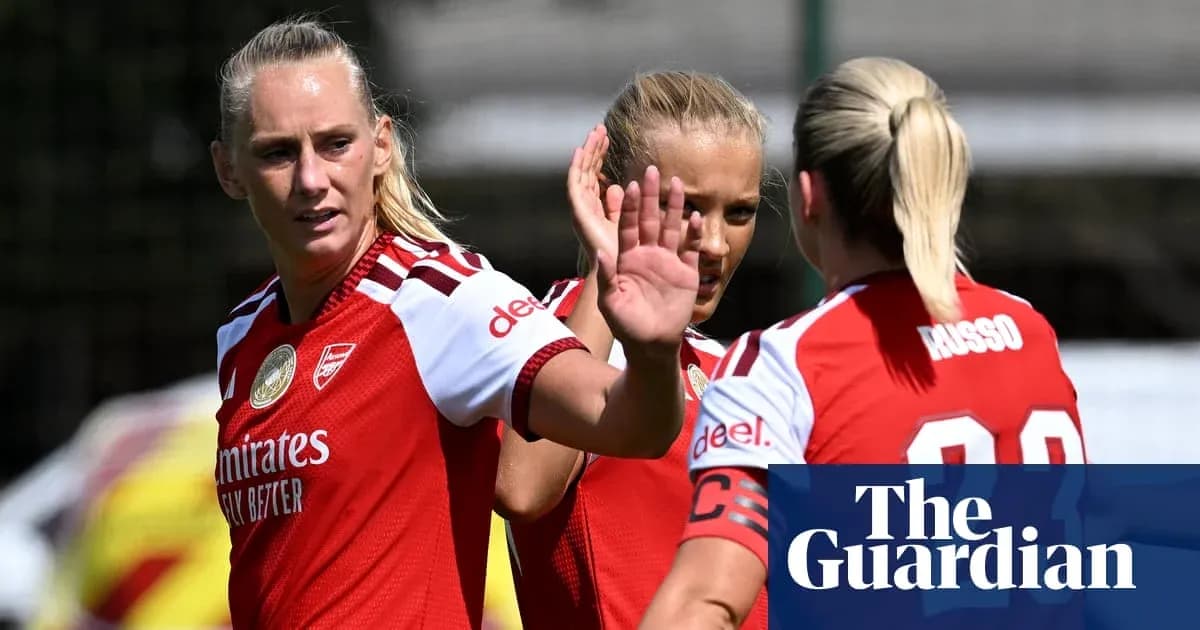
Arsenal Targets Title After Summer Squad Overhaul
Arsenal finished last season with a Champions League trophy in the cabinet and a gnawing sense of frustration. Second in the Women’s Super League again, no domestic silverware, and a feeling that the squad had reached the end of a cycle. The club has responded with a reset that is anything but gentle.
Eleven players have gone, including two modern greats in Beth Mead and Katie McCabe. Seven have arrived. The Champions League triumph of 2025 masked some structural issues; this summer has dragged them into the open and ripped them out.
Ona Batlle, Georgia Stanway, Géraldine Reuteler and Selina Cerci headline a recruitment drive that injects experience and edge while trimming the age profile. These are not speculative punts. Batlle arrives as one of Spain’s standout full-backs, Stanway as a two-time Euro winner, Reuteler and Cerci as proven performers at the highest level. Arsenal have not just freshened the squad. They have hardened it.
Whether the decision to let Mead and McCabe join Manchester City and Chelsea respectively proves an act of bravery or a miscalculation will hang over the season. Those two have defined Arsenal’s modern era; now they will be direct obstacles to the club’s ambitions. Any slip in the title race and the question will be asked.
This time, there are no excuses. Renée Slegers has had a full pre-season for the first time, armed with the security of Champions League league-phase qualification thanks to last year’s second-place finish. No summer tournament, no early Champions League qualifiers, no reason for another sluggish start.
The pattern has to change. Across the past two WSL campaigns, Arsenal have stumbled out of the blocks. Last season they drew four and lost one of their first nine league matches. The damage was done before the title race truly began.
“We’re in a great place of course, but we would have liked to have won more trophies last season and that is our huge ambition coming into this year,” she said. “I’ll flat out say it: we want to win the league and want to take that next step.”
There is no attempt to play down expectations. Arsenal are going for the title. Anything else will feel like a failure.
Numbers that demand a response
The data underlines just how costly those early wobbles and dropped points became. Arsenal topped Opta’s expected points table in 2025-26 and lost only once in the league. Yet Manchester City took the title.
The difference lay in the margins. Arsenal drew six games; City drew one. Expected goals suggested Arsenal had done more than enough to win three of those stalemates. Only one, against Chelsea, tilted the other way. The head-to-head with City ended level – one win each – so it was the missed opportunities elsewhere that decided the race.
That is where Stanway’s arrival feels so pointed. Arsenal have often dazzled, but they have not always imposed themselves when games turned scrappy or tense. Stanway, 27, brings exactly what they have lacked: a streak of controlled menace in midfield. She described herself as “ruthless and robust” and there is no argument. She tackles, she harries, she drives her team up the pitch. She also already knows the core of Arsenal’s England contingent inside out. The club has not just bought quality; it has bought chemistry and bite.
Slegers’ chance to own the project
Slegers enters her second full season with Arsenal in a very different position to the one she inherited. When she stepped in after Jonas Eidevall’s exit, she walked into an established dressing room and a squad largely built by someone else. Now she has a group that carries her imprint.
At 37, she has already shown she can steady a listing ship and guide it to European glory. This season is about something else: control, identity, and sustaining a title push across an entire campaign. With the overhaul complete and a full pre-season behind her, this is the first year where the team will truly look like Slegers’ Arsenal.
Behind the scenes, the club’s trajectory matches the ambition on the pitch. The latest accounts, for the year ending May 2025, showed revenue up by £6.5m to £21.5m. Average attendances at the Emirates Stadium for eight games hit 29,833, delivering just under £6m in matchday income. That figure is likely to rise again when the impact of last season’s average of more than 34,000 for all 11 WSL home fixtures is fully reflected.
Broadcast revenue more than doubled from £956,000 in 2024 to over £2m, helped by the Champions League success. Commercial income jumped from £649,000 to £1.77m. The women’s side is becoming a serious business in its own right. Yet the picture is not entirely independent. Group income from the parent club rose from £9.3m to £11.85m, still accounting for more than half of overall revenue. Arsenal are leading the WSL in many respects, but they are not yet financially self-sustaining.
A club outgrowing its home
On the pitch, Arsenal have outgrown Meadow Park. Off it, they are wrestling with what that means. All WSL home games and European knockout ties – if they get there – will be played at the Emirates. Domestic cup fixtures and Champions League league-phase matches will remain at Meadow Park.
The numbers tell you why that feels awkward. Arsenal contributed more than 40% of all WSL attendances last season. Demand is there, and the team has clearly moved beyond the confines of their long-time Boreham Wood base. Yet the Emirates is a giant to fill for every fixture, and scheduling around the men’s team remains a logistical puzzle. The club sits between two realities: one stadium too small, one too big, and a fanbase that keeps growing.
New energy, old scars
There is another storyline bubbling beneath the marquee signings. Last season was supposed to be a breakout year for 20-year-old forward Michelle Agyemang and 19-year-old defender Katie Reid. Agyemang had lit up Euro 2025, Reid had started the domestic campaign superbly. Then both suffered anterior cruciate ligament injuries and their momentum vanished.
Now they are on the way back. After almost a year out, their minutes will be managed carefully and it will take time to rediscover rhythm and confidence. But their return adds depth and a sense of unfinished business to a squad already bristling with competition.
Inside the dressing room, there is a clear sense of what Arsenal are trying to build. Lotte Wubben-Moy summed it up in her own way: “It’s like you’re cooking the most beautiful recipe and then you add the final small ingredients that make the marginal difference, that elevate, and you create something that’s beautiful and that you can relish and enjoy. That’s what we’re in the process of.”
The ingredients are certainly there now: Champions League pedigree, a manager with a clear mandate, a hardened midfield, a deeper squad, and a fanbase filling the Emirates with regularity. Arsenal have waited seven years for a league title.
With the safety nets gone and the ambition stated bluntly, this season will show whether this reset delivers the final flourish – or exposes just how brutal the margins at the top of the WSL have become.