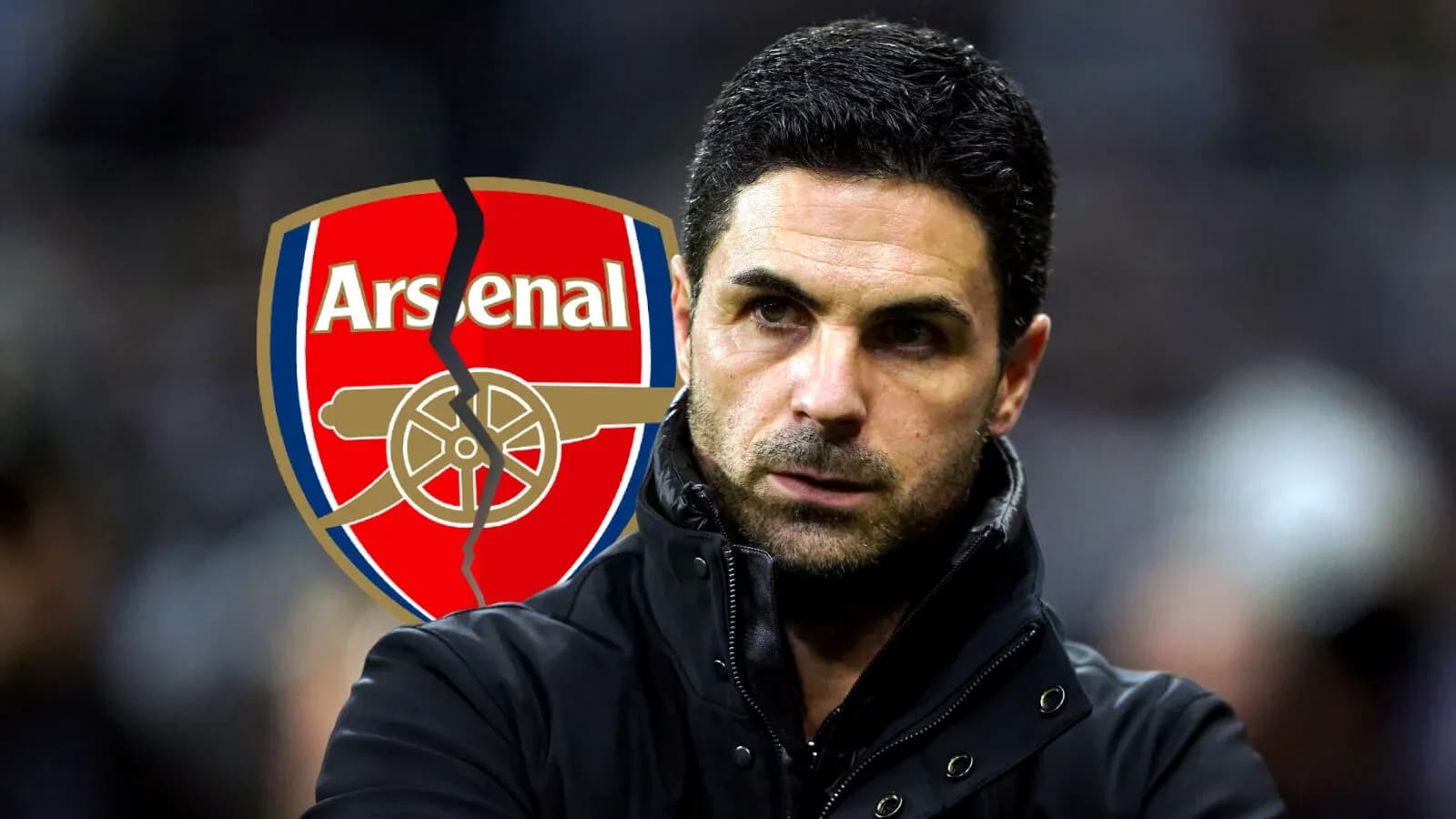
Arsenal's Martinelli Situation: Unpacking the Revolt Narrative
Mikel Arteta is apparently facing a revolt. Arsenal players are said to be “unhappy” with their manager and “siding with Gabriel Martinelli” over his treatment this summer.
Except that’s not what’s really happening. Not on the evidence presented, anyway.
The fee, the form and the fuss
The noise began with Gabriel Martinelli’s price tag. John Cross in the Daily Mirror asked the question plenty of Arsenal fans have muttered this summer:
“Why on earth have they not been able to get better value on Martinelli? If Savinho goes to Tottenham in an £85m deal, why is Martinelli cheaper? The £50m price just does not seem enough.”
On the surface, it looks like a fair challenge. Tottenham paying a wild £85m for Savinho, Arsenal accepting around £50m for a Brazil international with Premier League and title-winning experience. It jars.
But the Savinho number is heavily shaped by the Omar Marmoush deal, a fee structure that has been deliberately skewed and inflated. It is not a clean comparison, and everyone in the market knows it.
Then there’s Martinelli’s actual output. One goal and four assists last season. For the champions. That’s not the return of an untouchable starter, and it comes with a contract that is effectively down to a year, plus an option for another 12 months.
In that light, £50m stops looking like a giveaway and starts to resemble market reality. Clubs like Chelsea and Manchester City might squeeze more value out of a similar-level player because they’ve built their whole model around aggressive player trading. Arsenal haven’t.
“This is a player whose stats measure up against the likes of Yildiz,” came one line of defence.
But Kenan Yildiz is four years younger, hit ten Serie A goals last season and added seven assists. That’s a different profile entirely. Martinelli has pace, he carries threat, but he hasn’t “kicked on” over the past two seasons. Everyone can see that. The fee reflects it.
So far, so normal. A big club moves on a popular player for a solid but unspectacular fee. The kind of decision title-chasing squads have to make.
How 12 words became a ‘dressing-room split’
Then came the real spark: a short line from ESPN Brasil, picked up and amplified across the British press.
“Gabriel Martinelli has Arsenal stars on his side after being pushed out by Mikel Arteta,” ran the Daily Mirror website.
“Arsenal stars ‘side with Gabriel Martinelli’ as Mikel Arteta tries to force him out,” added the Daily Star.
“Arsenal squad ‘unhappy’ with Mikel Arteta as Gabriel Martinelli nears £40m Al-Hilal transfer,” claimed Goal.
All three pointed back to the same original source. All three hung their headlines on a single translated paragraph. This one:
“At the start of this season, the Brazilian wasn’t even included in Arsenal’s matchday squad and didn’t even receive a medal for winning the English Super Cup after beating Manchester City 3-0, something that even caused some discomfort among other players in the team.”
That’s it. That’s the entire basis for the talk of players “siding” with Martinelli and a squad “unhappy” with Arteta.
Twelve words at the end of a sentence – “something that even caused some discomfort among other players in the team” – have been stretched into a full-blown civil war. The quotes in the headlines don’t appear in the original line; they’re inventions, not translations.
Strip away the drama and what’s left? A long-serving player, seven years at the club, has been frozen out ahead of a likely sale. He missed out on a medal in the Community Shield equivalent and a few team-mates didn’t like it.
Is that really shocking? It would be far stranger if Gabriel Magalhaes or Declan Rice were delighted to see a colleague ostracised on his way out. Dressing rooms are tight. Players empathise when one of their own gets pushed aside.
This is human, not mutinous. Sympathy, not sabotage.
The ‘one condition’ that isn’t a condition
While the Martinelli story was being inflated, the Daily Mirror website was also busy on the other side of Arsenal’s summer.
“Mikel Arteta sets one condition for £130m Julian Alvarez transfer as Arsenal plan emerges.”
One condition. For £130m. It sounds dramatic, like a hard line in the sand from a manager with total control.
Then you read the detail.
“Mikel Arteta is ready to make a £130m push to sign Julian Alvarez – but will demand assurances the Argentina star wants to move to Arsenal.”
So the big “condition” is… that the player actually wants to join. Not exactly a revolutionary stance. That’s not some ruthless ultimatum, it’s the basic starting point of any major transfer. No top club spends £130m on a reluctant forward.
It’s another example of a simple, obvious reality being dressed up as something grand and confrontational. The sort of inflation that now surrounds almost every big-club move.
Time-wasting, or just defending a lead?
Elsewhere, the same pattern of overreach cropped up at Newcastle. Ian Ladyman in the Daily Mail took aim at new head coach Matthias Jaissle after a late penalty denied his side victory against Liverpool.
Jaissle had pointed a finger at referee Stuart Attwell for the spot-kick given against Lewis Hall for a foul on Victor Munoz. Ladyman pushed back.
“The contact from the otherwise excellent Lewis Hall on Liverpool substitute Victor Munoz was clear,” he wrote, before turning the spotlight on the Newcastle coach.
Jaissle, he argued, should look at his own role. The foul came in time added on because of a “totally unnecessary” substitution – Yoane Wissa off, Fabian Schar on – in the final seconds. Ladyman labelled it a classic time-wasting move that backfired when Attwell added 30 more seconds, during which Munoz won the penalty.
New guidelines now say players must leave the pitch within 10 seconds of their number being raised or risk a booking, making old-school time-wasting changes “even more pointless than ever”.
But was it really just about wasting time? Or was there an obvious tactical reason to bring on a defender for a forward when protecting a narrow lead in stoppage time? Managers have been shoring up back lines in that way for decades. You don’t have to agree with Jaissle’s complaints about the referee to acknowledge that.
Again, the story is nudged towards drama when the football explanation is sitting right there.
Manchester United and the ‘transfer plan’
The same theme runs through Manchester United’s summer, too. The Manchester Evening News ran with:
“Manchester United’s transfer plan has paid off with £45million boost.”
The claim: United’s patience over Carlos Baleba has saved them a fortune. The suggestion is that he would have cost around £115m last year, and now they are on course to sign him for £70m instead.
On paper, that looks like a smart, long-term strategy. Wait a year, let the price drop, then move.
But scratch at it and the narrative frays. Not spending a ludicrous fee 12 months ago only to spend a still-enormous one after a season of underperformance doesn’t scream “masterplan”. Especially when the deal drags on beyond the start of the season, the team stumbles to defeat against promoted Hull, and Youri Tielemans is left exposed because he can’t cover the ground required.
That doesn’t resemble a carefully executed blueprint. It looks like a club lurching between targets – Elliot Anderson, Mateus Fernandes, maybe Sandro Tonali before Baleba – and then retrofitting the phrase “transfer plan” after the fact.
The bigger picture
Across all of this, the pattern is clear. A dressing room “split” built on a line about mild discomfort. A routine transfer prerequisite sold as a hard-line “condition”. A defensive substitution framed purely as time-wasting. A delayed, expensive deal rebranded as a clever strategy.
The football is complicated enough. The stories don’t need the extra sugar.
Arsenal will move Martinelli on or they won’t. Some players will be sad to see him go. Arteta will chase an elite forward like Julian Alvarez if the numbers and the will line up. Newcastle will keep learning under Jaissle, with or without late substitutions. Manchester United will keep throwing big money at midfield problems until they finally solve them.
The real question is simpler: which of these clubs are actually making decisions that stand up on the pitch, not just on the back page?