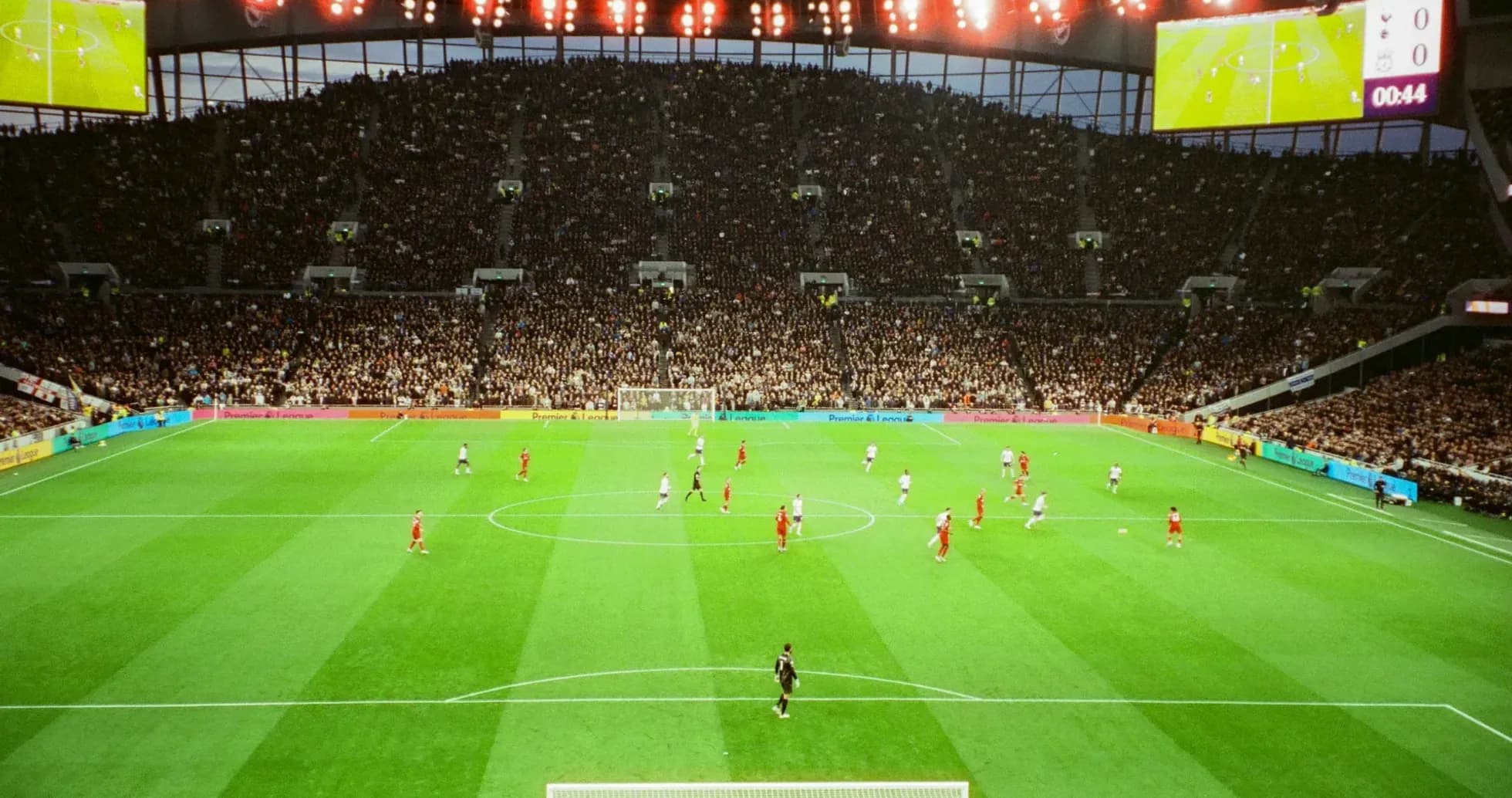
Arsenal vs Chelsea: Tactical Battle in Premier League Clash
Under the grey north London sky, the Emirates Stadium staged a meeting of two evolving superstructures. Arsenal and Chelsea arrived in Round 3 of the Premier League season not as unfinished projects, but as sharply defined ideas: one built on control and defensive parsimony, the other on vertical chaos and attacking volume. Over 90 minutes that finished 2–1 to Arsenal, those identities collided – and, crucially, the league table started to bend around them.
I. The Big Picture – Two blueprints, one statement
Heading into this game, Arsenal sat 2nd with 9 points from 3 matches, perfect in both result and defensive discipline. Overall they had scored 6 and conceded just 1, a goal difference of 5 built on control: at home they had 5 goals for and 1 against, averaging 2.5 goals scored and 0.5 conceded at the Emirates. Chelsea arrived 4th on 6 points from 3, with a very different profile: 8 goals scored and 7 conceded overall, a goal difference of 1 that spoke of wild, open contests. On their travels they had split their first two away games – 1 win, 1 defeat – with 4 goals both scored and conceded.
The scoreline – Arsenal 2–1 Chelsea, after a 1–1 half-time – did not just preserve Arsenal’s perfect start; it underlined the emerging seasonal DNA. Mikel Arteta’s side continue to suffocate games with structure, while Xabi Alonso’s Chelsea remain committed to a more volatile, risk-embracing model.
Arteta’s selection was a manifesto in itself. Arsenal stayed loyal to the 4-2-3-1 that has underpinned all three league outings. David Raya behind a back four of Ben White, Ezri Konsa, Gabriel and Riccardo Calafiori gave Arsenal both security and progression. Declan Rice and Myles Lewis-Skelly formed the double pivot, with Bukayo Saka, Martin Ødegaard and Christos Tzolis behind Kai Havertz as the lone forward.
Chelsea’s 3-4-2-1 was equally consistent with their season so far. Emiliano Martinez marshalled a back three of Jaden Acheampong, Maxence Lacroix and Wesley Fofana. The wing-and-box midfield of Pedro Neto, Romeo Lavia, Reece James and Jorrel Hato sat behind a narrow front three: Cole Palmer and Morgan Rogers supporting João Pedro.
II. Tactical Voids – Absences that shaped the chessboard
The absentees list hinted at why both managers leaned into control in the middle third. Arsenal were without C. Mosquera, W. Saliba and J. Timber – three defensive options whose absence reduced Arteta’s margin for error in the back line. It made the selection of Konsa and Gabriel non-negotiable, and increased the importance of Calafiori’s composure and distribution on the left.
Chelsea’s missing spine – M. Caicedo, J. Henderson and M. Palestra – removed two experienced midfield stabilisers and another squad option. Without Caicedo’s ball-winning and Henderson’s organisational presence, Alonso had to trust Lavia as the single true central anchor, flanked by James and Hato, both of whom are more naturally progressive than conservative.
Disciplinary trends added another layer. Arsenal’s yellow-card distribution this season has been spread across phases, with 25.00% of their cautions in each of the 16–30, 31–45, 46–60 and 91–105 minute windows, and none recorded in the closing 15 of normal time. Chelsea, by contrast, have shown a tendency to ignite early: 37.50% of their yellows have come in the first 15 minutes, followed by further spikes between 46–60 (25.00%) and scattered cards later. In a high-emotion derby, that profile always threatened to tilt the rhythm of the match.
III. Key Matchups – Hunter vs Shield, Engine Room vs Chaos
The headline duel was the Hunter vs Shield dynamic between Chelsea’s attacking trio and Arsenal’s defensive platform.
João Pedro, with 2 goals and 2 assists in his first 3 league games, arrived as one of the division’s most complete forwards: 7 shots (3 on target), 6 key passes, 6 dribbles attempted with 5 successful, and 27 duels won from 47. Around him, Rogers and Palmer each had 2 goals, with Rogers adding 1 assist and 10 key passes, and Palmer 1 assist and 6 key passes. This is a front three that thrives on receiving between lines, combining in tight spaces, and then attacking the half-spaces with late runs.
Standing opposite was an Arsenal defence that, heading into this game, had conceded just 1 goal overall in 3 matches. At home they had allowed only 1 goal across 2 fixtures, and kept 2 clean sheets overall this campaign. Gabriel and Konsa, shielded by Rice, were less about highlight tackles and more about denying central access. Calafiori, already with 2 assists this season, added progressive passing and crossing from left-back without sacrificing solidity – 3 tackles, 1 block and 1 interception underline his dual role. Against Chelsea’s narrow front three, his positioning was critical in preventing overloads on the left channel.
Further forward, the Engine Room battle set Ødegaard and Rice against Lavia, James and Hato. Ødegaard’s season numbers – 2 goals, 7 key passes, 91% pass accuracy from 155 passes – mark him as Arsenal’s metronome and scalpel in one. Rice, with his range and timing, allowed Lewis-Skelly to play as a connector and presser.
Chelsea’s answer was structural rather than individual. Lavia’s job was to screen Ødegaard’s favourite pockets, while James and Hato stepped out aggressively to contest Saka and Tzolis. Hato, with 2 assists and 4 key passes already, is not a purely defensive presence; his tendency to step forward risked leaving Lavia exposed if Arsenal broke the first line of pressure.
Out wide, Saka’s duel with Neto and Acheampong on Chelsea’s right was another fault line. Saka’s 2 goals, 5 shots on target and 84% passing show an attacker who is both end product and circulation hub. Arsenal’s shape often allowed White to underlap while Saka held width, stretching Chelsea’s back three and forcing Neto to run deep, which in turn blunted some of Chelsea’s transition threat.
Discipline also had a human face. For Arsenal, Christos Tzolis entered this match as one of the league’s most-booked players, with 2 yellows in just 3 appearances, while Mikel Merino – on the bench – had 1 yellow from limited minutes. Their aggression is functional to Arsenal’s press but carries risk in a derby environment, even if neither has yet seen red.
IV. Statistical Prognosis – Why Arsenal’s structure prevailed
From a statistical vantage point, this 2–1 felt like the logical intersection of both teams’ seasonal curves. Arsenal’s overall scoring rate of 2.0 goals per game and defensive average of 0.3 conceded suggested they would not need a flurry of chances to tilt the contest. Chelsea’s overall averages of 2.7 goals scored and 2.3 conceded pointed toward a match that would open up at some stage, particularly as their defensive line remains untested in clean-sheet scenarios; they had yet to keep one, home or away.
Arsenal’s xG profile is not explicitly given, but their blend of patient possession, high technical quality in the final third, and a front four all capable of finishing – Saka, Ødegaard and Havertz each on 2 league goals – implies that they consistently generate good-quality opportunities rather than sheer volume. Chelsea, with their 8 goals from 3 games, clearly create, but their concession of 7 in the same span – including 4 on their travels – betrays a defensive structure still being calibrated.
Overlay that with the card data and a pattern emerges. Chelsea’s tendency to collect 37.50% of their yellows in the opening 15 minutes hints at early over-commitment in the press or duels. Against an Arsenal side comfortable recycling possession and drawing contact, that aggression risks cheap fouls in dangerous zones and a defensive line forced to operate on a tightrope for long stretches.
In the end, the 2–1 scoreline at the Emirates felt like a microcosm of where these projects stand. Arsenal’s 4-2-3-1, anchored by Rice and orchestrated by Ødegaard, is already a mature, repeatable system that turns territorial control into measured threat. Chelsea’s 3-4-2-1, fuelled by the creativity of João Pedro, Palmer and Rogers, is thrilling but still porous, capable of punching any opponent but not yet built to absorb sustained pressure.
Following this result, the league narrative tilts further towards Arsenal as early title contenders: perfect in points, balanced in both boxes, and tactically coherent. Chelsea remain one of the division’s most dangerous attacking units, but until Alonso can narrow the gap between their goals for and goals against, nights like this – close, breathless, ultimately falling just short – may become a recurring theme.