
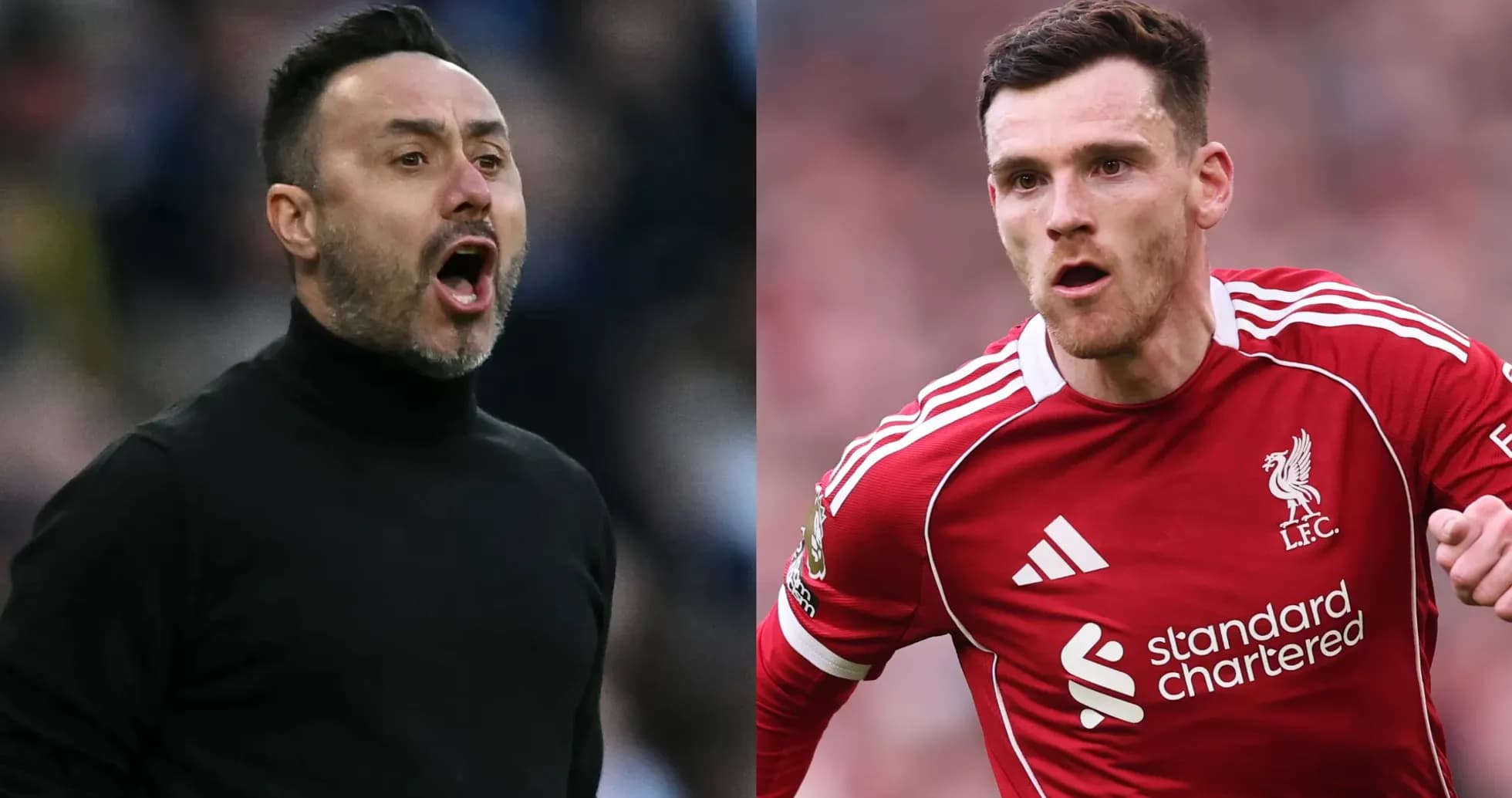
Andy Robertson: A New Era for Tottenham
Andy Robertson leaves Liverpool as something more than a successful signing. He goes as a reference point. A benchmark. For many, he is the finest left-back Anfield has seen in the Premier League era, and the numbers – and medals – back that up.
He arrives at Tottenham Hotspur as a 32-year-old free transfer. He arrives as a serial winner, a culture carrier, and still, crucially, as a full-back who can out-run and out-deliver most of those several years younger.
A Liverpool great, by any measure
Robertson walked into Liverpool from Hull City in 2017 for a reported £8million. He walks out having completed the set.
Two Premier League titles. A UEFA Champions League. An FA Cup. Two League Cups. A FIFA Club World Cup. All won as a virtual ever-present in Jurgen Klopp’s high-octane side.
His game was perfectly wired to Klopp’s demands. Relentless running, aggressive pressing, a refusal to let the tempo drop. Robertson didn’t just play in that system; he amplified it.
The respect spread well beyond Merseyside. After Liverpool beat Manchester United 3-1 at Anfield in December 2018, Jose Mourinho summed up the experience of facing him: “I am still tired from looking at Robertson. He makes 100-metre sprints every minute, absolutely incredible.” That line has followed the Scot ever since, because it felt accurate. It still does.
In the club’s history, only Alan Kennedy – scorer of two European Cup-winning goals – can genuinely rival him in the left-back conversation. On the Premier League stage, only Ashley Cole stands clearly above him in most people’s rankings. That is the level we are talking about.
The running machine on the flank
At his peak, Robertson covered more ground than almost any full-back in the country. In 2020/21 he ran 389.3km in the Premier League, the second-highest total for a full-back that season, just behind Luke Ayling.
The raw speed was one thing. The repeatability was another. From 2019 to 2022, no full-back in the division sprinted more. Three straight seasons at the top of the sprint charts underline what the eye always suggested: he never stopped.
His pressing became part of Liverpool folklore. The 13-second chase against Manchester City in January 2018 – Bernardo Silva, Kyle Walker, John Stones, Ederson, Nicolas Otamendi all harried in one ferocious, continuous burst – remains one of the defining defensive moments of the Premier League era. It was the embodiment of Klopp’s Liverpool in a single, wild sequence.
Tottenham fans will warm to that side of him very quickly. They have long demanded intensity from their players. Robertson brings it as standard.
An elite creator from deep
The numbers behind his attacking output are extraordinary.
Only two full-backs have produced 10 or more Premier League assists in three different seasons: Trent Alexander-Arnold and Andy Robertson. They did it together in 2018/19, 2019/20 and 2021/22, redefining what full-backs could be in an elite side.
Robertson’s personal haul for Liverpool in the league tells its own story:
- 11 assists in 2018/19
- 12 in 2019/20
- 10 in 2021/22
Since the start of 2017/18, among Premier League left-backs he ranks first for chances created, touches in the opposition box, big chances created and successful passes ending in the final third. He sits on 56 Premier League assists, the most by any left-back in the competition’s history.
Only Lucas Digne has delivered more successful open-play crosses from that side of the pitch in the same period. Robertson’s delivery, both whipped and driven, has been a constant weapon.
Stack him up against all defenders, not just left-backs, and the picture barely changes. Since 2017/18 he ranks:
- 1st for touches in the opposition box
- 2nd for chances created
- 2nd for big chances created
- 2nd for assists
- 1st for open-play crosses
- 3rd for successful open-play crosses
- 1st for successful passes into the final third
These are not the numbers of a solid, dependable full-back. They are the numbers of a playmaker who just happens to start his work 80 yards from goal.
Why Tottenham moved
Tottenham were never going to be alone in chasing Robertson once it became clear he would leave Liverpool on a free at the end of his contract. Juventus were among the clubs linked, and Spurs had already tested the water in January, only for Liverpool’s inability to recall Kostas Tsimikas from Roma to shut down that move.
Roberto de Zerbi, newly in at Spurs, pushed to revive the deal. He got his man.
“He brings experience, mentality and qualities,” De Zerbi said when the transfer was confirmed. “He’s a big player for us.” That line matters. Tottenham’s squad has talent, but the dressing room has been light on hardened, senior winners. Robertson changes that dynamic immediately.
On paper, Spurs already had options at left-back in Destiny Udogie and Djed Spence. On grass, they needed more. More voice. More nous. More reliability in big moments. Robertson, accustomed to the standards of a dressing room that regularly competed for major trophies, offers precisely that.
Back-to-back 17th-place finishes underline how far Spurs have slipped. They do not just need better players; they need people who know how to drag a team upwards. Robertson has lived that journey at Liverpool.
What version of Robertson are Spurs getting?
He is 32, yes, but far from finished. He will captain Scotland at the FIFA World Cup 2026, and his club numbers last season suggest there is plenty left in the tank.
In 2025/26 he started 11 Premier League matches for Liverpool and came off the bench 13 times, featuring in 35 games across all competitions. He no longer spends quite as much time bursting into the penalty area as he did in his mid-20s, but his heat map from last season still shows an aggressively high starting position and constant involvement in the final third.
More importantly for Spurs, his output per 90 minutes remains outstanding. In tackling, crossing productivity and chance creation, he outperformed every Tottenham defender in 2025/26.
Per 90 minutes last season:
- Passes into the box: Robertson 5.07, Spence 2.67, Udogie 1.75
- Tackle success: Robertson 75.00%, Spence 61.36%, Udogie 61.29%
- Successful open-play crosses: Robertson 0.92, Spence 0.44, Udogie 0.34
- Chances created: Robertson 1.54, Spence 0.81, Udogie 0.44
These are not the figures of a fading force. They are the figures of a player who, if trusted and kept fit, can still dictate games from left-back.
He will give De Zerbi width, balance and intelligence on that flank. He understands when to underlap, when to hug the touchline, when to sit and when to go. His decision-making, sharpened by years of competing at the top of the Premier League and in the Champions League, should mesh well with a coach who demands technical precision and bravery on the ball.
Raising the bar in north London
Tottenham are not just signing a left-back. They are importing a culture.
Robertson has lived inside a dressing room where anything less than maximum intensity was unacceptable. He has trained and played under Klopp, navigated title races, Champions League knockout ties, and the pressure of needing to win every three days. That experience does not fade with age; it deepens.
He is vocal, demanding, and unafraid to set standards. For a Spurs side that has too often drifted through seasons, that edge could prove as valuable as any whipped cross or recovery tackle.
De Zerbi wants intelligent, technical footballers who play with conviction and courage. Robertson fits that profile. He may no longer be the blur of red who seemed to sprint “every minute” in Mourinho’s words, but he remains a formidable athlete with a sharp football brain.
This feels like an astute piece of business from Tottenham. Low risk. High pedigree. Immediate impact.
The question now is simple: can Robertson, the Liverpool great, become the catalyst that helps Spurs remember what it feels like to compete for the biggest prizes again?




