Anderlecht vs PAOK: UEFA Europa League 3rd Qualifying Round Preview
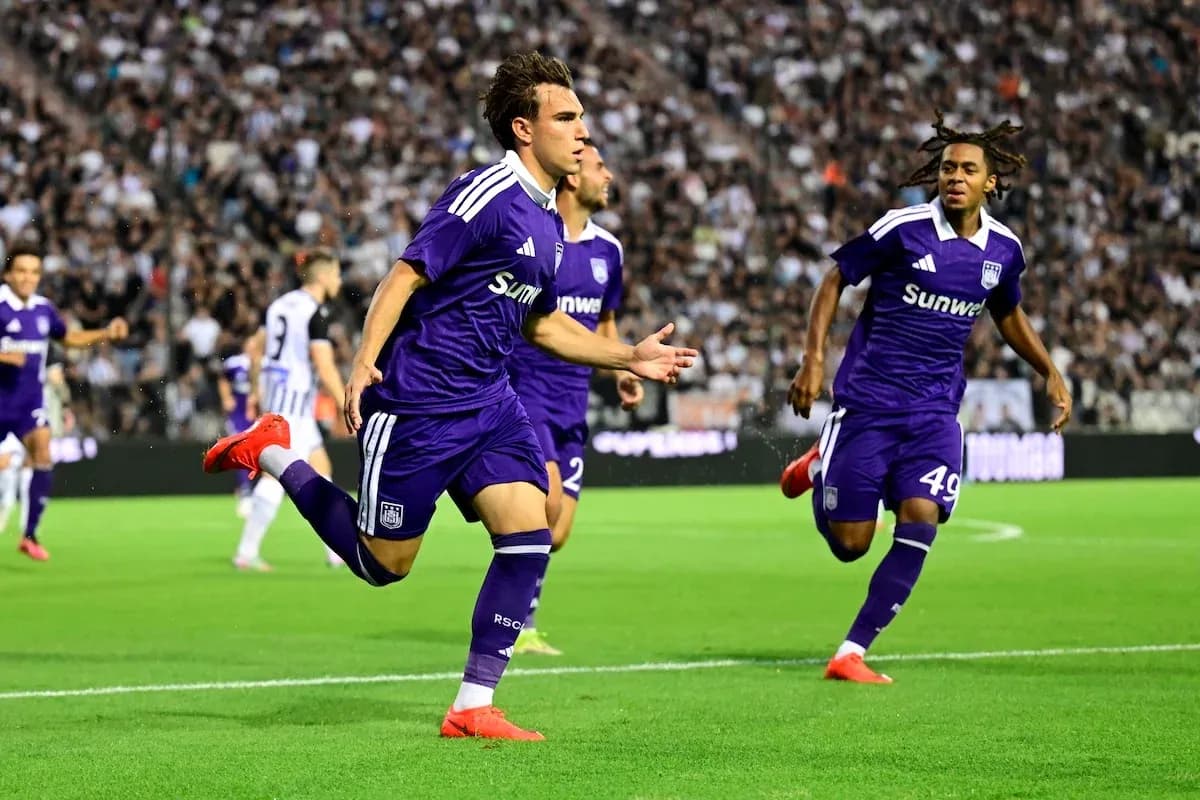
Anderlecht host PAOK at Lotto Park in the UEFA Europa League 3rd Qualifying Round second leg with a narrow but significant psychological edge after their 1–0 away win in Thessaloniki on 6 August. That result not only gives the Belgians a lead in the tie but also confirms they can control PAOK’s attack on the road, which is important as they now return to their own stadium.
From the official prediction model, Anderlecht are marginally favoured not necessarily to win outright, but to avoid defeat: the winner block points to Anderlecht with the comment “Win or draw”, and the main advice is a combo bet: double chance Anderlecht or draw with over 1.5 goals. Probabilities are split 45% home win, 45% draw, and just 10% for an away win, clearly shading the qualification narrative towards the hosts and a low likelihood of PAOK taking this leg in 90 minutes.
Recent tournament form is strong on both sides. Using the Europa League form strings, Anderlecht come in on “DWW” while PAOK show “WWL”. Anderlecht are unbeaten in three Europa League matches (2 wins, 1 draw), scoring 5 and conceding only 2, with an average of 1.7 scored and 0.7 conceded. PAOK mirror that attacking output with 5 scored in 3, but concede slightly more at 1.0 per game. The comparison indices back a slight overall edge for Anderlecht: form index 54 versus 46, equal attacking index at 50–50, but a clear defensive advantage at 60 versus 40. The total comparison index stands at 55.3 for Anderlecht against 44.8 for PAOK, reinforcing the model’s lean towards the home side in the tie context.
Goal timing patterns suggest a game that can open up around the edges of each half. Anderlecht have scored 2 of their 5 Europa League goals in the 0–15 minute window and 2 more between 76–90, showing they start and finish strongly. PAOK tend to strike between 31–60 minutes, with 4 of their 5 goals coming from 31–60. Defensively, both teams show vulnerability early: Anderlecht have conceded in 0–15 and 76–90, while PAOK have allowed 2 goals in the first 15 minutes and another late between 76–90. This supports the over 1.5 goals angle – both sides are capable of scoring and conceding at key phases.
Head-to-head data is limited but relevant: there is one competitive meeting on record in this tie, the first leg on 6 August at Toumba Stadium, where PAOK were at home and Anderlecht won 1–0. That result feeds directly into the comparison block, where Anderlecht lead the head-to-head and goals indices 100 to 0. It underlines that Anderlecht’s defensive structure has already proven effective against this specific opponent in this specific competition and season.
Turning to the market, the pre‑match odds show PAOK priced as a slight road favourite despite the model’s preference for Anderlecht not to lose. Home win odds range from 2.82 to 3.28, implying an approximate probability band of about 30–35%. Draw odds range from 3.07 to 3.52, translating to roughly 28–33%. Away win odds lie between 2.12 and 2.27, implying around 44–47%. Compared with the model’s 45% home, 45% draw, 10% away, bookmakers are clearly more optimistic about a PAOK win and far less about Anderlecht’s outright chances, while the model treats an away victory as a low‑probability event.
This discrepancy creates a clear betting angle. The official prediction advice is explicit: combo double chance Anderlecht or draw with over 1.5 goals. The data supports this: Anderlecht are unbeaten in the competition, have not failed to score, average 1.7 goals for and 0.7 against, and already beat PAOK away. Both teams’ goal profiles and early/late defensive lapses make at least two match goals a realistic baseline.
Match prediction: Anderlecht to qualify looks more likely, but for the 90‑minute market the best value-aligned play is following the model’s advice – Anderlecht or draw and over 1.5 goals. For a more conservative position, straight double chance Anderlecht or draw also aligns with the 90% combined home/draw probability from the prediction data versus a market that prices PAOK much stronger than the model suggests.