Anderlecht vs PAOK: UEFA Europa League 3rd Qualifying Round Preview
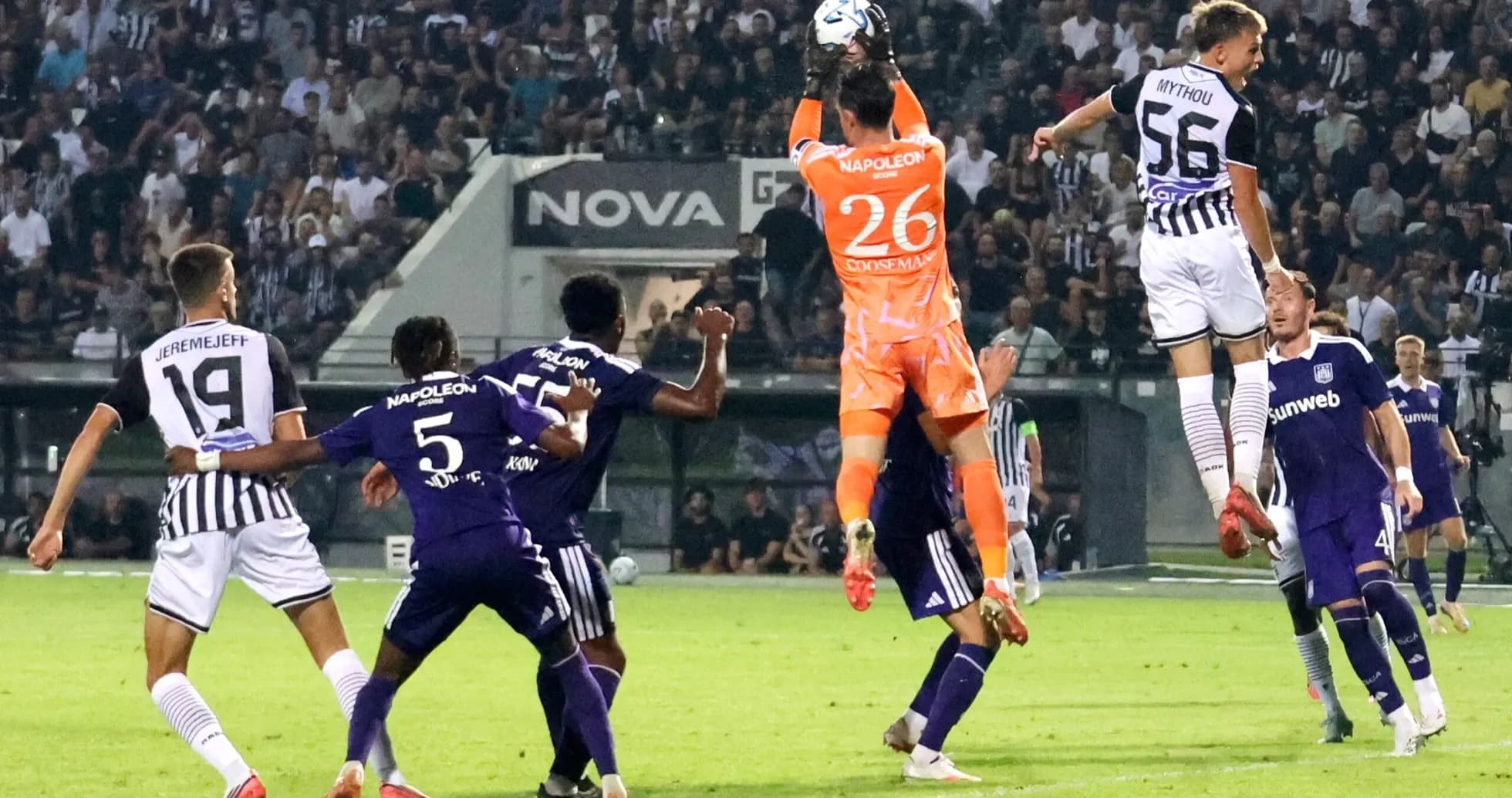
On a warm European night in Anderlecht, the floodlights of Lotto Park will cut through the August dusk as Anderlecht and PAOK walk out for a decisive UEFA Europa League 3rd Qualifying Round clash on 13 August 2026. With the tie finely poised after the first leg in Thessaloniki, the Belgian side return home with a narrow advantage and the chance to finish the job, while PAOK arrive with nothing to lose and a place in the main competition on the line.
Season Context
Early in this Europa League campaign, Anderlecht have made a quietly efficient start. Across 3 matches they are unbeaten, with 2 wins and 1 draw (played 3), scoring 5 and conceding just 2. That blend of productivity and control has given them a platform to push for a return to the European group stage, where both prestige and prize money are at stake.
PAOK mirror that sense of promise with their own strong opening. They have also played 3 matches, winning 2 and losing 1, with 5 goals scored and 3 conceded. The Greek side know that overturning the deficit in Brussels would not only rescue this tie but also underline their ambition to be a regular presence in European knockout football later in the year.
Form & Momentum
Anderlecht’s recent European form reads “DWW”, a pattern that speaks of a team growing into the competition (2 wins and 1 draw from 3 games). They average 1.7 goals scored and only 0.7 conceded per match (5 for, 2 against over 3), suggesting a side that can both create and manage games effectively. That balance was on display in Thessaloniki, where they struck once and then protected their lead.
PAOK arrive with a “WWL” sequence, which underlines their threat despite the setback in the first leg (2 wins and 1 loss from 3). They also average 1.7 goals per game (5 in 3) but are a little looser at the back, conceding 1.0 per match (3 in 3). That profile hints at a team capable of explosive spells going forward, but one that can be opened up if forced to chase the game.
Head-to-Head Patterns
History between these two clubs at this stage is still being written, but the first chapter fell Anderlecht’s way. On 6 August 2026, PAOK hosted Anderlecht at Toumba Stadium and the Belgian side emerged with a 1-0 win (1-0, UEFA Europa League, season 2026, August 2026). That result, secured away from home, gives Anderlecht both a psychological edge and a precious aggregate lead.
Beyond that recent meeting, there are no additional competitive clashes in the provided data to deepen the historical narrative between the clubs. Instead, the story is of a fresh rivalry: PAOK will feel they underperformed in front of their own fans, while Anderlecht will believe that their disciplined away display is a template they can refine back at Lotto Park.
The first leg scoreline also feeds into the broader pattern suggested by the prediction models, which lean slightly towards Anderlecht while acknowledging that the tie remains finely balanced.
Tactical Preview
Anderlecht’s European profile so far suggests a side comfortable in structured, modern shapes. Their most used systems have been 4-4-2 (2 matches) and 4-3-3 (1 match), hinting at flexibility between a more direct, two-striker approach and a possession-oriented front three. With 5 goals scored and only 2 conceded in 3 games, they have shown they can press high in a 4-3-3 or drop into a compact block in 4-4-2 without sacrificing too much attacking edge.
In midfield, players such as E. Llansana and M. Stroeykens give Anderlecht options between control and verticality, while wide or advanced roles for the likes of O. Antman and D. Sikan can stretch PAOK’s back line. The fact that Anderlecht have yet to fail to score in this European run (0 matches without a goal) underlines the importance of their front line’s movement and variety.
PAOK, by contrast, have leaned heavily on a single structure: a 4-2-3-1 used in all 3 recorded European outings. That shape is designed to maximise their creative band behind the striker, with players like K. Despodov, D. Pelkas, A. Živković and Taison capable of interchanging and attacking the half-spaces. Their 5 goals in 3 matches reflect the potential of that attacking quartet, especially when the full-backs push on.
However, the same adventurous approach has left spaces to exploit, as shown by the 3 goals conceded in those 3 games. The double pivot, potentially including M. Camara or S. Meïté, will need to be disciplined to prevent Anderlecht’s midfield from running at the back four. If PAOK are forced to open up early in search of an away goal, transitions could become decisive, with Anderlecht’s wide players and mobile forwards poised to counter.
Squad depth may also play a role. Anderlecht’s list includes a number of young attackers and midfielders—such as M. Cvetkovic, E. Dao and Jayden Onia Seke—offering fresh legs late on. PAOK, meanwhile, can turn to experienced options like A. Jeremejeff and T. Ali to change the profile of their attack if they are chasing a goal in the final stages.
Statistical Snapshot
- Competition: UEFA Europa League, season 2026 — 13 August 2026.
- Venue: Lotto Park, Anderlecht.
- Prediction: Win or draw for Anderlecht — Combo Double chance: Anderlecht or draw and +1.5 goals.
- Win Probabilities: Home 45% / Draw 45% / Away 10%.
- Model: Anderlecht 55.3 — PAOK 44.8.
Betting Verdict
The prediction model leans towards Anderlecht avoiding defeat, supported by their unbeaten European run so far (DWW over 3 matches) and the 1-0 away win in Thessaloniki that gives them a cushion at Lotto Park. At the same time, the win probabilities — 45% home, 45% draw, 10% away — and the relatively even comparison model (55.3 to 44.8) underline that this is no foregone conclusion, especially given PAOK’s own strong start (WWL and 5 goals scored in 3 games).
Bookmaker odds for the match winner market generally frame Anderlecht as a very slight underdog or near-equal to PAOK on the night: home prices around 2.80–2.94 imply roughly 34–36% for an Anderlecht win, draws around 3.00–3.15 imply about 32–33%, and away odds around 2.55–2.68 suggest roughly 37–39% for PAOK. That contrasts with the model’s much lower away probability, indicating that the value may lie more in safety-first angles than in picking a single winner.
Given the data and the first-leg pattern, the advised angle of “Anderlecht or draw and +1.5 goals” aligns with both teams’ tendency to score (5 goals each in 3 games) and Anderlecht’s defensive solidity (only 2 conceded). A match where PAOK must take more risks should create chances at both ends, but the hosts’ aggregate advantage and unbeaten run make the double-chance component a logical way to back the model’s expectation while respecting the bookmakers’ view of a tight, high-stakes contest.