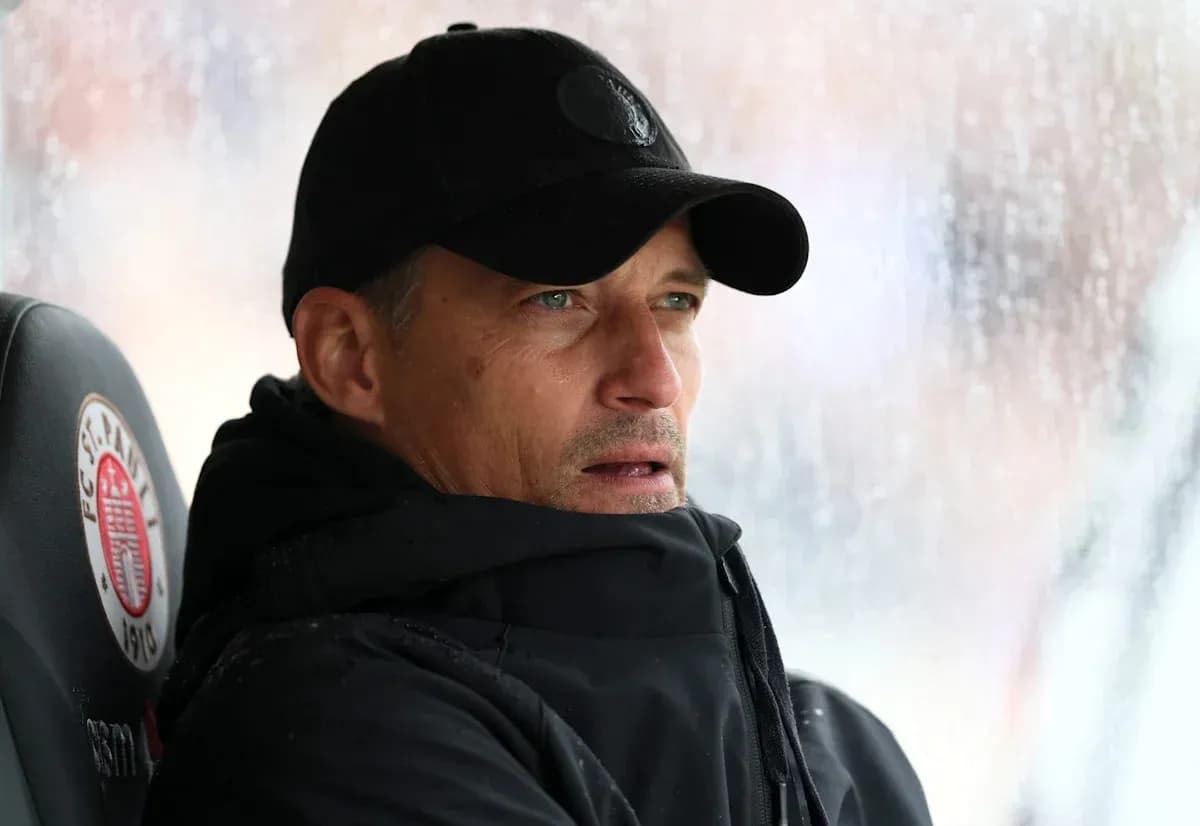
Alexander Blessin Takes Charge at Borussia Mönchengladbach
Borussia Mönchengladbach have turned to Alexander Blessin in a bid to stop an early-season freefall and restore some order to a team leaking goals at an alarming rate.
The club confirmed on Tuesday that the 53-year-old has signed a contract through 2028 and will be unveiled on Wednesday alongside sporting director Rouven Schröder. His first official act after the international break? A Rhine derby away at 1. FC Cologne on October 11. No gentle warm-up.
From 5-0 humiliation to a new man in charge
Blessin replaces Eugen Polanski, who was dismissed after Gladbach’s 5-0 hammering at Freiburg on Matchday 3. Jan-Moritz Lichte stepped in on an interim basis and, for a moment, stirred some life into a shaken squad. Saturday’s 3-4 home defeat to Mainz still ended in zero points, but it at least showed attacking intent and a willingness to fight.
The table, though, is unforgiving.
Gladbach go into the international break rock bottom of the Bundesliga, with a 6:16 goal difference. Only Union Berlin have conceded more, and those 16 goals against equal the Bundesliga record for most conceded after four matchdays.
That is the mess Blessin walks into.
A return shaped by rise and collapse at St. Pauli
Blessin comes back to Germany’s top flight just four months after relegation with FC St. Pauli, a demotion that overshadowed the impressive work he had done in Hamburg before everything unraveled.
He took over from Fabian Hürzeler following St. Pauli’s promotion in 2024 and immediately built one of the hardest sides in the league to break down. In his first Bundesliga season at the Millerntor, St. Pauli conceded only 41 goals – second only to Bayern Munich – and secured survival. A newly promoted club with the league’s second-best defensive record: that caught attention.
Clubs noticed. In April 2025, reports linked Hoffenheim and Wolfsburg with Blessin as he guided St. Pauli toward safety again. Early in the following campaign, it looked like the next step was coming. By September 2025, tactical analysis pieces were focusing on an unbeaten St. Pauli side sitting near the top of the table with seven points from three matches.
Then the floor gave way.
A nine-game losing streak dragged the club straight into a relegation battle. Blessin stayed in the job under heavy pressure and briefly appeared to have found an escape route. Wins over Werder Bremen and Hoffenheim, plus a draw with Eintracht Frankfurt, brought seven points from three games and a hint of momentum.
Even after a 2-0 defeat in Gladbach in mid-March, there were still reasons to believe St. Pauli could survive. Blessin had consistently squeezed results from a limited squad, and performances such as a 2-1 win over Stuttgart showed there was still energy and resistance in the group.
Then came the decisive collapse.
St. Pauli threw away a lead to lose 2-1 to Freiburg. Blessin later apologized for insulting referee Florian Badstübner in an emotional post-match interview. A 1-1 draw at Union Berlin followed, then Bayern tore through the Kiezkicker 5-0 at the Millerntor. A 1-1 draw with Cologne barely slowed the slide.
The key chance slipped away against bottom side Heidenheim. A 2-0 defeat in a must-not-lose fixture left St. Pauli with almost no margin for error. By then, the team had taken just two points from five matches since mid-March. The pattern never changed.
A 2-1 loss to Mainz, another 2-1 defeat at RB Leipzig, and suddenly survival hinged on a final-day showdown with Wolfsburg. St. Pauli lost 3-1 at home and finished bottom of the Bundesliga. From mid-March to season’s end, Blessin’s side collected only two points from eight games and never won again.
Relegation forced St. Pauli to start over without him.
Gladbach bet on structure in chaos
Gladbach, though, are looking beyond those final grim months in Hamburg. Blessin arrives with a detailed coaching education and a CV that stretches far beyond one relegation.
He spent eight years in RB Leipzig’s academy system, learning within one of Europe’s most structured development environments. His first senior role came at KV Oostende, and he later coached Genoa and Union Saint-Gilloise. In Belgium, he lifted the domestic cup and twice earned Coach of the Year honors.
That track record matters in a club desperate for stability.
Since Marco Rose left for Borussia Dortmund in 2021, the Gladbach dugout has been a revolving door. Adi Hütter lasted a single season. Daniel Farke followed the same pattern. Gerardo Seoane arrived in June 2023 and was gone by September 2025. Polanski’s reign ended after just over a year.
Blessin now becomes the fifth permanent head coach in that span.
What Gladbach want from him is no mystery. They need the defensive organization that underpinned his first St. Pauli season, and they need it quickly. Sixteen goals conceded in four games is not a blip; it is a crisis.
The timing offers a small advantage. The international break gives Blessin a pocket of time on the training pitch before the real pressure starts. No points on the board, a fragile back line, and an emotionally charged derby at Cologne as his first competitive outing.
For a club already staring at the wrong end of the table, that night on the Rhine will say a lot about whether this appointment signals another short-lived experiment – or the beginning of something sturdier.