Ajax’s Bold Rebuild: Cruyff's Vision for Success
Jordi Cruyff leans into the name first. Ajax.
For the club’s new sporting director, that single word still opens doors. After a bruising period on and off the pitch, he has just overseen one of the most eye‑catching transfer windows in recent Eredivisie history – and he insists the badge still does half the talking.
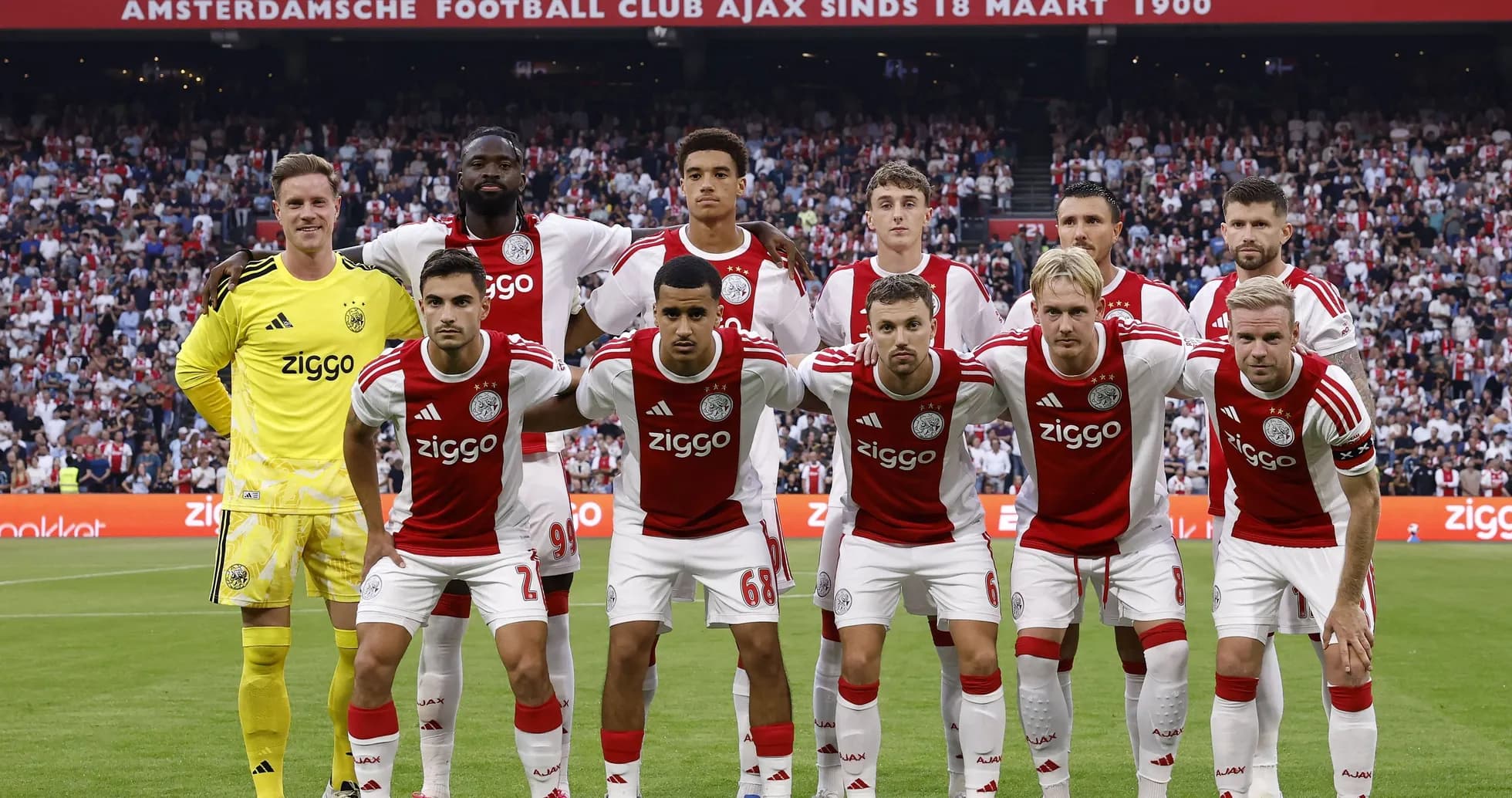
“When you mention the name Ajax, you can see from their eyes that they are very interested,” he told ESPN NL, reflecting on a summer that brought Marc-Andre ter Stegen, Sofyan Amrabat and Julian Brandt to Amsterdam. “We have to get back to the top. Senior players want to compete and perform at their peak right now.”
Elite names. No transfer fees. And a club trying to reinvent itself without losing its soul.
The Human Pitch
Cruyff made it clear he does not sell players on spreadsheets or tactical diagrams alone. His method is personal. Direct. Human.
He focuses on one‑to‑one connections, not just on systems and roles, and that approach produced what he calls his favourite moment of the window: the stealth capture of Julian Brandt.
Ajax worked in total silence. No leaks, no teasing briefings, no drawn‑out saga. Negotiations stayed locked away until the club suddenly dropped the announcement on a Friday evening.
“For once, we as a club showed that we determine when information comes out,” Cruyff said. Then he reached for a line from his father, Johan: “If you don’t shoot, you will never score. Sometimes you just have to try.”
Ajax shot. Brandt signed. And the message went out across Europe: the Amsterdammers are still capable of a heavyweight move.
Free Agents, Not Free Risks
Outside the club, the debate quickly turned to money. Could Ajax really load the dressing room with high‑profile arrivals without blowing up their wage structure? Was this a gamble dressed up as prudence?
Cruyff pushed back hard.
“This is not risky at all,” he insisted. For him, the danger lies elsewhere. “The biggest risk is paying expensive transfer fees from club to club. Eight of eleven new players arrived for free or on loan.”
The model is clear: invest in salaries, protect the balance sheet by avoiding huge fees. If a signing fails, the club is not left with a depreciating asset bought at a premium. If he thrives, Ajax either keep a leader or cash in on a player who cost nothing up front.
Cruyff underlined that sales revenue has comfortably outstripped spending, an important cushion in a season without Champions League income. The books, he says, remain healthy. The pressure now sits squarely on the pitch, not in the accounts office.
Accepting the Springboard Reality
Not every story this summer ended with an Ajax handshake. Mika Godts left for Paris Saint-Germain, another reminder of where the Eredivisie stands in the modern hierarchy.
Cruyff did not try to dress it up. He accepted that losing young talents to Europe’s superclubs is part of the landscape – and part of Ajax’s identity.
This league, this club, still serve as a launchpad. Develop, showcase, sell. Repeat. The challenge is to do that while still competing for trophies, not becoming a permanent feeder.
So Ajax doubled down: they cashed in, then brought in experience on free transfers and loans, trying to tilt the cycle in their favour.
De Topper as the First Real Verdict
Now comes the real test. De Topper against PSV looms, and with it a first hard look at this radically reshaped squad.
PSV arrive with continuity and clarity, a side built over several seasons with a settled core. Ajax come with a new spine, a new voice in the boardroom, and a fanbase desperate to see proof that the rebuild is more than a glossy recruitment drive.
Cruyff knows the scale of the task but refuses to lower the bar.
“We have taken a big step in the right direction,” he said. “Our job now is to prove it tangibly on the pitch.”
The window is closed. The accounts are balanced. The names are in the dressing room.
Now Ajax have to show whether this bold, low‑fee revolution can still carry them back to the top – and whether the power of that famous name is enough to turn promise into silverware.