World Cup Highlights: Messi, Goals, and Rising Stars
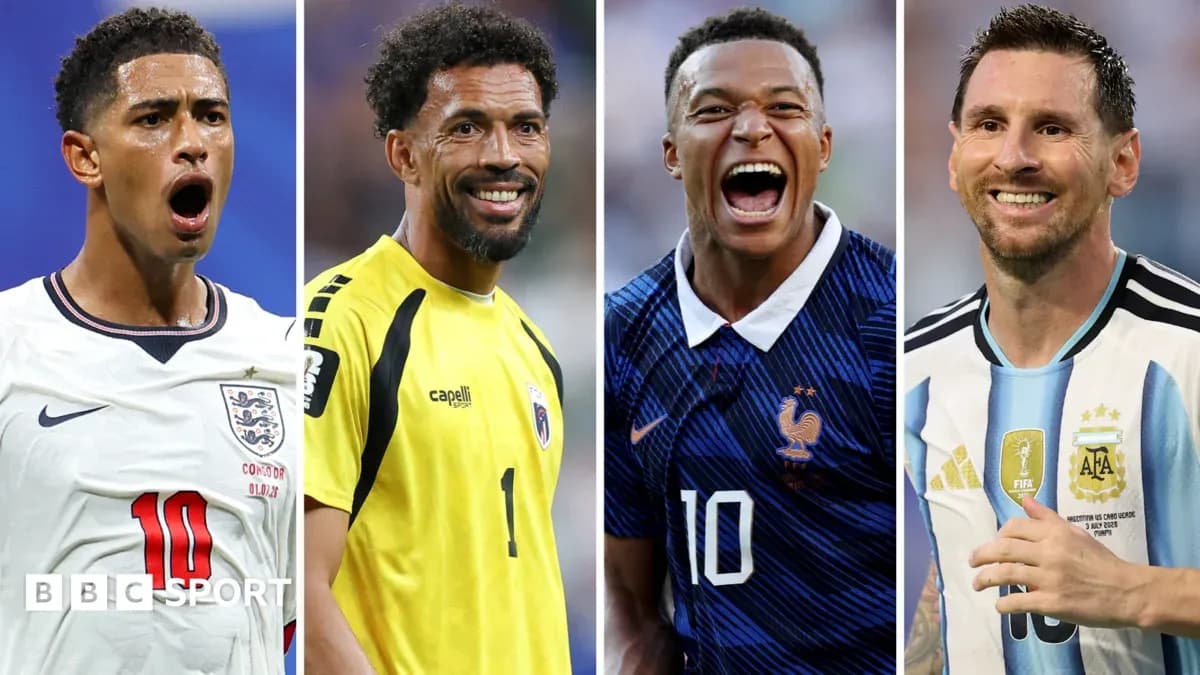
Lionel Messi bent his run, killed the ball with one touch, and with the next he ripped it into the top corner. A sliver of space, a difficult pass, and Argentina’s 39-year-old conductor made it all look absurdly simple against Cape Verde. Technique, timing, nerve. The deadlock gone in an instant.
Cape Verde, though, refused to play the role of grateful guests.
Deep into extra time, with Argentina still trying to shake them off, Sidny Cabral stepped in from just inside the box and curled a right-footed strike that tore past Emiliano Martinez and into the top corner. The clock showed 103 minutes. The stadium shook. Martinez never moved. For a heartbeat, the world champions stared at the brink of humiliation.
Argentina survived that night, edging it 3-2, but Cabral’s goal joined Messi’s on the tournament’s highlight reel – a reminder that genius can come from anywhere, not just from the usual suspects.
A World Cup of spectacular strikes
This World Cup scattered great goals across the United States like confetti.
Kerim Alajbegovic lit up the group stage for Bosnia-Herzegovina against Qatar, slaloming through challenges before smashing a rising right-foot shot that screamed class from the moment it left his boot.
Erling Haaland delivered something different: brutality disguised as ease. Against Brazil in the last 16, what looked like a casual swing of his right boot turned into a thunderous, perfectly placed winner for Norway. It was the decisive moment in a performance that shoved Brazil out of the tournament and stripped away the myth that they would inevitably find a way.
Julian Alvarez provided the dagger in a suffocating quarter-final between Argentina and Switzerland. Extra time, legs heavy, nerves fraying. Then Alvarez stepped into range and sent a swerving right-foot drive arcing into the top corner. A tight game torn open by a single, ruthless decision.
Antonio Nusa did the same for Norway against Ivory Coast. A shimmy in the box, a defender wrong-footed, and a precise curling finish into the top corner. No fuss, no backlift, just cold execution.
Goalkeepers who refused to be beaten
The outfield fireworks needed a counterweight, and the keepers delivered.
Johny Placide produced a double save for Haiti against Morocco that belonged in slow-motion replays but happened at full speed. First, he blocked with his legs. Before anyone could react, he sprang left and clawed away the follow-up with one hand. A scramble turned into a statement.
Jordan Pickford had his own defining night at the Azteca Stadium in England’s win over Mexico. Early on, Raul Jimenez’s header seemed destined to nestle in the corner. Pickford flung himself low to his left and turned it away. In a stadium that pulsed with Mexican noise, that save changed the tone of the night.
Orjan Nyland’s best stop in Norway’s upset of Brazil came not from Vinicius Jr or Rodrygo, but from his own defender. Kristoffer Ajer inadvertently diverted the ball towards his own goal, forcing Nyland into a desperate backward scramble. He leapt, twisted, and somehow turned the ball on to the post. Disaster averted by instinct and agility.
Aymen Dahmen kept Tunisia alive against Japan with a reaction save that defied logic, repelling Takehiro Tomiyasu from close range as the ball flirted with the goal line but never crossed it.
Patrick Beach, for Australia against Turkey, hurled himself to his right to touch Abdulkerim Bardakci’s rising 30-yard strike on to the post. Alireza Beiranvand did something similar for Iran, recovering from Kevin de Bruyne’s shot to somehow get back and block Maxim de Cuyper from inside the six-yard box. The ball should have been in the net. It wasn’t.
Rodri’s crown, Messi’s defiance
When the dust settled, the official Golden Ball went to Spain’s captain, Rodri. He ran Spain’s tournament with the same quiet authority he shows at Manchester City, anchoring the best team in the competition and giving them a platform so strong they conceded only one goal all tournament.
Messi, with the Silver Ball, refused to fade into the background. This was no sentimental farewell tour. At 39, he still bent matches to his will, none more than Argentina’s semi-final against England, when he slowed and sped the game as he pleased, pulling strings, drawing markers, opening space for others.
Kylian Mbappe, the Bronze Ball winner, arrived in the United States looking and sounding like a man ready to own the stage. Relaxed in the press room, ruthless on the pitch. Goals, leadership, relentless running off the ball. His work rate matched his star power.
Jude Bellingham, though, became England’s heartbeat. The Real Madrid midfielder dragged his country through games by sheer force of personality, then elevated his level again as the stakes rose. In Miami, when Norway’s fans were already singing about England going home, it was Bellingham who answered them with the equaliser.
Lionel Messi’s name kept coming back in every conversation about the tournament’s standout performer. Eight goals and four assists in eight games told one story; the two decisive assists against England told another. At 39, he played as if the laws of age and physics did not apply.
Michael Olise left his own imprint, his seven assists for France and that audacious scissor-kick against Sweden in the last 32 living on in the mind even though it crashed against the post. Rodri’s admirers called him irreplaceable. Others simply called Messi the greatest.
A new generation steps into the light
Spain’s Pau Cubarsi walked away with the award for best young player. Nineteen years old, every minute played, and a defence anchored with a calm that belied his age. His performance against France in the semi-final was the sort that redefines careers. Barcelona knew what they had; now the world does too.
He was not alone.
Morocco’s Ayyoub Bouaddi, already well known to Lille fans and Ligue 1 watchers, turned an opening match against Brazil into a personal coming-out party. His movement off the ball in New York New Jersey Stadium drew comparisons with Patrick Vieira and Luka Modric. The ball often went one way; Bouaddi’s intelligence pulled the game another.
Erling Haaland hardly fits the usual “breakout” label, but in the United States his impact pushed him into a different stratosphere. He left as a household name far beyond Europe.
Cape Verde’s 40-year-old goalkeeper Vozinha became an unlikely global cult hero. Seven sensational saves in a goalless draw against Spain on their World Cup debut. Eight more as Cape Verde dragged Argentina to the edge of elimination. His performances turned his Instagram following from around 50,000 into more than 29 million.
For the USA, full-back Alex Freeman used the tournament to announce himself. His performances drew praise from coach Mauricio Pochettino, who suggested he could become one of the best in the world in his position.
Switzerland’s Johan Manzambi, 20 years old and fearless, played with a smile, scoring three goals in four games before injury cut his tournament short. That did not stop Aston Villa moving for him, a deal of around £50m a measure of how highly he is rated.
Mexico’s 17-year-old midfielder Gilberto Mora slipped into the starting line-up and played with the poise of a veteran, carrying shades of Luka Modric in the way he saw the game.
Stadiums, scenes and a World Cup that felt different
Some nights will not fade.
The Azteca for Mexico v England might just have been the finest atmosphere of the past seven World Cups for those who were there. Noise as a physical force, colour in every corner, and a Mexican national anthem that sent shivers through the press box.
Outside the Boston stadium, Paraguay fans staggered out in tears and disbelief after their penalty shootout win over Germany. One father and son, wrapped in flags, called it the best day of their lives. That is what a World Cup can do: turn a single night into a lifetime memory.
Messi’s opening hat-trick of the tournament signalled his intent. He was not done. He was coming for another trophy.
Cabral’s equaliser against Argentina became an instant classic, replayed and re-lived, a goal that turned Cape Verde from plucky debutants into genuine threats for one wild, unforgettable spell in Miami.
On the road, the World Cup wrapped itself around everyday life. Tailgate parties in Philadelphia with sausages cooked on the back of pick-up trucks. Fans stopping reporters for selfies just because they carried a BBC microphone. The same question over and over: “Is it coming home?”
Not everything worked. The final at MetLife Stadium in New Jersey drew criticism. Huge, yes. But expensive, awkward to reach, and lacking the intimacy and ease of a venue like Philadelphia’s stadium complex.
Giants that stumbled
Brazil arrived with Carlo Ancelotti and left with regrets. Slow, uninspired, un-Brazilian. Norway exposed every flaw in the last 16, and when Haaland’s winner hit the net, it felt like a verdict as much as a result.
Senegal brought arguably the most talented squad in their history but never found the right environment off the pitch. Two goals up against Belgium in the last 32, they seemed ready to rescue their campaign, then tactical errors and poor game management dragged them under. A golden generation saw a golden chance slip away.
Scotland’s failure to grab third-placed qualification hurt, the delay before elimination confirmed only prolonging the pain.
Cristiano Ronaldo and Portugal departed with a whimper after a 1-0 last-16 defeat by Spain. Three goals in five games for Ronaldo, but the team never reached the levels expected of pre-tournament contenders.
The USA started brightly, carried by a wave of home optimism, only for controversy around Folarin Balogun and a limp exit to Belgium in the last 16 to puncture the mood. For France, a flat semi-final against Spain left their star-studded frontline looking strangely ordinary.
Even Brazil under Ancelotti, a project built with the deepest of expectations, crashed out earlier than they or anyone else had planned.
The fans who owned the tournament
If the players wrote the script, the supporters gave it sound and colour.
Mexico’s fans turned every city they touched into a celebration. In Mexico City, an MC in a restaurant asked diners where they were from. When a table said “England”, the room broke into spontaneous applause. At the Azteca and beyond, the Mexican support became the beating heart of the World Cup.
Curacao’s small but deafening travelling army in Philadelphia made a mockery of population size. For 48 hours when Brazil were in town, that same city felt more like Rio or Sao Paulo, their fans flooding streets and stadiums alike.
Colombia’s followers took over Arrowhead Stadium in Kansas City against Ghana, turning it into a carnival. Norway’s fans exported their Viking row celebration, entire stands sitting in lines and “rowing” in unison. It became a global meme, a ritual that peaked when players joined them on the pitch after games.
In Los Angeles, Mexico’s presence could be heard in fireworks and seen in the sea of green shirts. In Miami and Kansas City, Argentina’s support arrived in waves of 60,000 or more, singing without pause, smothering stadiums in sky blue and white.
Norway’s fans even found time for mischief, taunting England with “You’re going home” in Miami when leading 1-0. Moments later, Bellingham equalised. Football has a long memory for those little twists.
And somewhere in all that noise, Messi kept finding the ball, kept deciding games, kept bending this World Cup to his will. At 39, with the world watching and new stars rising all around him, he still refused to step aside. The question now is not whether he has done enough, but how long he can keep rewriting the limits of what is possible.