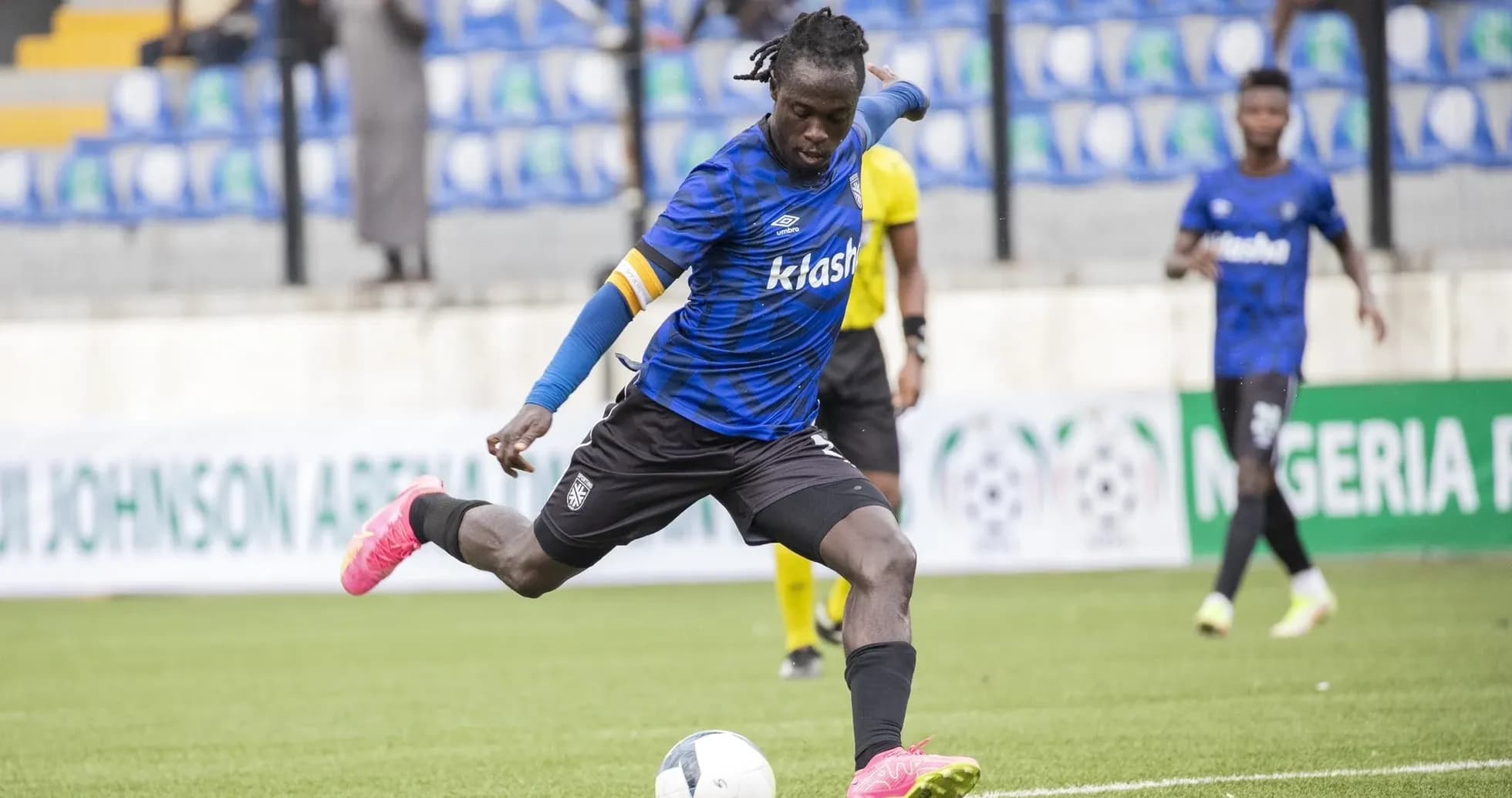

Warri Wolves Secure Home Victory Against Shooting Stars
Warri Township Stadium emptied under the late-afternoon sun with the scoreboard locked at 1–0, but the story of Warri Wolves versus Shooting Stars felt far richer than a single goal. In a league where margins are thin and travel is unforgiving, this was a meeting of two sides still sketching out their seasonal identities in the NPFL Regular Season - 6.
I. The Big Picture – Home fortress vs fragile travellers
Heading into this game, Warri Wolves sat 13th with 7 points from 5 matches. Their overall goal difference stood at -1, the product of 3 goals scored and 4 conceded in total. Yet that negative balance hides a clear split personality: at home they had been flawless. Two home fixtures, two wins, 2 goals scored and none conceded. Their home averages underlined that steel: 1.0 goals scored per match at Warri Township Stadium, 0.0 conceded.
On their travels, Wolves had been far less convincing, but this fixture was about protecting a growing fortress. The 1–0 win over Shooting Stars extended an already perfect home record and reinforced a pattern: this team does not need volume in attack when the defensive structure at home is this tight.
Shooting Stars arrived 16th with 6 points from 4 games, perfectly balanced overall with 5 goals scored and 5 conceded, giving them a goal difference of 0. But that balance was deceptive. At home they had been vibrant – 2 wins from 2, 4 goals scored and just 1 conceded. Away, however, they were brittle: 2 defeats from 2, 1 goal scored and 4 conceded. Their away defensive average of 2.0 goals conceded per match contrasted sharply with Warri Wolves’ 1.0 goals scored at home, setting up a classic “home edge vs away vulnerability” narrative.
The match itself – 1–0 at half-time, 1–0 at full-time – followed the script of Wolves’ season: controlled, low-scoring, and built on defensive assurance.
II. Tactical Voids and Discipline – Edges in the margins
There were no listed injuries or suspensions, so both coaches had full squads to select from. That lent this contest a purity: no excuses, only tactical choices.
Warri Wolves’ season-long disciplinary pattern had been relatively calm but with a subtle warning. Of their yellow cards, 66.67% had come between 31–45 minutes and 33.33% between 76–90 minutes. That points to a team that tends to tighten the screw in the closing stages of each half, willing to take a card to break rhythm or protect a lead. No red cards all season reinforced an image of controlled aggression rather than recklessness.
Shooting Stars, by contrast, walked a disciplinary tightrope. Their yellow cards were spread across 16–30 minutes (20.00%), 46–60 (40.00%), and 76–90 (40.00%), but the real alarm bell was the late-game red: 100.00% of their reds had arrived in the 76–90 window. This is a side that often unravels when the game stretches and fatigue sets in.
In a tight 1–0 away defeat, that late-game profile matters. Even without specific card details from this fixture, the broader pattern suggests that as Warri Wolves defended their lead, Shooting Stars were always at risk of disciplinary self-sabotage in the final quarter-hour.
III. Key Matchups – Hunter vs Shield, Engine Room battles
Without official formations listed, the tactical shapes had to be read from personnel and season tendencies.
For Warri Wolves, the defensive “shield” began with goalkeeper B. Adeniyi in the number 1 shirt, fronted by a back line likely anchored by the likes of G. Oham, E. Itolowo and S. E. Gift. At home this unit had been immaculate: 2 matches, 0 goals conceded, 2 clean sheets. Across the whole campaign, Wolves had kept 3 clean sheets in 5 games in total, an impressive ratio for a side in mid-table.
In midfield, players such as E. Uzoechi, C. Olisemah and U. Sabastine offered the connective tissue between defence and attack, while the creative and attacking burden fell on the likes of O. Egbo and C. Orji. With Warri Wolves averaging only 0.6 goals scored per match overall, but 1.0 at home, their “hunter” was less about a single prolific forward and more about a collective capable of striking once and then locking the game down.
That hunter met a Shooting Stars back line that had struggled away from home. With M. Lawal in goal and defenders like D. Ojietefian, G. Adelowo, J. Apaingolo and I. Yusuf ahead of him, Shooting Stars had still conceded 4 goals in 2 away matches heading into this game. Their away defensive average of 2.0 goals conceded per match was double Warri Wolves’ home scoring rate, and while they limited Wolves to just 1 goal here, the margin for error was always slim.
In the “engine room”, Shooting Stars relied on the likes of S. Amos and O. Akala to control tempo and shield their defence, while attacking threats such as J. Atule, R. O. Olanrewaju and A. Mustapha tried to stretch Wolves’ back line. But away from home, Shooting Stars’ attack had been muted: only 1 goal in 2 away fixtures, an average of 0.5. Against a Wolves side that had never conceded at Warri Township Stadium this season, that was always going to be an uphill battle.
IV. Statistical Prognosis – A result written in the numbers
Following this result, the numbers and the narrative converged neatly.
Warri Wolves’ home identity is now fully formed: 3 home matches in total, 3 wins, no goals conceded at Warri Township Stadium this campaign. Their season-long defensive average of 0.8 goals conceded per match overall is dragged up only by away struggles; at home, 0.0 conceded per game is title-contender territory, even if their attack remains modest.
Shooting Stars continue to live a double life. At home, their attacking average of 2.0 goals per match and defensive average of 0.5 conceded speak of a side that can dominate in Ibadan. Away, however, 0.5 goals scored and 2.0 conceded per match underline why they left Warri empty-handed again. Add in a season with 1 penalty taken and 1 missed – a 0% conversion rate from the spot – and you see a team that has not yet learned to seize fine margins on the road.
In xG terms, even without explicit figures, the profiles suggest a low-event home win was always the likeliest outcome: a Wolves side that scores just enough and defends superbly at home, against a Shooting Stars outfit that concedes heavily and struggles to score away. The 1–0 scoreline at Warri Township Stadium did not just reflect 90 minutes; it crystallised the deeper statistical truths of both campaigns so far.