
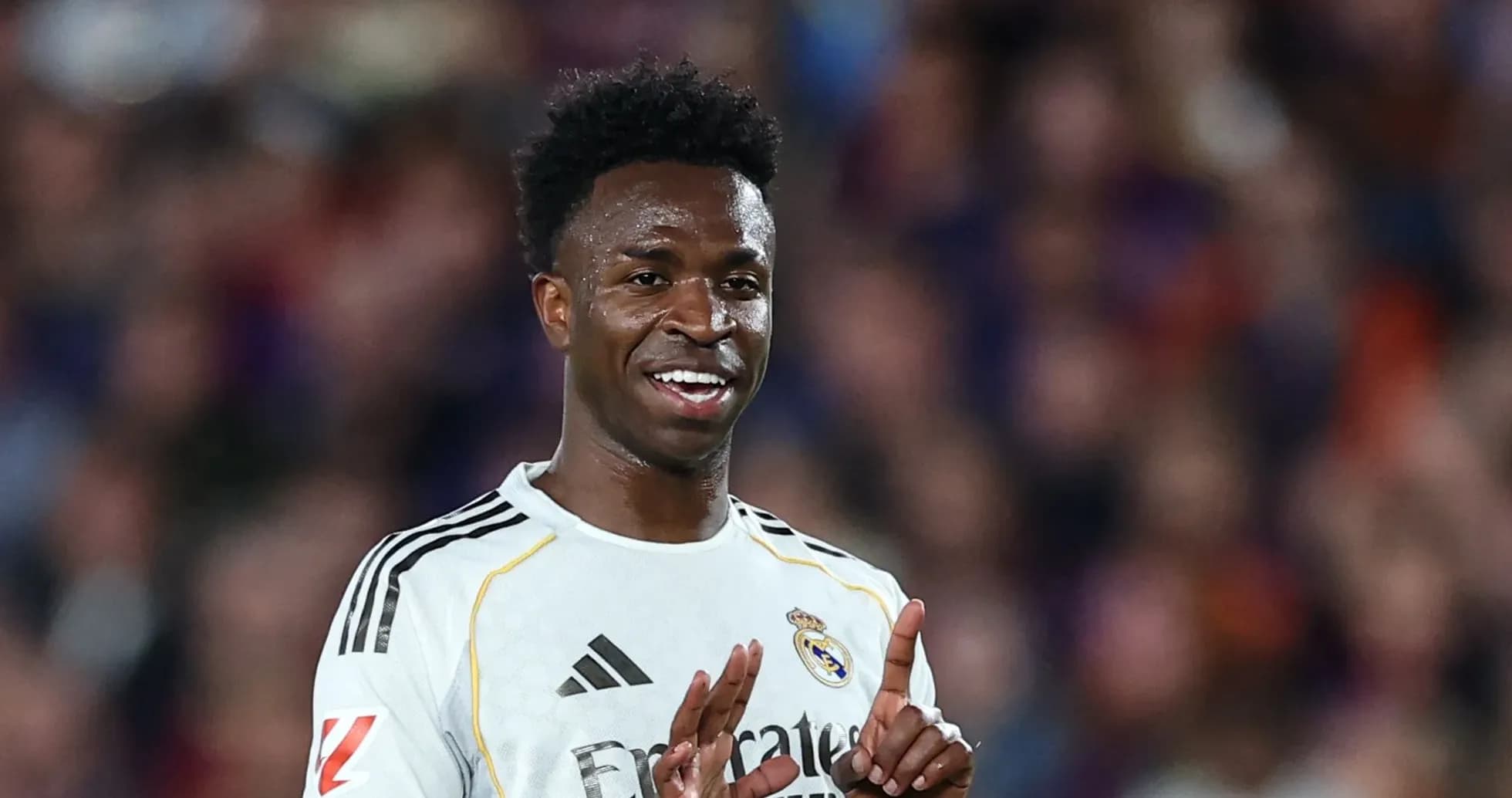
Vinicius Jr's Future: Real Madrid vs Arsenal
For 18 months, Real Madrid lived with a question they never truly wanted to ask: what if Vinicius Jr walked away?
Talks dragged. Deadlines slipped. The player who had become the face of their post‑Benzema era suddenly looked closer to the exit than at any point in his Bernabeu career. And waiting, with a plan and a cheque book, were Arsenal.
Arsenal’s bold pitch
The Premier League champions did not lurk in the background. They went straight for the jugular.
Backed fully by the club’s owners and Mikel Arteta, Arsenal presented themselves as the alternative superpower in the race for Vinicius. Not a consolation prize if Madrid failed, but the main stage if he chose to leave. The proposal was clear: come to London and become the undisputed focal point of the attack, the centrepiece of a project built around you.
According to The Athletic, the Brazilian was genuinely tempted. Arsenal’s hierarchy threw everything at the deal. High‑level meetings laid out the sporting vision in detail — how he would fit tactically, how the team would be shaped to maximise his strengths. Around that, they painted the picture of a commercial juggernaut: a global star in a global city, with all the off‑pitch power that brings.
Money would not have been a problem. Arsenal were ready to smash their existing salary structure to bring in the 26‑year‑old. Personal terms were expected to be straightforward. Inside the club, some remained wary of how realistic such a move truly was, but the top brass believed their financial package could stand toe‑to‑toe with anything Madrid could assemble during those fragile months of negotiation.
For Arsenal, this was not just a transfer chase. It was a statement of where they now see themselves in the football food chain.
Breakdown in Madrid
While Arsenal were building their case, Madrid were risking losing their star by mismanaging their own.
The road to Vinicius’ new deal was anything but smooth. Communication between the player and the club’s leadership broke down badly. The arrival of Xabi Alonso as manager in May 2025 turned what had been a delicate situation into a full‑blown problem.
Alonso and Vinicius never truly connected. The relationship never warmed, and tension simmered beneath the surface. It boiled over after a match against Sevilla, when Vinicius reportedly told club president Florentino Perez that he did not see extending his stay as being in his best interests while Alonso remained in charge.
At the same time, the financial gap looked enormous. Vinicius wanted an annual package just under €30 million, combining base salary, performance bonuses and a historic renewal bonus — the kind of signing-on figure Madrid had never previously granted to any player. With his contract running only until June 2027, the spectre of losing him for nothing began to loom. Inside the Bernabeu, that fear grew louder.
Madrid, the club that rarely blinks in these situations, suddenly looked vulnerable.
Mourinho changes the temperature
The twist arrived this summer with the appointment of Jose Mourinho.
On paper, it was not an obvious marriage. Early on, it looked combustible. After a controversial incident against Benfica, Mourinho suggested Vinicius had incited racial abuse — a remark that landed badly and sharpened existing tensions around the forward.
Yet somewhere in the friction, common ground emerged. Mourinho made it clear he wanted Vinicius to stay. He did not wade into the financial fight — that remained the club’s domain — but his stance gave Madrid a powerful football argument to put on the table: you are central to what comes next.
The pressure still built. At one point, Vinicius wiped his Instagram profile clean of photos, a symbolic act that rang like an alarm bell across Madrid. It looked, for a moment, like the prelude to goodbye.
Everything then funnelled towards a final “crunch meeting” in a Madrid restaurant. Around the table sat his agents, Frederico Pena and Tata Soares, alongside senior club figures Juni Calafat and Jose Angel Sanchez. This was the moment for Madrid to decide whether they truly wanted to keep their star — and to pay him like one.
They did.
Decision made, doors closed
The club finally put forward a package that met Vinicius’ expectations. On Thursday, the saga ended: Real Madrid announced a renewal until 2032, a deal that makes him one of the highest‑paid players in the club’s history.
The player’s own message captured the emotional weight of the decision. On social media he wrote: “Eight years at the Bernabeu are far too short; six more years and forever.” For Madrid, it was not just the retention of a world‑class winger. It was a reassertion of identity: their future still runs through Vinicius.
Arsenal had already been informed. Last Wednesday, his camp communicated the commitment to stay in Spain, while expressing gratitude for the way the London club had handled the process.
At the Emirates, there was disappointment, naturally. You do not come this close to a player of that calibre without feeling the sting when he chooses another path. But there was also something else: a sense of validation.
Arsenal’s pursuit showed they could sit at the same table as Real Madrid for one of the biggest names in world football, construct a serious offer, and be genuinely considered. For a club that has spent years clawing its way back into the elite, that matters.
Vinicius stays where he is. Madrid keep their star. But the chase itself leaves a mark — not just on the player’s bank balance, but on how the game’s power map is drawn for the battles still to come.




