Victor Munoz: The New Face of Liverpool Under Iraola
Andoni Iraola did not bother with subtlety.
“We have to be a team that works hard, intense and aggressive,” he said in his first press conference as Liverpool head coach. No caveats, no soft landing. A manifesto in a single sentence.
If that sounds like a slogan, Victor Munoz is the proof of concept.
The face of Iraola’s Liverpool
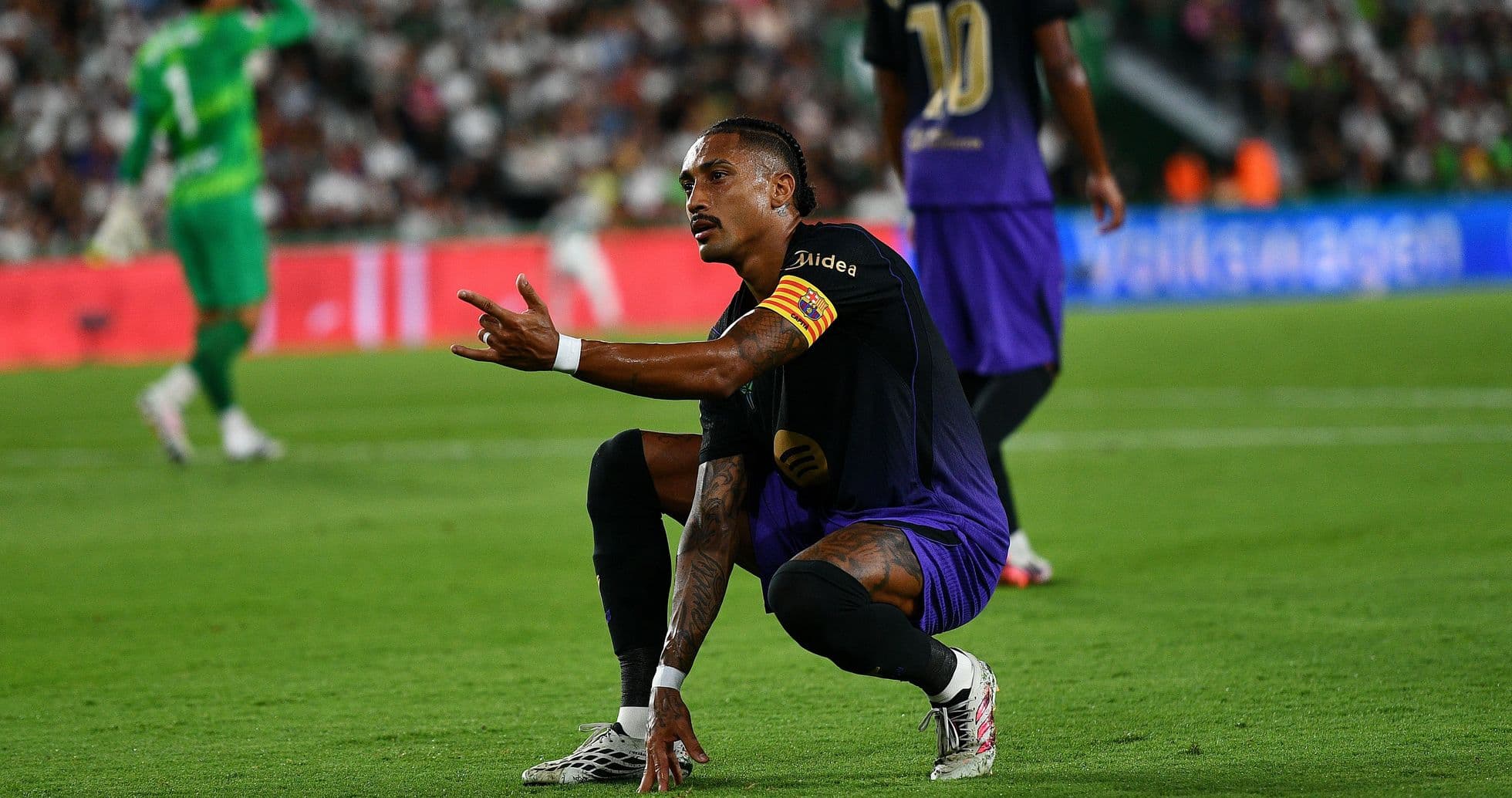
Munoz arrived from Osasuna this summer for £34.5m, a 23-year-old winger imported not for romance but for ruthlessness. Asked why Iraola had pushed so hard to bring him to Anfield, Munoz gave an answer that could have been lifted straight from his new manager’s playbook.
“My directness, the way that I try to break open the matches, the way I press and try to suffocate the opposition,” he told El Pais. “Those are the qualities he looks for in a winger, and they were a big reason why he made the decision.”
You did not need the interview to see it. You just had to watch his first few touches in a Liverpool shirt.
Thrown on in a pre-season game against Monaco at Anfield on Sunday, Munoz wasted no time. One of his first actions: collect the ball wide, explode past his full-back and tear down the wing towards the Kop, the defender left flailing in his wake. It was only a cameo, only a friendly, but it carried a message. This is the direction of travel.
Press or perish
Out of possession, Iraola’s demands are non-negotiable. Liverpool have hired a coach whose football is built on a front line that hunts, harasses and turns the final third into hostile territory.
The evidence is already there from his time at Bournemouth. Marcus Tavernier won the ball in the attacking third more often than any Liverpool player managed last season. Evanilson and Junior Kroupi also ranked among the Premier League’s top 30 in that metric. Across Iraola’s three seasons in charge, Bournemouth finished among the top two teams in the division for sprints every year.
That is not a quirk. It is his footballing identity.
Liverpool, by contrast, drifted. Under Arne Slot, passiveness crept into their game, frustrating a support that had grown used to the frenzy and fury of the Jürgen Klopp years. Iraola has been hired to rip that out, not with slogans but with selections.
The 34-year-old version of Mohamed Salah could no longer lead that kind of press. The legs were not there in the same way. The intent remained, the execution faded. So the club has turned to Munoz, a winger who won possession in the final third 22 times in LaLiga last season. Only six players in the division did it more.
Liverpool’s high press is not being discussed. It is being rebuilt.
A different kind of pedigree
Munoz arrives with a background that sounds like a dream and reads like a grind.
He spent three years at Barcelona’s famed La Masia academy from 2014 to 2017, sharing pitches and classrooms with Fermin Lopez, Alejandro Balde and Xavi Simons. The education was elite, the standards unforgiving. La Masia laid the foundations.
Then came Real Madrid. Munoz climbed through their development sides and eventually made his LaLiga debut last season, coming on as a late substitute for Vinicius Junior – against Barcelona, of all opponents. It was a neat symmetry for a player who had worn both shirts in Spain’s great divide.
Yet his story does not follow the usual golden-boy arc. Barcelona let him go. Real Madrid could not offer the pathway he needed. He had to drop to Osasuna to find a stage big enough for his talent and humble enough to give him minutes.
He never played for Spain at youth level. He does, though, own a World Cup winners’ medal, a late bloomer who forced his way into the conversation from the outside rather than being carried along by reputation.
Those who know him describe a character that matches that journey. Carlos Domenech, adviser at CF Damm, the club that picked him up after his Barcelona release, calls him “not the typical extroverted footballer”. Spain coach Luis de la Fuente, who guided the national team to World Cup glory, has highlighted his humility. “It is the best way to grow,” he said.
Munoz has grown the hard way.
Numbers that shout
What he did at Osasuna, a modest club from Pamplona, carries extra weight because of where he did it.
Only three players in LaLiga completed more dribbles last season: Lamine Yamal, Vinicius and Kylian Mbappe. That is the company Munoz kept with the ball at his feet.
Look at corners won and the pattern repeats. Just three players finished ahead of him, all from Barcelona or Real Madrid. Push the ball forward over distance, and again he stands out: when it comes to progressive carries of 10 metres or more from attacking players, only Vinicius did it more often.
These are not vanity metrics. They paint a picture of a winger who relentlessly drags his team up the pitch, who forces defenders to turn, backpedal and make decisions they do not want to make.
For Liverpool, the appeal is obvious. More pace and drive in the opposition half. A weapon in transition with the speed to punish space, but also the one-on-one skill to unpick deep, stubborn defences when the game slows and the penalty area fills.
The edges that need sanding
Munoz is not the finished product. Far from it. His Osasuna role came with a certain freedom and the numbers show both the thrill and the waste that came with it.
He ranked among LaLiga’s top 10 players for shots taken, yet did not crack the top 40 for goals scored. That gap speaks loudly. Too many efforts from distance, too many from impossible angles, too few from the areas where goals are most likely.
His expected goals per shot sat at 7.2 per cent. Compare that with Hugo Ekitike at 15.2 per cent, Florian Wirtz at 13.8 per cent or Salah at 12.0 per cent and the issue sharpens. Shot quality, not shot volume, is where he must improve.
At Liverpool, the landscape will change. He will play in a team that creates more chances, with more passing options around him, more runners, more combinations. The temptation to shoot on sight will need to give way to better choices, sharper decision-making, a cooler head.
But this is not a one-way adaptation.
Liverpool must bend too
Hidden inside Iraola’s early comments is a quiet warning: Liverpool will not simply plug Munoz into the old system and expect him to conform.
“I talked to the staff about the things that are working well and the things we can do differently,” Iraola said. “I wouldn’t say better, I would say differently.”
That word matters. Differently. This is not about recreating Klopp’s Liverpool, or asking Munoz to mimic Salah. It is about recalibrating the whole attacking structure around a new idea of what a Liverpool winger looks like: more relentless without the ball, more vertical with it, more willing to carry risk into the final third.
The appetite for that kind of football has never really left Anfield. Salah himself, in what will go down as his exit speech, referenced the “rock-and-roll” style that defined his peak years on Merseyside. The stands still crave that chaos, that sense that at any moment the game might be ripped open by a sprint, a tackle, a counter-attack that starts with a press and ends in a roar.
Iraola has been hired to restore that edge. In Victor Munoz, he believes he has found a winger who can live at that tempo, who can press like a forward and run like a sprinter, who can turn a throw-in on halfway into a panic in the penalty box.
Now comes the real question of Liverpool’s new era: can a young winger from Pamplona, shaped by La Masia, hardened at Osasuna and driven by a manager obsessed with intensity, drag Anfield back into that wild, thrilling noise?