
VfL Wolfsburg: Dominating the 2. Bundesliga Transfer Market
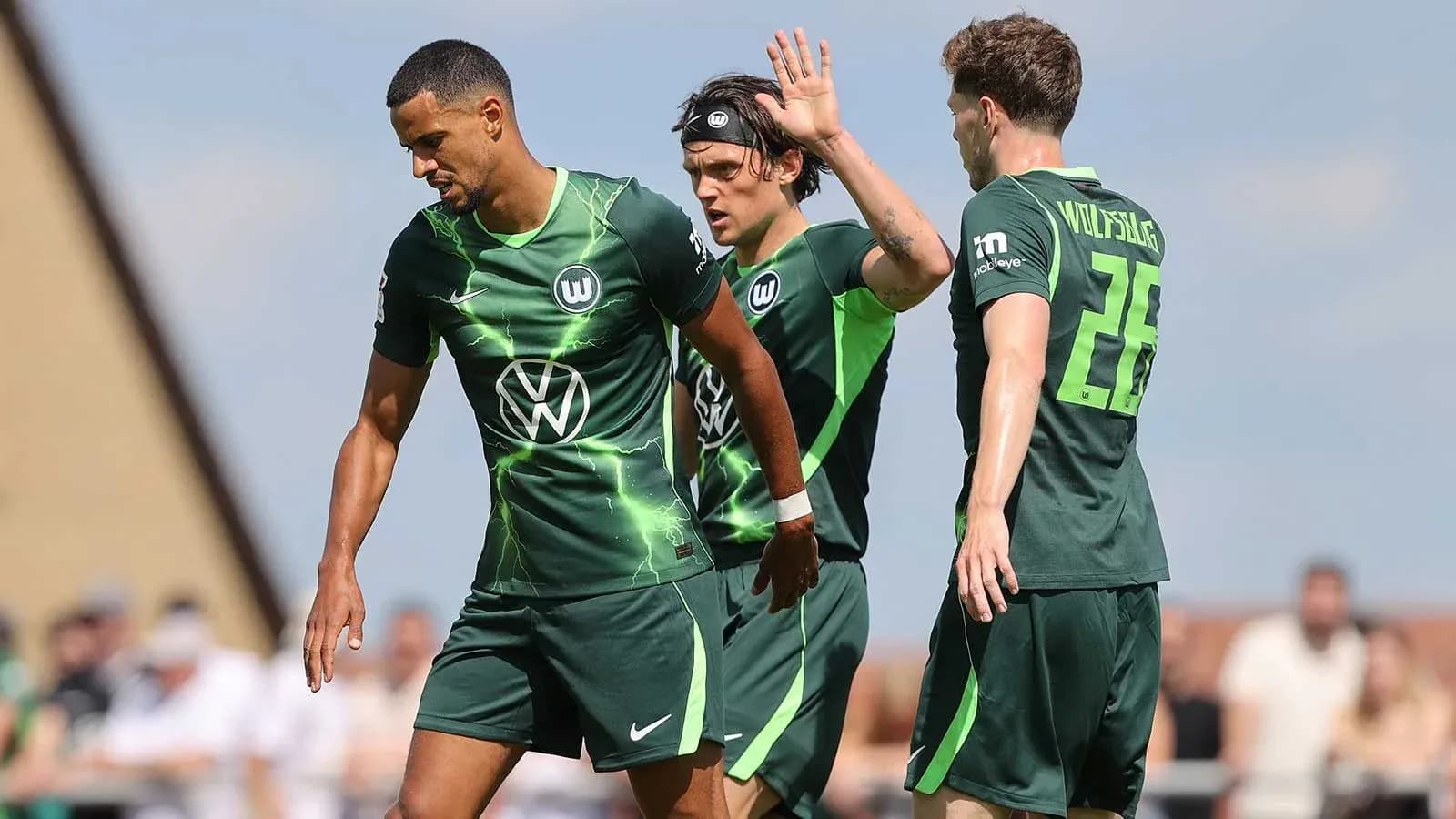
VfL Wolfsburg were supposed to fall. Instead, they’ve landed on a different planet.
Relegation from the Bundesliga usually means belt-tightening, bargain hunting and a humbling reset. For Wolfsburg, it has meant something else entirely: a transfer campaign so outsized that the rest of the 2. Bundesliga can only watch from the cheap seats.
The numbers alone are brutal. While the 17 other clubs in Germany’s second tier have, in total, spent just under 19 million euros in publicly known transfer fees, Wolfsburg have already pushed 22.7 million euros onto the table by themselves. One club outspending an entire league. That’s not a quirk of the market. That’s a statement of power.
And it’s a statement that cuts particularly deep in Berlin.
Reese: From Hertha’s heartbeat to Wolfsburg’s weapon
No deal captures the imbalance more starkly than Fabian Reese’s move.
Eight million euros for the former Hertha BSC captain. Eight million from a freshly relegated side to another 2. Bundesliga club for a player who was never supposed to leave.
Reese had become the emotional core of Hertha’s reset. Ninety-one competitive appearances, 35 goals, 31 assists – but the numbers only tell half the story. He was the face of a club trying to reconnect with its city after years of turmoil, the symbol of a “new” Hertha that wanted to be closer to its supporters and to Berlin itself.
The club underlined that bond in spectacular fashion. In November 2025, Reese signed an early extension through to 2030. Hertha staged the moment as a manifesto. Sporting director Benjamin Wieber made it clear: they didn’t just want to keep a good player; they wanted to tie down an identity. Reese himself called Hertha the club closest to his heart and spoke of long-term plans in the capital.
Less than a year later, that entire narrative has been ripped up. Not by Bayern, not by a Premier League heavyweight. By a direct second-division rival.
Wolfsburg came with eight million euros and the kind of professional environment and financial package Hertha simply could not match. Sporting director Pirmin Schwegler called him “one of the strongest players in the 2. Bundesliga” on arrival. For Hertha fans, the pain runs deeper than losing a star. They have lost their flagbearer to a club that, in many ways, represents the opposite of what they want to become: a heavily backed, corporate powerhouse rather than a self-styled community project.
Sportingly, Hertha lose a top performer and haven’t bought a single player to replace him. Emotionally, they lose their figure of identification. Wolfsburg gain both. And the league gets a cold reminder of just how different the financial realities are when a relegated side can casually spend eight million euros on a second-division player from another major 2. Bundesliga club.
A squad built to steamroll the league
Reese is just the headline. The depth of Wolfsburg’s work on the market is just as telling.
Fraser Hornby arrived from SV Darmstadt 98 for four million euros – again, a key player plucked from a direct rival. Muhammed Damar came in from TSG Hoffenheim. Hauke Wahl joined from another relegated Bundesliga club for 1.8 million euros.
Then there’s Robert Glatzel. At around 1.7 million euros, the fee looks almost modest by Wolfsburg’s current standards. But the former Hamburger SV striker brings more than 180 second-division games and a proven habit of hitting double figures at this level. His move highlights another gap: Wolfsburg don’t just win on transfer fees; they win on wages. They can offer established professionals contracts that most 2. Bundesliga sides cannot even enter into conversation about.
The pattern is clear. This is not a scattergun youth project. This is a targeted raid on proven performers.
They paid 700,000 euros to SC Freiburg for Swiss forward Alessio Besio, a 22-year-old who never made a professional appearance for Freiburg and spent last season on loan in the third division with Verl. For many second-tier clubs, that is a speculative luxury signing. For Wolfsburg, it’s a small side note.
Timon Wellenreuther joined from Feyenoord for around one million euros before a knee injury sidelined him for weeks. Elvis Rexhbecaj arrived on a free from FC Augsburg, but even “free” looks different in Wolfsburg: his more than 150 Bundesliga games put him in a salary bracket that would stretch the limits of many 2. Bundesliga budgets.
The 2009 German champions are assembling a squad that looks far more like a lower-mid-table Bundesliga side than a promotion hopeful. The message could not be clearer: this is designed to be a one-year stopover in the second tier.
Compared to Schalke, HSV and Hannover, Wolfsburg are playing another sport
The true scale of Wolfsburg’s spending only really comes into focus when set against recent second-division heavyweights.
Take Schalke 04 in the 2025/26 season. They generated around 8.75 million euros from sales and invested just 3.4 million euros. Transfer surplus: 5.35 million. Their most expensive signing, Christian Gomis, cost 1.5 million euros.
Fabian Reese alone cost Wolfsburg more than double Schalke’s entire transfer outlay that summer.
Hamburger SV, before their promotion in 2024/25, were similarly restrained despite lofty ambitions. Around nine million euros spent, roughly three million brought in. Their priciest newcomer, Alexander Rossing-Lelesiit, came in at around 2.8 million euros.
Hannover 96? Eleven million euros in income in 2025/26, only 4.33 million spent. A surplus of about 6.68 million euros.
These clubs had to juggle, compromise, and live within their means. Wolfsburg, by contrast, are operating with a scale and freedom that simply doesn’t exist for the rest of the division.
Selling big, spending big
This is not, however, a simple case of a relegated club lighting a bonfire of cash.
Wolfsburg have also been busy on the other side of the ledger. Patrick Wimmer moved to TSG Hoffenheim for around ten million euros. Jakub Kamiński brought in 5.5 million with his switch to 1. FC Cologne. Lovro Majer’s move to AEK Athens was reportedly worth six million euros. In total, Wolfsburg have taken in around 24 million euros.
On paper, that leaves them with a small surplus despite the headline-grabbing recruitment drive.
That is the key nuance. Wolfsburg are not just being bankrolled; they are recycling substantial transfer income straight back into a squad built for immediate promotion. Their special status lies less in the balance sheet and more in what they can do with that balance: reinvest every cent at a level the rest of the league cannot dream of matching.
There is precedent. When VfB Stuttgart dropped into the 2. Bundesliga in 2019/20, they also went hard on the market. Around 25.4 million euros spent, with Silas alone costing eight million from Paris FC and Sasa Kalajdzic arriving from Admira Wacker for about six million.
Stuttgart, though, offset that with enormous sales. Roughly 79.5 million euros generated, leaving a surplus north of 54 million euros despite heavy investment. They were a selling machine retooling on the fly.
Wolfsburg are not dealing in those Stuttgart dimensions, but they are following a similar logic: sell well, then reload aggressively.
And this is not a one-off summer. Last season, still in the Bundesliga, Wolfsburg already spent around 68 million euros on new players while bringing in about 37 million. A deficit just under 31 million euros. Vinicius Souza alone cost roughly 15 million from Sheffield United. Mohamed Amoura’s permanent signing from Union Saint-Gilloise came in at around 14.75 million.
For Wolfsburg, multi-million transfers are routine. What has changed is the stage. These sums used to be measured against Bayern Munich, Borussia Dortmund, Bayer Leverkusen and RB Leipzig. Now they are being dropped into a league where some clubs’ entire transfer budgets are smaller than the fee for Fabian Reese.
No wonder it feels different.
The Bayern of the basement? Not even close
Put the squad values side by side and the imbalance looks almost absurd.
According to transfermarkt.de, Wolfsburg’s squad is valued at 194.15 million euros. That number would place them ninth in the Bundesliga. In the 2. Bundesliga, the next closest are fellow relegated side FC St. Pauli at 45.93 million euros – roughly 4.5 times less.
Calling Wolfsburg the “FC Bayern Munich of the lower house” doesn’t even capture it. Bayern’s squad, at 1.07 billion euros, is not even worth twice as much as RB Leipzig’s (around 604 million). The gap between Bayern and their nearest challenger is smaller than the gap between Wolfsburg and most of their new rivals.
Reese, Hornby, Glatzel, Wahl, Rexhbecaj, Wellenreuther – the list sketches out a plan that could hardly be more obvious. This is a promotion assault, not a patient rebuild. And players like Amoura have even followed the club down a division, further inflating the quality level.
The question now is not whether Wolfsburg are financially on another level. That has already been answered by this transfer window. The question is what that means for sporting fairness.
Is this still a competition in which the best sporting project wins? Or a season in which one club’s financial gravity bends the entire league around it?
Only when the ball starts rolling will we know if the 2. Bundesliga can resist Wolfsburg’s weight. For now, one thing is undeniable: VfL Wolfsburg are playing a different game to almost everyone else in this division.




