Vancouver's World Cup 2026: New Rules and Unequal Impacts
Vancouver is about to sound different. Look different. Feel different.
On Wednesday, the city formally steps into its FIFA World Cup 2026 “event period,” triggering a powerful new set of rules that will reshape life around B.C. Place and Hastings Park for more than two months.
City hall calls it a plan to keep things “clean, safe, and organized” as an estimated 350,000 people stream through B.C. Place for seven World Cup matches. Critics see something else: a global football spectacle tightening its grip on public space in a city already straining under the weight of inequality and homelessness.
The bill for hosting? Between $532 million and $624 million, with Vancouver itself on the hook for up to $281 million. The debate over what residents get in return is only just beginning.
A City Under Tournament Rules
The FIFA World Cup 2026 Bylaw, in force from May 13 to July 20, hands the city expanded powers over advertising, vending, noise, graffiti removal and public-space management in key zones.
In practice, that means the city can move faster, act harder, and control more.
Among the changes coming into effect:
- Relaxed rules for building temporary event infrastructure: fan zones, large signage, and other tournament installations near major sites will go up with fewer local hurdles.
- New restrictions on street vending, busking, and certain advertising in designated “event areas,” tightening who can make money and how.
- Rapid removal of unauthorized commercial signs to protect FIFA’s branding and sponsorship ecosystem.
- Extended noise allowances, designed to accommodate international broadcast windows and late-running event operations.
- Adjusted truck routes and delivery schedules in parts of the downtown core, clearing room for security perimeters and logistics.
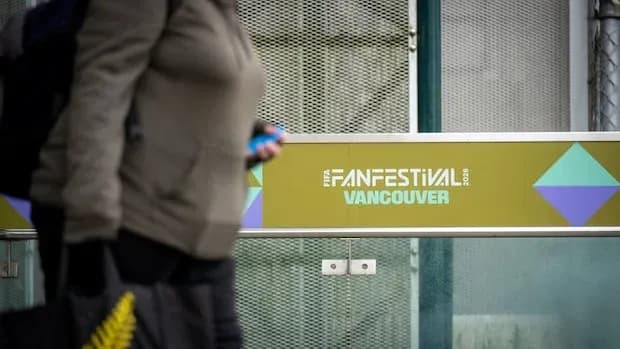
Most of these powers concentrate inside a two-kilometre “controlled area” around B.C. Place and the FIFA Fan Festival site at Hastings Park. Inside that ring, the city’s bylaw officers will be able to issue tickets of $250 to $1,000 for common violations, backed by enforcement from both the City of Vancouver and the Vancouver Police Department.
The infrastructure will be temporary. The World Cup will move on. The question is what happens to the people who live inside those circles.
The Cost of “Cleanliness”
For housing advocates and legal scholars, one word in the bylaw hits a raw nerve: “cleanliness.”
“This is basically the privatization of public space,” said Penny Gurstein, professor emeritus at the University of British Columbia’s School of Community and Regional Planning. In a city where tents, tarps and makeshift shelters already sit at the centre of political conflict, she warns that those living on the streets have reason to be “worried.”
The concern is blunt. When a city promises to keep things clean for a global event, who — or what — gets cleaned away?
Officials insist the new rules don’t roll back existing protections for unhoused residents. People experiencing unsheltered homelessness, they say, will still be allowed to erect temporary overnight shelter in parks where current bylaws allow it.
On beautification, the city draws a clear line. The term, it says, refers to physical infrastructure upgrades — repairing sidewalks, decorating construction sites, tidying up the built environment. According to the city, that work has “no assessed impact on human rights.”
For those on the ground, trust in that distinction will be tested in real time.
A Tournament of Unequal Impacts
Margot Young, a constitutional law professor at UBC’s Allard School of Law, doesn’t doubt that Vancouver will be transformed. She doubts everyone will experience that transformation the same way.
“There will be disruption, but that disruption will be different for different groups in the city depending really upon their … social and economic status,” Young said.
For wealthier residents and visitors, the World Cup looks like a festival. They can buy tickets, crowd fan zones, lean into the noise and colour. For those with little or no financial cushion, the same event can feel like a force pushing them aside.
“For those with money, they maybe can go to games, they can take part in the parties,” Young said. “But for individuals who are at the bottom of our ... income and wealth distribution … they will be moved around by the reordering of city space by FIFA.”
The city has promised “trauma-informed” enforcement when dealing with vulnerable populations. Young questions whether that promise can survive the pressure of a global event, security demands, and branding obligations.
“There's no system in place to sort of monitor what is happening with respect to the vulnerable populations,” she said.
If the World Cup is a stress test for Vancouver’s social contract, that monitoring gap looms large.
Services Stay, Pressure Rises
City officials insist that, even as the World Cup machine whirs into motion, core supports for those on the margins will not disappear.
They point to more than 1,500 shelter beds and roughly 8,100 supportive housing units across Vancouver, alongside outreach teams, hygiene services and storage programs that are expected to keep operating through the tournament.
Homelessness services, the city says, will continue. Outreach will continue. The message from City Hall is that hosting the world does not mean abandoning the people who already live here.
At the same time, those services already operate under strain. The World Cup won’t change that math. What it will do is add another layer of urgency — and scrutiny — to every interaction in the streets around B.C. Place and Hastings Park.
In a written statement, the city framed the tournament as a “once-in-a-generation opportunity” to showcase Vancouver. The stadium will glow. The fan festival will roar. The city will beam itself across the football world.
The real measure of this moment may come away from the cameras, in the quieter spaces where bylaws, branding and basic survival collide.