Tottenham's Reset: From European Ambitions to Survival
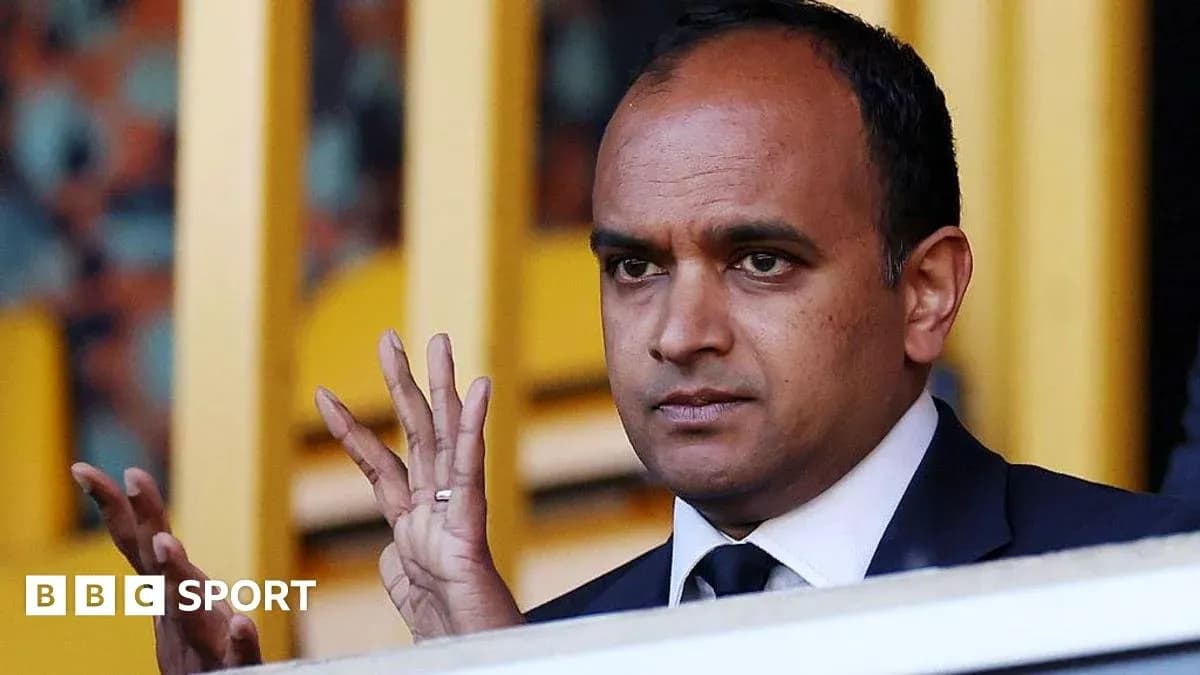
Vinai Venkatesham walked into Tottenham Hotspur last June talking about Europe. He ended his first season clinging to the Premier League cliff edge, celebrating survival with the relief of a man who has just stepped back from a ledge he didn’t realise he was standing on.
“It was just a huge outpouring of relief,” he admitted after a final-day win over Everton kept Spurs up. Relief, not joy. A club of Tottenham’s size reduced to exhaling on the last whistle.
He knows that is nowhere near good enough. And he knows the fans know it too.
From European ambitions to a “complete reset”
On day one, Venkatesham thought a realistic target for the men’s first team was competing for European places. Tottenham had just finished 17th under Ange Postecoglou, but they had a Europa League trophy in the cabinet – their first silverware since 2008 – and a squad full of internationals. From the outside, it looked like a platform.
A few months in, the view changed.
“When I was no longer an outsider, I would have told you the club was in a significantly worse state in some places than I thought,” he said. Not a tweak. Not a tidy-up. “It was really a complete reset.”
Off the pitch, he found a powerhouse. Stadium operations. Commercial strength. A club that looks and feels big.
On the football side, though, the Premier League had raced ahead. Tottenham had not kept pace.
Over the last five years, he saw “a significant gap” between Spurs and their rivals in key football departments. In some areas, “really quite worryingly so”.
“I don’t think that there was what I would call a relentless obsession with football success,” he said.
The training centre stands as a symbol of that imbalance. Gleaming, immaculate, world-class. “Amazing, one of the best, if not the best in the world,” as he put it. But there’s a problem.
“When you look around, it looks more like a five-star hotel than it does a performance environment. That will change over the summer.”
For Venkatesham, that cosmetic gloss masks a lack of sharp edges. He believes the club simply doesn’t have “the right level of expertise” in too many football areas. The reset, then, isn’t a slogan. It’s a necessity.
Frank, delay and the wrong call on Tudor
The season did not collapse immediately. Under Thomas Frank, appointed last June, Tottenham lost just one of their first 10 games in all competitions. It felt steady enough. Then the slide began.
By the time Frank was sacked in February, the only surprise among supporters was that it had taken so long. Venkatesham and sporting director Johan Lange were hammered for what many saw as damaging hesitation.
He rejects the idea that the club sat on its hands.
“There’s been plenty of coverage that the club was passive during this period. And that’s absolutely not true,” he insisted.
Inside the boardroom, they weighed results, the chances of Frank turning the season around, the impact of a change on the January transfer window, the fixture list, and the risks of diving into the interim market. Every decision carried a cost. They chose patience. It backfired.
Once Frank went, the plan was clear: Roberto de Zerbi. Tottenham tried to tempt the Italian, leaving Marseille, into the job on a permanent basis. He didn’t want to come mid-season.
With De Zerbi unwilling to jump in February, Spurs veered off the main road and took a gamble on Igor Tudor. It was a left-field move that lasted seven games.
They chose Tudor because he had handled high-pressure environments. They wanted someone who would not “wilt under that pressure”, someone with a track record of making an immediate impact, a big-club résumé, and a different personality to Frank.
But he had no Premier League experience. They knew it was a risk. It proved to be the wrong one.
“It didn’t work out,” Venkatesham said. No dressing it up. No caveats. “I don’t think anybody would argue anything else.”
Levy gone, anger redirected
For a quarter of a century, Daniel Levy stood in the firing line. When he left in September, the lightning rod went with him. The anger did not.
Two 17th-place finishes in a row have shifted the glare onto Venkatesham. The criticism has been fierce, personal and relentless.
“I understand the frustration,” he said. “It’s clearly not good enough.” For a club of Tottenham’s scale, scraping survival twice is not a blip. It’s a warning.
He insists the problems run deep and long. “They built up over many years,” he said. There is no magic wand, no overnight fix. That doesn’t mean he expects sympathy.
“So I have complete confidence in what we’re doing, how we’re doing it. But supporters are rightly impatient. So I have to weather that storm.”
He’s used to storms. Fifteen years in football, including a long spell at Arsenal, have given him a thick skin. Criticism, he says, is part of the job. The problem comes when it crosses the line – for players, referees, executives. At Tottenham this season, it has crossed that line often.
Still, he stays. And he doubles down on the reset.
De Zerbi’s impact and a dressing room reborn
Behind the scenes, people at Tottenham talk about De Zerbi in almost reverential tones. His arrival, initially on a short-term basis, changed the mood and, crucially, the results.
Eleven points from seven games. Survival secured. But the numbers only tell part of the story.
“I think he has made an extraordinary impact so far,” Venkatesham said.
The challenge he walked into was “hard to underestimate”. A fractured dressing room, a fanbase on edge, a club braced for the financial and sporting trauma of relegation. De Zerbi walked straight into the storm and started to clear the air.
“It’s hard to describe what a significant impact he has had in the dressing room with all the players,” Venkatesham said. Belief has crept back into a squad that had forgotten what it felt like to play with conviction.
He likes De Zerbi’s football, too. Aggressive, front-foot, the kind of style “our supporters and the broader football public want to see”.
This time, Tottenham do not intend to let him slip away. De Zerbi is expected to be fully involved in recruitment this summer, shaping not just how Spurs play but who plays for them.
Raising the ceiling and rebuilding the squad
If De Zerbi is the face of the reset, recruitment is its backbone.
Tottenham have spoken to Sebastian Kehl, who recently left Borussia Dortmund as sporting director, as they reshape the football structure. Venkatesham also confirmed a significant move: the club have raised their wage ceiling to attract higher-calibre players.
The message is blunt. The squad isn’t right.
“The squad needs work and the squad hasn’t got the right balance,” he said. Experience is lacking. Leadership is thin. Physical robustness – the ability to survive and thrive in “the most demanding league that exists” – is not where it needs to be.
This is not a one-window fix. “We need to strengthen the club over multiple transfer windows,” he said. But this one, the first under De Zerbi with Venkatesham fully aware of the scale of the task, “is going to be critical”.
Tottenham have survived. That is the bare minimum. The reset starts now. The question is simple and brutal: is this the summer Spurs finally start acting like a club obsessed with winning, or just another chapter in a story of wasted potential?