
Tottenham's Injury Crisis: Examining the Pitch and Performance Management
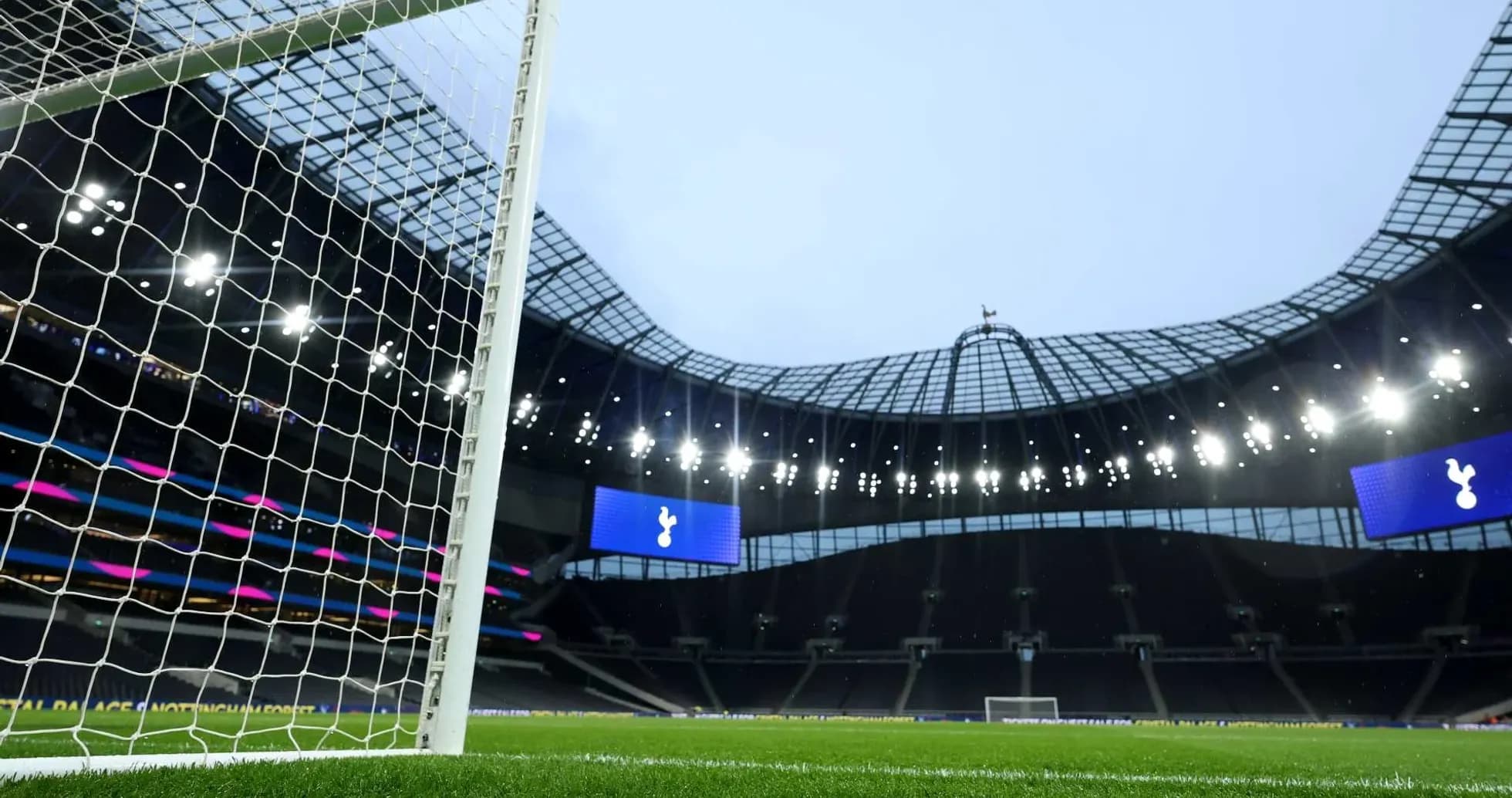
The Tottenham Hotspur Stadium was built to be a showpiece. A sliding grass field, a pristine synthetic surface tucked underneath for NFL and concerts, a feat of engineering that drew praise from across world sport.
Now that same marvel is under investigation.
Dan Lewindon, the club’s new performance director, is leading a detailed review into whether the dual-surface system is playing a part in a worrying spike in serious leg and ligament injuries at Spurs’ home. Independent tests on bounce and surface tension have already been run. They have not offered clear answers. The data sits in a grey area, forcing the club to dig deeper and benchmark their pitch against others across the Premier League.
The concern is not theoretical. It is personal, and it is piling up.
Dejan Kulusevski, Radu Dragusin and Wilson Odobert have all suffered major injuries in N17. James Maddison partially tore his ACL in a home clash with Bodo/Glimt, then went on to rupture it completely. Each incident has sharpened the focus on what happens underfoot at the stadium that was supposed to give Spurs a cutting-edge advantage.
The debate is not confined to north London. Real Madrid, who also installed a retractable pitch at the revamped Santiago Bernabeu, are running their own inquiry after a cluster of ACL injuries. Two of Europe’s super-arenas, both built to be the future, now face the same uncomfortable question: has the technology come at a hidden cost?
Structural flaws off the grass
Lewindon’s work has not stopped at the turf. His three-month review has exposed deeper issues in how Tottenham manage the bodies of their players.
Inside the club, there is a growing acceptance that the performance department has been too fragmented. Medical staff and coaches have often worked in parallel rather than in unison, with limited shared decision-making. The result, in the eyes of senior figures, has been a pattern of repeat problems and players breaking down again after returning.
Spurs intend to change the model. The plan is a “small-team approach”: specific physios assigned to pods of around six players, responsible for tailoring individual training loads and preparation. Less conveyor belt, more concierge. The aim is clear – tighter relationships, better information, fewer nasty surprises.
Tactical whiplash from the dugout
The treatment room is not the only place where instability has taken a toll. The dugout has been a revolving door.
Four head coaches in a single year – Ange Postecoglou, Thomas Frank, Igor Tudor and Roberto De Zerbi – have put the squad through a wild swing of philosophies, training intensities and tactical demands. Players have been asked to accelerate, decelerate, press, sit off, then press again, all under different regimes, all in quick succession.
Inside the club, that lack of continuity is seen as a significant risk factor. Conditioning plans have had to be rewritten with each new arrival. Bodies conditioned for one style have been thrown into another. The human frame, even at elite level, has limits.
The Xavi Simons flashpoint
Amid the broader debate, one incident has become a lightning rod.
During a win at Wolves, Xavi Simons went down injured, received ice spray, and was sent back on before eventually being stretchered off with a ruptured ACL. The optics were brutal. The backlash from supporters was immediate, with questions fired at the medical staff and their judgement.
Tottenham have stood firmly behind their doctors. Lewindon, it is understood, was very satisfied with how the situation was handled. Simons was desperate to continue at Molineux, and a full ACL assessment is notoriously difficult to perform at pitchside in the heat of a Premier League match. Within that context, the decision to let him attempt to carry on has been defended internally as the correct call.
Crucially, the club insists that his brief return did not inflict any further damage on the ligament. For them, this was not negligence but a brutal twist in an already cursed run.
It was not an isolated blow. Cristian Romero and Destiny Udogie also suffered serious injuries in De Zerbi’s first three games in charge, turning the Italian’s early weeks into a nightmare introduction. He has responded by pushing hard for a stronger support structure around the squad, including the appointment of a team psychologist to help knit together communication between performance and medical teams.
Maddison’s blunt assessment
From the pitch, the verdict has been just as stark.
James Maddison has been one of the most outspoken voices on the crisis, calling for a forensic look at Spurs’ fitness record.
“Our situation with the injuries has been worse than any other club,” he said. “People try and say, ‘Oh, but we’ve got this and that’. But ours is astronomical, and we need to look at why that is.”
Maddison is no conspiracy theorist. He is quick to point out that some moments are simply cruel luck – his own ACL, Kulusevski taking a horrendous knock from Marc Guehi. Those, he insists, are not on the medics, not on the pitch, not on the theories swirling around social media.
Sometimes, as he put it, “that’s rubbish.”
What he will not dilute is the impact. The volume of absences, he believes, dragged Spurs into a relegation fight they should never have been near.
“We’ve been a bit unlucky,” he said. “But like I said, the big names that we’ve missed, it does affect you and you can’t just deny that. Myself, Kulusevski and Mohammed Kudus, and Rodrigo Bentancur missed three months and whatnot. If you had had them for the whole season, we wouldn’t have been in this situation, I strongly believe. That’s just not me being naive, that’s just a fact.”
In the end, he chose to praise the squad’s resilience, proud of how they “dug deep” to haul themselves clear. The relief was real. So is the sense that this cannot happen again.
What comes next
Tottenham now stand at a crossroads between innovation and risk. A stadium built to be a symbol of progress is under forensic scrutiny. A performance department is being rebuilt on the fly. A dressing room, battered by change and injury, is crying out for stability.
The technology will stay. The question is whether the culture around it can finally catch up – and whether Spurs can turn a season of scars into the foundation of something far more robust.




