
Tottenham's Reboot: From Relegation Threat to Recovery
Tottenham did not just flirt with disaster this season. They stared it straight in the face on the final day, survived by two points, and walked off knowing the club they have been cannot be the club they are again.
Relegation was closer than Europe. Four head coaches in 12 chaotic months. An injury list that at times looked like a full matchday squad. Inside the club, the word is blunt: unacceptable.
So Spurs have launched an internal review that goes far beyond a few meetings and a new fitness drill. This is a root-and-branch operation, touching everything from the psychology of a fragile squad to the mechanics of the retractable pitch at the Tottenham Hotspur Stadium.
De Zerbi’s rescue act – and the cost of chaos
The season only stayed alive because Roberto De Zerbi arrived and dragged it back from the edge. Eleven points from the final six games turned panic into survival, but nobody at Hotspur Way is pretending that late surge masks what came before.
Two points. That was the gap to the Championship.
The carnage has left sporting director Johan Lange’s position under serious scrutiny. After a year that saw four different head coaches come and go, the Dane now faces the prospect of being eased into a supporting or handover role, with Spurs hunting what they describe internally as a “world-class” sporting director to take the reins.
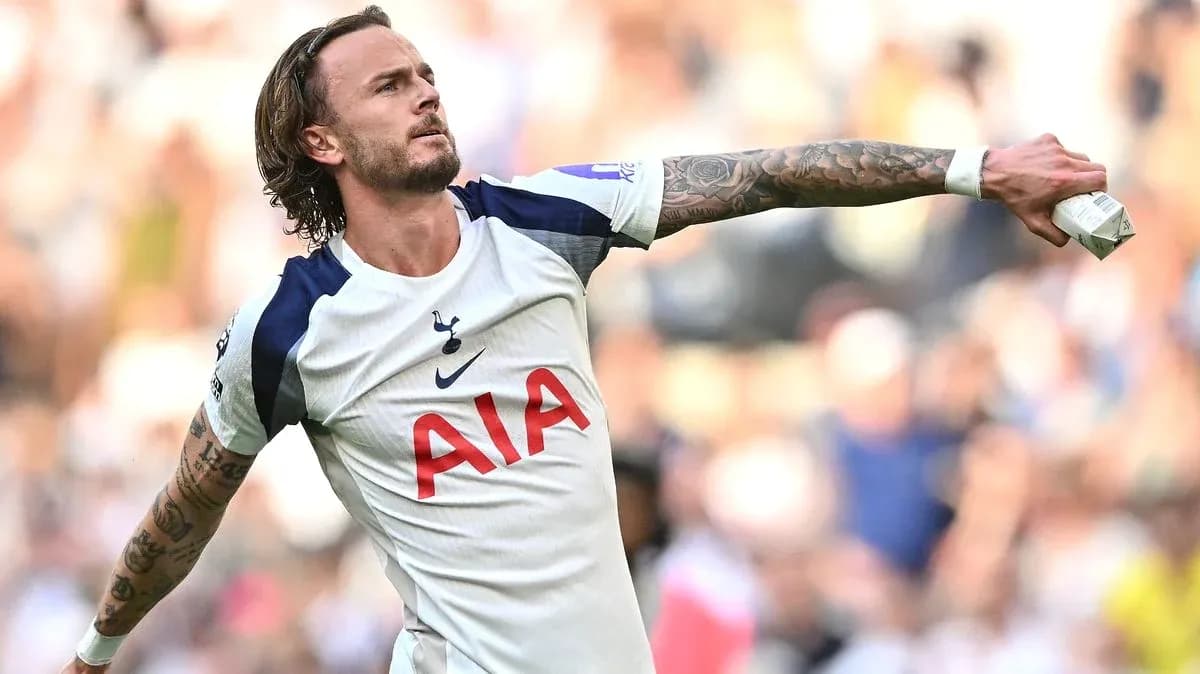
The numbers behind the crisis are stark. Tottenham suffered more injuries than any other Premier League club, many of them long-term and serious. James Maddison, only recently back after a partially torn anterior cruciate ligament finally gave way last summer, did not hide his anger.
“Our situation with the injuries has been worse than any other club,” he said after the win over Everton. “People try and say ‘Oh, but we’ve got this and that’, but ours is astronomical, and we need to look at why that is.”
That question now sits at the heart of the review.
Lewindon arrives to fix a broken body
The man tasked with answering it is Dan Lewindon, the new performance director who joined in February from City Football Group. He walked into Hotspur Way the day before Thomas Frank departed and found a department that had been through the wringer.
Under Geoff Scott, the long-serving head of medicine and sports science, Tottenham enjoyed years of stability. Scott left in 2024 after more than two decades and is now at Nottingham Forest. Since then, the turnover has been relentless.
Director of performance services Adam Brett and head of sports science Nick Davies both exited after only a year in charge. Nick Stubbings arrived last summer as the men’s medical lead, following Frank and a cluster of former Brentford staff across London.
The churn has been constant. The injuries have been worse.
Lewindon, with a background spanning elite football, tennis and rugby, has been handed the authority to change that. Inside the club, there is a clear belief that his methods will finally cut into the run of seasons where double figures of players have been missing for long stretches.
He has already found an ally in De Zerbi. The pair speak regularly about reshaping the performance and medical set-up so it can stand alongside the best in Europe, not limp behind them.
Non-executive chairman Peter Charrington made the direction clear on Monday, confirming moves to “modernise our football operation, with a significant focus on raising standards across medical and performance”.
A manager who refuses to gamble with bodies
De Zerbi’s influence is not confined to tactics and touchline theatrics. Those working inside the medical department have been struck by how he handles risk.
Under pressure, some managers lean on players who are half-fit and hope. De Zerbi has pushed the other way. He has been clear, consistent and, crucially, unwilling to take unnecessary chances.
Staff describe an Italian who wants every piece of information before deciding when a player returns. He calls for feedback, listens, and backs caution when needed. In a club battered by muscle tears and ligament ruptures, that approach has landed well.
His one-to-one meetings with players have become a quiet theme of the run-in. He has tried to rebuild confidence with detail and care, using clips of their best moments – at Spurs and at previous clubs – to remind them of who they are when fully fit and fully sure of themselves.
For a squad long mocked with the tag “Spursy”, that matters.
Is the pitch part of the problem?
No stone is being left unturned. Not even the pitch.
Lewindon is already involved in an investigation into whether the Tottenham Hotspur Stadium’s retractable surface has played any role in the spate of ACL injuries. The grass pitch slides under the south stand to allow NFL games and concerts. Five ACLs in recent years at Spurs has triggered alarm, and the club accepts that number is too high.
Real Madrid, who also installed a retractable surface, have suffered a heavy injury load of their own. The parallel has not gone unnoticed.
Early external, independent tests on matchdays have so far shown no difference in bounce or spring between the stadium pitch and the training surfaces at Hotspur Way. That has calmed some fears, but not ended the inquiry. More detailed, longer-term analysis is planned to ensure there is no hidden factor in the way the surface behaves over time.
Some injuries, Spurs accept, are simply cruel luck. The ACL problems suffered by Xavi Simons and Wilson Odobert fall into that category. The handling of Simons’ injury at Molineux, when the player wanted to continue but could not, has been reviewed internally and backed. The club believes the physios took the right precautions and avoided further damage.
Yet coincidence is not a strategy. The club wants proof.
Fighting ‘Spursy’ in the mind
The review is not just about hamstrings and ligaments. It is also about what happens when the ball goes out of play and the doubts creep in.
For years, Tottenham have been branded “Spursy” – a team that finds a way to self-destruct. Inside the club, there is a growing acceptance that the label has seeped into the psyche.
Lewindon has been a driving force behind the push to recruit a new lead psychologist to work full-time with players and staff. The aim is simple: build resilience, help them handle pressure, and give them tools to cope with the scrutiny that comes with playing at the top level.
De Zerbi, for his part, has told those around him that he sees part of his job as acting like a psychologist. His constant individual meetings, his use of positive video, his insistence on understanding the person as much as the player – all of it feeds into a broader attempt to harden the squad mentally.
A new model: pods, not production lines
On the physical side, Lewindon is pushing for a change in how Tottenham manage injuries and recovery. The plan is to move towards a more integrated, pod-based model.
Instead of physios and sports scientists spreading themselves thinly across the entire squad, small groups of four to six players would work closely with a dedicated pair of staff. Those staff would live with that group’s needs, their positions, their histories, their personalities.
Like a teacher with fewer students, the thinking is that deeper knowledge leads to better decisions. Better decisions on training loads. Better calls on when to push and when to pull back. Better preparation for the exact demands of each role on the pitch.
It dovetails with De Zerbi’s belief that to compete at the highest level, the club must understand its players as individuals – in their family lives, in their mental make-up, and in the specific stresses of their positions.
Rebuilding trust in the medical room
One problem the review has already identified is trust. Some Spurs players have, at times, leaned more heavily on staff from previous clubs or their national teams than on Tottenham’s own medics.
That is not unusual in modern football, where top players often employ their own performance staff and juggle advice from multiple sources. But it can create confusion and mixed messages.
Spurs want to tighten that up. The aim is a single, agreed plan for each player, built in conjunction with personal staff and international medics, so everyone pulls in the same direction. No more competing voices. No more doubt about who is in charge of a recovery.
Once Lewindon’s review is complete, changes behind the scenes are expected. Fresh ideas. New personalities. Better integration between departments. Even recruitment could be shaped by it, with more emphasis on signing robust players who can withstand De Zerbi’s intense, energetic style.
The cost of churn – and the stakes now
Inside the club, there is also a frank admission that the constant change in the dugout has contributed to the injury crisis. Every new head coach brings new training methods, new demands, a new tempo. Players push harder to impress. Sessions spike in intensity. Bodies break.
Tottenham know they cannot live through another season like the one they have just escaped. Survival on the final day might have spared them the humiliation of relegation, but it has forced a reckoning.
The first target is simple: give De Zerbi more players to choose from, more often. The deeper goal is cultural – to build a club where “Spursy” is a relic, not a prophecy.
The fixes will not show overnight. They rarely do in high-performance sport. But if Lewindon’s overhaul bites, if the pitch checks out, if the pods work and the psychology holds, the question will not be how close Spurs came to going down.
It will be how far this reset can take them the next time the season goes to the wire.




