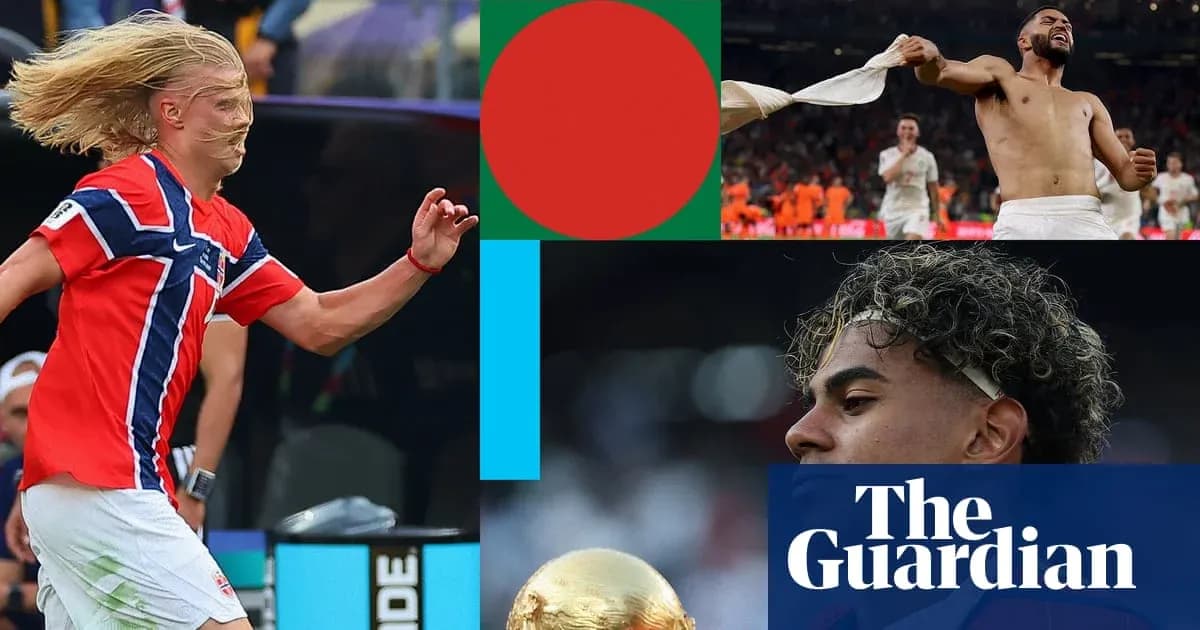
Top 10 National Teams for the 2030 World Cup
The giants are fading. The race has already started.
The 2026 World Cup felt like a farewell tour for a generation that defined an era. Lionel Messi, Cristiano Ronaldo, Luka Modric, Neymar, James Rodríguez, Guillermo Ochoa – all walked away with wet eyes and heavy legs, their last World Cup minutes swallowed by the noise.
Now the calendar swings toward 2030. Anyone on the wrong side of 32 is counting training sessions, trimming body fat, hunting marginal gains. International football moves quickly, and this next cycle belongs to squads stacked with players in their prime.
These are the 10 national teams with the strongest foundations for 2030 – sides that, on paper, have every right to believe they can be in the quarter-finals and beyond.
1) Spain – Champions, hosts, and still hungry
Spain will not just defend their crown in 2030. They will do it on home soil. The first reigning World Cup winners to host the next edition will enter the tournament as the team to beat, and Luis de la Fuente’s group already looks terrifyingly settled.
The spine is built to last. Unai Simón (32), Joan García (29) and David Raya (34) can easily reprise their roles as the goalkeeping trio. In front of them, Marc Pubill (26), Eric García (29), Pedro Porro (30) and Pau Cubarsí (23) offer continuity and calm. That’s a defensive core with years of football still in their legs.
Midfield, as ever with Spain, is the jewel. Dani Olmo (32), Gavi (25) and Pedri (27) should all be back, with Rodri (33) still the favorite to sit at the base and dictate. If he maintains his current standards, he remains the metronome that makes the whole structure hum.
Out wide, Nico Williams (27) and Lamine Yamal (22) will hope their bodies cooperate this time. Even with fitness concerns, they showed in the latter stages how central they are to Spain’s attacking threat. Ferran Torres (30) may again be the impact weapon from the bench, a luxury option few teams can match.
And that’s before you look beyond the title-winning 26-man squad. Dean Huijsen (25) and Cristhian Mosquera (25) are lined up as potential long-term heirs to Aymeric Laporte (36). In midfield, Fermin López (27), Pablo Barrios (26), Javier Guerra (27), Marc Bernal (23) and Jesús Rodríguez (24) have already earned De la Fuente’s trust.
The only missing piece? A true No 9. If Samu Aghehowa (26) or Gonzalo García (26) emerges as a reliable striker, Spain’s possessive machine suddenly has a ruthless cutting edge. For the rest of the world, that’s a chilling prospect.
2) France – Zidane steps into the storm
France do not lack talent. They never do. Their problem in 2026 was not personnel, but a brutal semi-final collapse against Spain that exposed structural flaws and emotional scars. Into that pressure cooker walks Zinedine Zidane.
Zidane inherits a squad stacked with experience and star power. Mike Maignan (34) remains one of the game’s elite goalkeepers. Dayot Upamecano (31), Ibrahima Konaté (31) and William Saliba (29) form a physically dominant defensive unit.
In midfield, France are spoiled. Manu Koné (29) and Aurélien Tchouaméni (30) already look like long-term anchors, with Eduardo Camavinga (27) and Khéphren Thuram (29) waiting in the wings after missing out on the last World Cup squad. That’s four players capable of controlling any game in any stadium.
Up front, Kylian Mbappé (31) will arrive in 2030 chasing records and revenge. He’ll have Michael Olise (28) and Désiré Doué (24) as creative foils, adding craft and unpredictability around his raw pace and finishing.
The question is not whether France can assemble a world-class XI. It’s whether Zidane can solve the tactical puzzle that undid them against Spain. At Real Madrid, his genius often lay in man-management more than complex structures. International football may suit that profile perfectly – or punish it.
3) England – A golden core, one big question
England’s 2026 campaign was a cocktail of resilience and regret. They survived an instant classic against Mexico, clawed back against Norway, then froze with a 2-0 lead over Argentina and watched a World Cup final slip away. That collapse will sting for years.
Yet the core is built for another run. Marc Guéhi (29) looked every inch an elite centre-back, while Djed Spence (29) finished the tournament in the best form of his career. In midfield, Declan Rice (31), Elliot Anderson (27), Jude Bellingham (26) and Kobbie Mainoo (25) give Gareth Southgate’s successor (or Thomas Tuchel’s successor) a wealth of combinations – power, control, creativity, all in their prime.
On the flanks, Bukayo Saka (28) and Anthony Gordon (29) have already proved they can handle the stage. The raw materials are there for a flexible, aggressive attacking unit.
The problem sits right at the top of the pitch. Harry Kane will be 36 in 2030. Can he still be a 90-minute focal point at that age? England have yet to identify a clear heir to their record goalscorer, and that uncertainty could define the cycle.
Even so, the depth chart is absurd. Goalkeeper is an open contest. Beyond the 2026 squad, options like Lewis Hall (25), Cole Palmer (28), Adam Wharton (26), Alex Scott (26), Phil Foden (30), Rio Ngumoha (21) and Ayden Heaven (23) underline just how deep the pool runs.
If they solve the No 9 dilemma, England will not just be contenders. They’ll be expected to deliver.
4) Morocco – Co-hosts with a cause
Morocco are no longer a plucky outsider. They’ve built a résumé. Back-to-back World Cup quarter-finals, one of them extended into a semi-final fairytale. An Afcon 2025 crown. A new coach who injected attacking verve without surrendering defensive steel.
With part of the 2030 tournament on home soil, the stage is set for something bigger.
The back line remains in safe hands. Achraf Hakimi (31), Chadi Riad (26), Anass Salah-Eddine (28) and Noussair Mazraoui (32) all project to be key figures. In midfield, Ayyoub Bouaddi (22) will arrive as a more mature version of the breakout talent seen in 2026, alongside Azzedine Ounahi (30), who continues to knit play together.
Ismael Saibari (29) looked a constant scoring threat before injury cut his tournament short, and he’ll be joined by Bilal El Khannouss (26), Gessime Yassine (24) and Brahim Díaz (30) as creative and goalscoring threats between the lines.
The production line is humming. Morocco won the most recent U-20 World Cup, powered by forwards Othmane Maamma (24) and Yassir Zabiri (25), plus goalkeeper Ibrahim Gomis (25). That youth success adds depth and competition across the pitch.
If Yassine Bounou (39) can somehow defy time and maintain his level, Morocco become one of the most awkward, emotionally charged draws in the tournament. With the stands behind them and a proven core in front of him, they’ll be a nightmare opponent.
5) Argentina – Life after Messi
Argentina’s run to the 2026 final was a reminder, if one was still needed, of Lionel Messi’s unique gravitational pull. He wasn’t just their creative heartbeat and attacking brain; he was the emotional centre, the player every teammate ran to shield and serve.
There is no replacing that. There never will be.
But Argentina are not empty without him. Julián Álvarez (30) has grown steadily into a leading role and will likely spearhead the attack again, backed by the ever-lethal Lautaro Martínez (32). That’s a strike partnership most nations would envy.
In midfield, Enzo Fernández (33) owes his country a response after his red card in 2026, but he has the quality and temperament to anchor the next cycle. At the back, Nahuel Molina (32), Cristian Romero (32) and Lisandro Martínez (32) will be seasoned veterans, battle-tested and hardened by years at the top level.
Emiliano Martínez (37) is another whose game relies more on presence, reflexes and mentality than raw speed, and there’s every chance he still has a World Cup left in him.
The pipeline remains strong. Argentina finished runners-up at the last U-20 World Cup, with midfielder Milton Delgado (24), left-back Julio Soler (25) and goalkeeper Santino Barbi (24) emerging as names to track for 2030.
They will never recreate the Messi era. What they can do is build a nastier, more collective version of themselves and see how far that can carry them.
6) Portugal – A golden chance gone?
For Portugal, 2026 will be remembered for what it lacked. They had a gifted, balanced squad but never found the mobile, natural line-leader to unlock it. Cristiano Ronaldo has already accepted that 2030 is beyond him – 45 is a bridge too far even for him – and the focus now turns to whether Roberto Martínez wasted this generation’s best window.
The bones of a top-tier side remain. Diogo Costa (30) ranks among the world’s standout goalkeepers. In defence, Gonçalo Inácio (28) and Nuno Mendes (27) give Portugal a strong, modern platform. António Silva (26) will hope to relaunch a career that stalled, apparently with Bournemouth as the springboard.
Midfield is a strength. João Neves (25) and Vitinha (30) would walk into most national teams, offering press resistance, passing range and work rate. In attack, Gonçalo Ramos (28), João Félix (30) and Francisco Conceição (27) all return with something to prove.
The concern lies with the ageing core. Bruno Fernandes (35), Bernardo Silva (35) and Rúben Dias (33) have carried enormous loads for club and country. They may still be there, but will they be at their peak? Or will 2026 stand as the moment when Portugal’s best shot slipped away?
7) Norway – Riding Haaland’s prime
Nobody will underestimate Norway again. Their run to the 2026 quarter-finals was no fluke, built on a tight-knit culture and a squad that played with freedom and belief. They became one of the stories of the summer.
At the centre of it all, of course, stood Erling Haaland (29). He looked like a man revelling in the biggest stage, bullying defences, smiling through the pressure. There is no reason to think he won’t be just as destructive in 2030.
He will not be alone. Andreas Schjelderup (26), Antonio Nusa (25) and Oscar Bobb (26) are all credible partners in the final third, offering movement and invention around Haaland’s brutal finishing. Martin Ødegaard (31), if his body cooperates, remains the conductor, threading passes and setting the rhythm.
The defensive half and goalkeeping positions will need fresh blood and rotation. That’s the obvious area of concern. But as long as Haaland leads the line and Ødegaard pulls the strings, Norway will arrive at any tournament with a puncher’s chance.
8) Côte d’Ivoire – The Elephants gather pace
Côte d’Ivoire walked into a tricky Group E in 2026, beat Ecuador and Curaçao, and then bowed out to Norway in the last 32. It was a respectable run, but it felt like a beginning rather than a peak.
If Emerse Faé remains in charge, he will have a thrilling group to sculpt as part of the World Cup returns to African soil.
Yahia Fofana (29) offers stability in goal, backed by a defensive trio that defends as a unit: Ousmane Diomande (26), Odilon Kossounou (29) and Wilfried Singo (29). That collective understanding at the back gives them a platform to play with ambition.
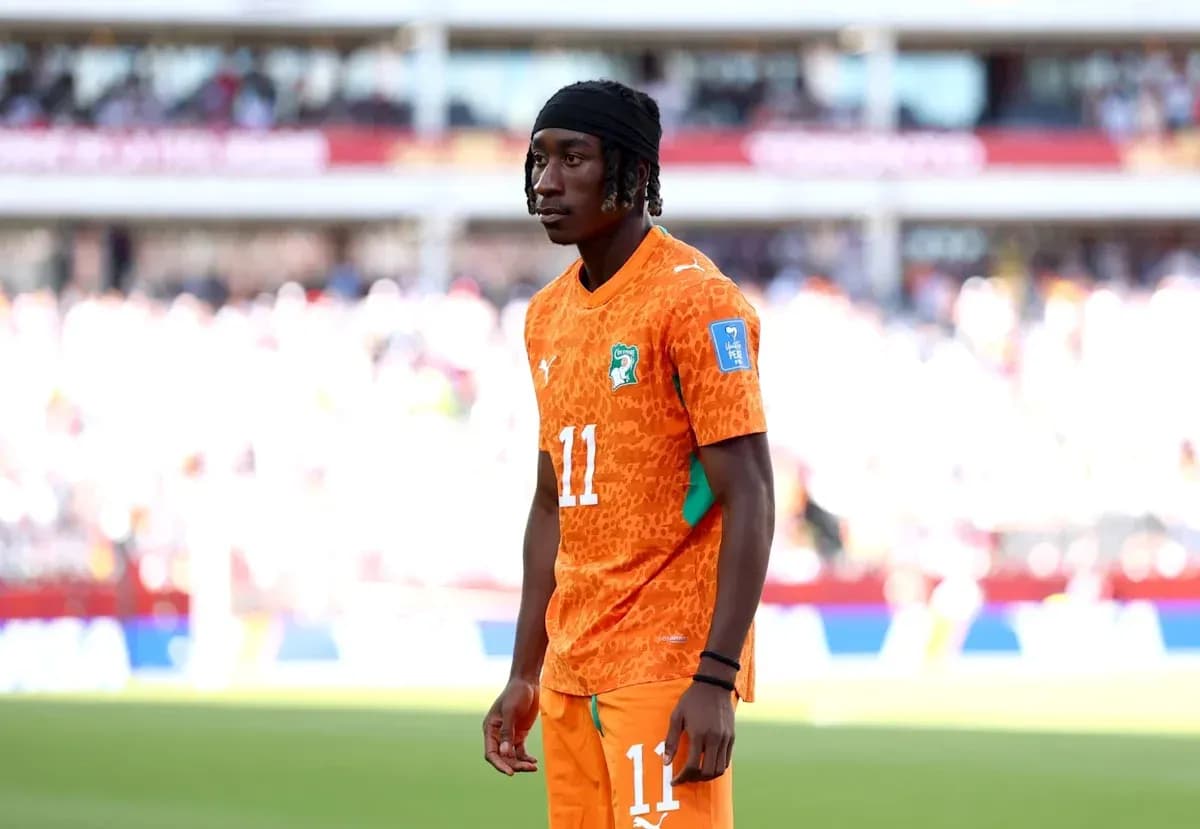
The forward options are the kind of “problem” every coach wants. Amad Diallo (27), Oumar Diakité (26), Elye Wahi (27), Yan Diomandé (23), Simon Adingra (28) and Ange-Yoan Bonny (26) give Faé pace, power, dribbling and finishing in multiple combinations. Picking the right blend becomes a champagne headache.
Midfield is thinner. If Franck Kessié (33) can no longer start every game, there is a gap to fill in terms of physicality and leadership. That’s the one clear area that needs reinforcement.
Even so, with an Afcon 2023 title already in the cabinet and a first World Cup knockout win under their belt, Côte d’Ivoire head into this cycle as one of Africa’s most compelling projects.
9) Germany – Klopp’s long runway
Germany have spent a decade trying to rediscover themselves after 2014. False dawn followed false dawn. Now they hand the keys to Jürgen Klopp and give him four full years to reshape the culture and the system.
For a national team in search of identity, that feels like a dream scenario.
The question is whether the talent matches the coach. An injury to Lennart Karl (22) on the eve of the 2026 World Cup hurt their preparations, but the Bayern playmaker should be a central figure by 2030. Kai Havertz (30) remains a wildcard – infuriating at times, decisive at others – but he has a habit of scoring important goals.
Florian Wirtz (27) and Jamal Musiala (27) will both hope to arrive in better form and fitness, and if they do, Germany suddenly have two of the most gifted attacking midfielders in the world at the peak of their powers. Nathaniel Brown (26) looks tailor-made for the wing-back role in Klopp’s high-energy blueprint.
Joshua Kimmich (35) has already brushed off talk of retiring before Klopp’s tenure begins, which is a relief. His experience and versatility will be vital amid what promises to be sweeping turnover, especially in the defensive half.
If Klopp can weld this group into a coherent, aggressive unit, Germany’s years in the wilderness may finally end.
10) United States – A bruised but growing contender
The United States arrived at the 2026 World Cup with more optimism than ever. They left with a last-16 appearance, a fractured relationship with Folarin Balogun, and a cloud over Mauricio Pochettino’s long-term status.
Even so, the tournament did something important: it confirmed that a core of players, all in a similar age bracket, can handle the pressure and perform. That matters for a nation still learning how to live with expectation.
This group will be older, smarter and more cynical by 2030. If the coaching situation stabilises and the Balogun fallout doesn’t fracture the dressing room, the US will arrive with a coherent core in its prime and a genuine shot at going deeper.
The Messi-Ronaldo era is gone. The next World Cup will not be about farewells. It will be about who has built best for the future – and who dares to grab it.