Sturm Graz vs Fenerbahçe Tactical Analysis: Key Moments and Stats
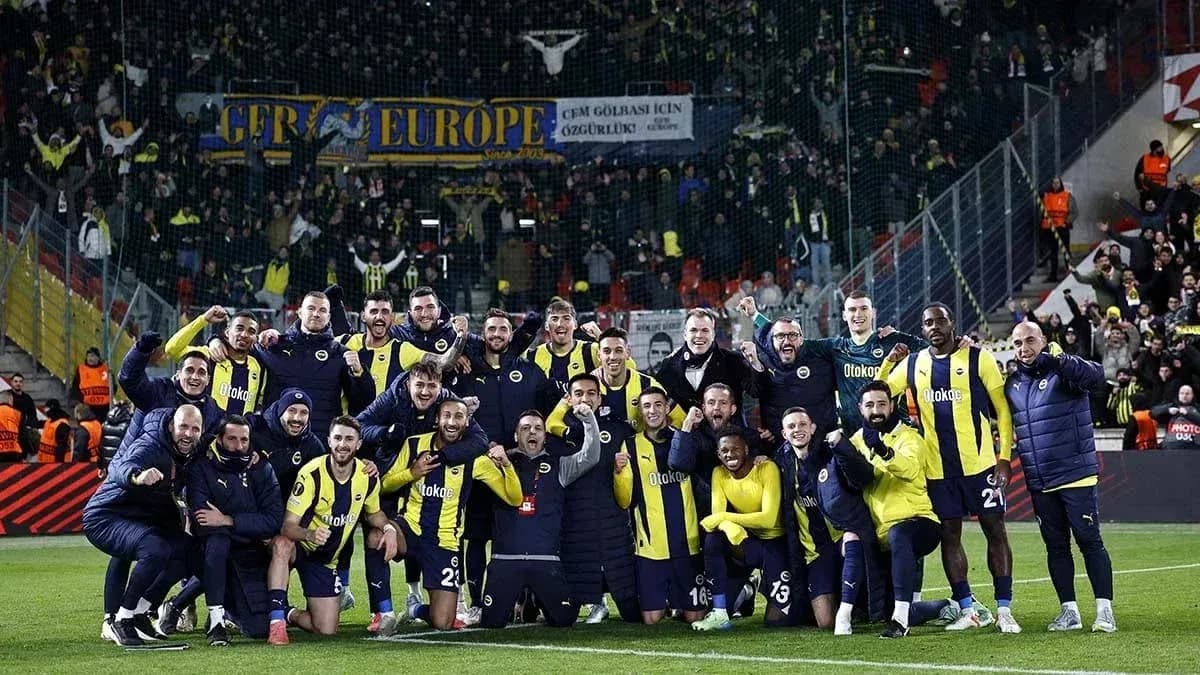
Sturm Graz approached the first leg at Merkur Arena in a proactive 4-4-2, trying to use structural aggression and volume of shots to offset Fenerbahçe’s superior individual quality in a 4-2-3-1. The statistical profile – 19 total shots for Sturm to Fenerbahçe’s 11, with possession split exactly 50%-50% – underlines a game where the Austrian side carried territorial and shooting volume, but the Turkish visitors controlled the decisive spaces and moments, winning 1-0 via a 66' penalty from Talisca.
Out of Possession
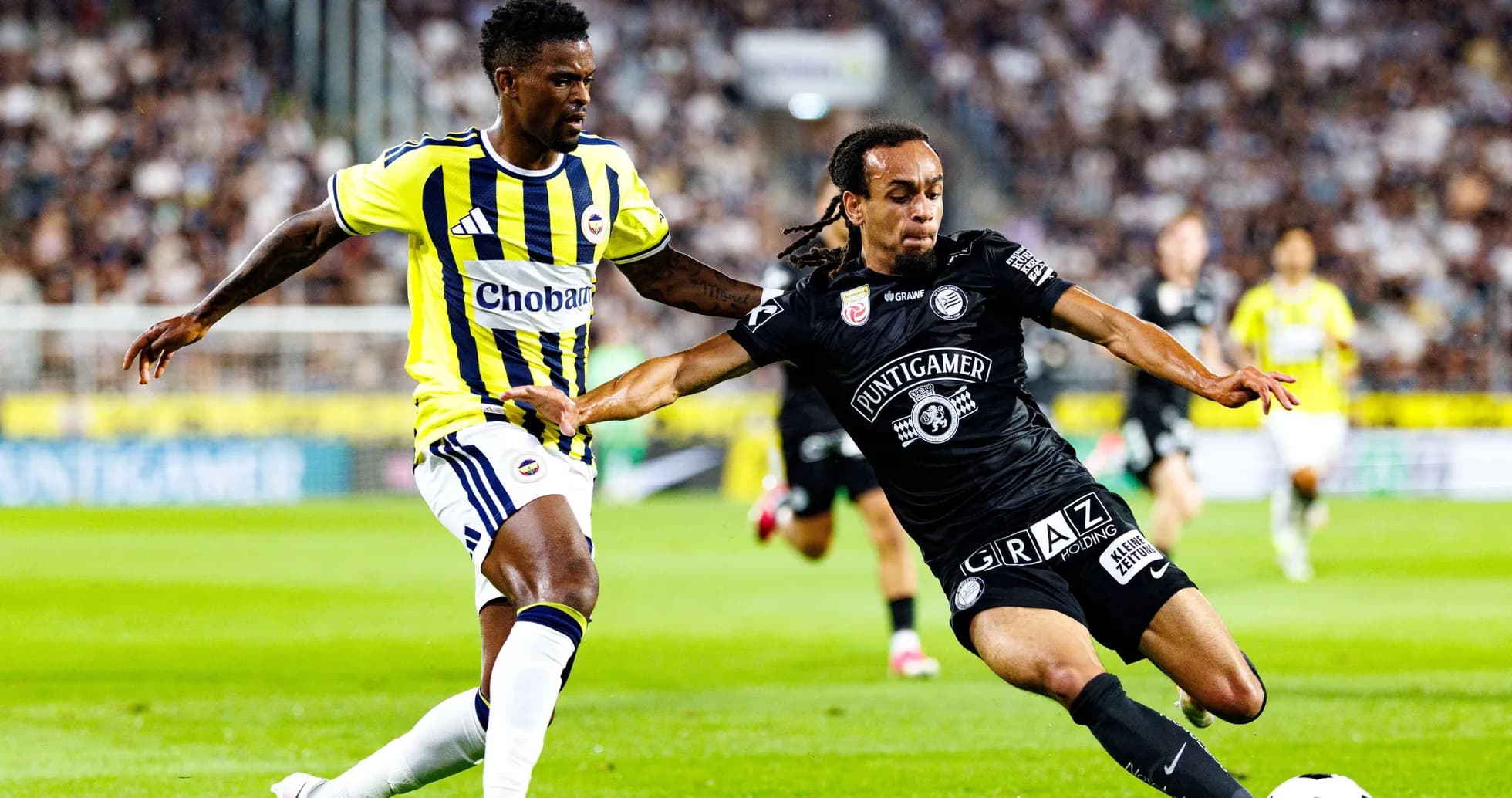
Out of possession, Sturm’s 4-4-2 was compact and relatively narrow. The double pivot of J. Gorenc Stankovic and S. Seidl tried to screen passes into Talisca’s feet and disrupt the central rhythm of M. Guendouzi and N. Kante. The back four, with J. Mitchell and P. Petrovic centrally, defended quite deep, which helped limit balls in behind but allowed Fenerbahçe to advance their full-backs and recycle possession in front of the block. That conservative line contributed to Sturm conceding 8 shots inside the box despite restricting Fenerbahçe to just 11 attempts overall.
With the Ball
With the ball, Sturm’s plan was clearly to stretch Fenerbahçe horizontally and then attack the half-spaces. The wide midfielders, L. Weinhandl and J. Hodl, held width, while the full-backs E. Soglo and A. Malic supported high, creating 2v1s against Fenerbahçe’s wingers. Sturm’s 19 shots included 13 from outside the box, reflecting how often they were forced to settle for long-range efforts when central lanes were closed by Kante and Guendouzi. The 383 passes with 311 accurate (81%) show a side comfortable circulating in the middle third but struggling to convert possession into clear penalty-area entries; only 6 of their attempts came from inside the box.
Key Tactical Shift
The key tactical shift from Sturm came with the triple substitution on 61': B. Beganovic (IN) came on for S. Jatta (OUT), J. Heil (IN) came on for A. Malic (OUT), and N. Weiper (IN) came on for A. Kayombo (OUT). These changes re-energised the front line and right flank, with Beganovic offering more mobility between the lines and Weiper providing a different profile in the channel. The idea was to increase verticality and pressing intensity just as Fenerbahçe were preparing their own changes. Later, R. Fosso (IN) came on for J. Gorenc Stankovic (OUT) at 70', adding a more dynamic, forward-running presence in midfield, and P. Koller (IN) replaced P. Petrovic (OUT) at 79' to freshen the back line for the closing phase.
Fenerbahçe’s Structure
Fenerbahçe’s 4-2-3-1 was built around control and vertical punch through the three behind Talisca. M. Asensio and M. Greenwood operated as inverted playmakers from the flanks, with K. Aktürkoğlu providing depth and diagonal runs. Guendouzi and Kante formed a double pivot that was crucial in dictating the game’s tempo: they were the main reason Fenerbahçe could match Sturm’s possession (397 passes, 318 accurate at 80%) despite playing away and spending phases under pressure. Their positioning prevented Sturm from accessing the central “10” zone, forcing the hosts wide and into those numerous long shots.
Defensive Setup
Defensively, Fenerbahçe’s back four – N. Semedo, M. Skriniar, N. Aké, and Archie Brown – were compact and aggressive in duels. They conceded 19 shots but allowed only 2 on target, a critical distinction: the majority of Sturm’s attempts were rushed or from poor angles, which meant that M. Gunok (Fenerbahçe) was rarely exposed. The visitors also defended their box with numbers, reflected in just 2 blocked shots against them compared to Sturm’s 9; Fenerbahçe tended to force the shot earlier, whereas Sturm often had to throw bodies in front of efforts after deeper defending.
Game’s Turning Point
The game’s turning point came in the mid-second-half substitution wave. On 62', M. Muldur (IN) came on for N. Semedo (OUT), adding more defensive security and fresh legs on the right. One minute later, Fred (IN) came on for M. Asensio (OUT) and O. Aydin (IN) came on for M. Greenwood (OUT), rebalancing the side: Fred’s arrival gave extra control and pressing resistance in midfield, while Aydin offered vertical running and direct threat. This reconfiguration coincided with Fenerbahçe’s best attacking spell, culminating in the 66' penalty converted by Talisca. After the lead, Ismail Kartal doubled down on control: I. Yuksek (IN) replaced N. Kante (OUT) at 73', and V. Muriqi (IN) came on for Talisca (OUT) at 77', giving a more traditional target presence to relieve pressure and defend set-plays.
Discipline and Tactical Narrative
Discipline also fed into the tactical narrative. Fenerbahçe collected three yellow cards (Nélson Semedo, Archie Brown, Kerem Aktürkoğlu, all for “Foul”), indicative of their willingness to break Sturm’s rhythm with tactical infringements when transitions threatened to open up. Sturm’s single booking, to Jeyland Mitchell for “Foul” on 84', came as they pushed more aggressively in search of an equaliser, stepping higher with their centre-backs.
Statistical Verdict
The statistical verdict frames the tactical story clearly: Sturm’s 7 corners to Fenerbahçe’s 6 and equal 50% possession show they were not outplayed territorially. Their 383 passes, 311 accurate (81%), reflect a competent build-up and circulation structure. However, the shot quality gap was decisive: 19 shots yielded just 2 on target, and only 6 from inside the box against a compact Fenerbahçe block. Conversely, Fenerbahçe’s 11 shots included 8 inside the box and 6 on target, underlining far better chance quality and efficiency.
Defensive Efforts
Defensively, Sturm’s back line and midfield shield worked hard, as evidenced by 9 blocked shots, but the penalty concession and the volume of box shots against them show the limits of their deep block when Fenerbahçe accelerated. Both goalkeepers’ raw save counts – 5 for Sturm’s D. Khudyakov and 2 for M. Gunok (Fenerbahçe) – encapsulate the pattern: Fenerbahçe forced more genuinely dangerous situations, while Sturm’s pressure translated into quantity rather than clear chances. In tactical terms, the 0-1 home defeat leaves Sturm needing to convert their structural competitiveness into higher-quality final-third actions in the return leg, while Fenerbahçe will feel their control-oriented 4-2-3-1 has given them both the lead and a repeatable blueprint.