Sturm Graz Defeats Heart Of Midlothian 2-0 in UEFA Champions League
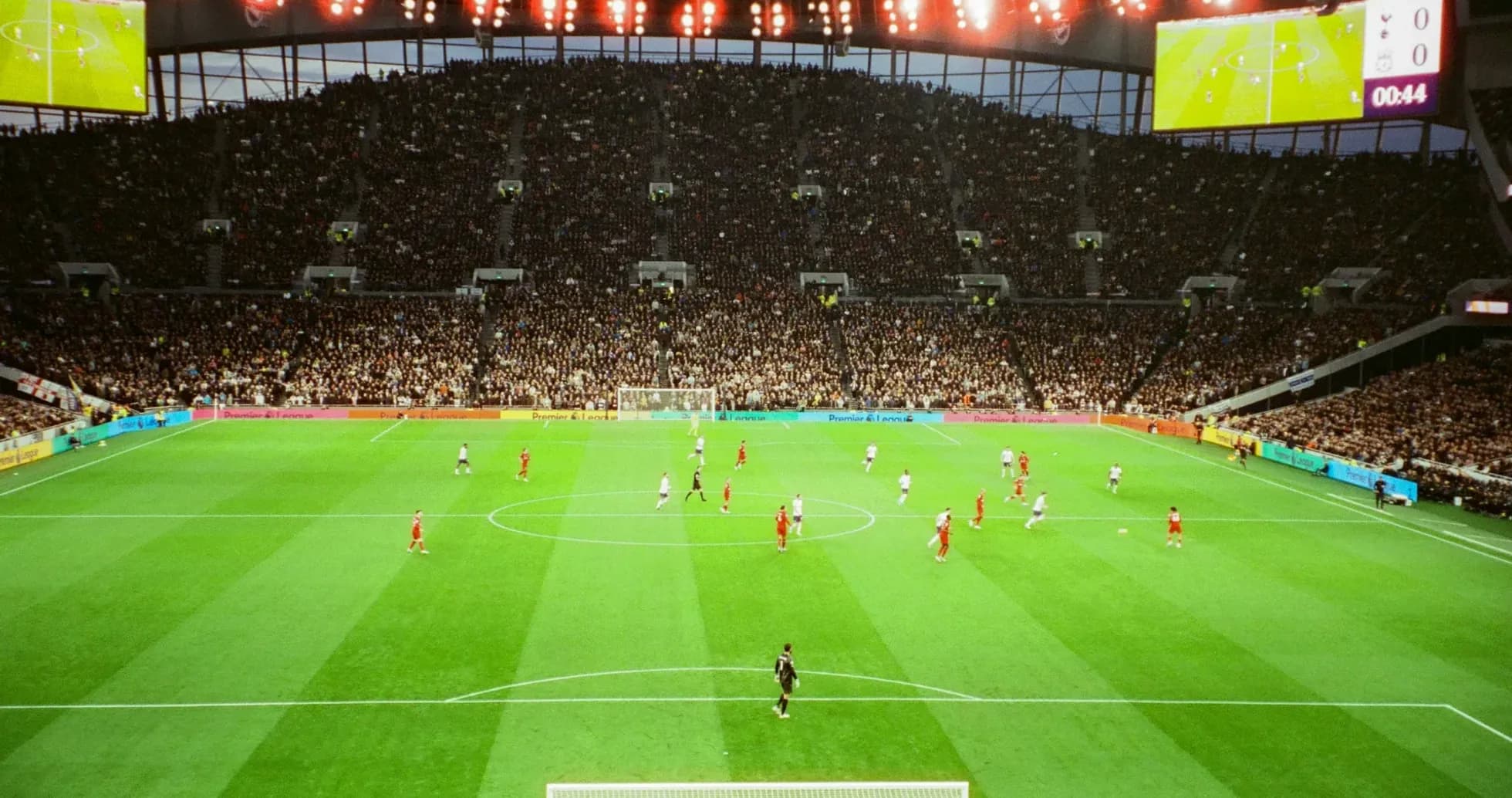
Heart Of Midlothian’s 2-0 home defeat to Sturm Graz at Tynecastle Park in the UEFA Champions League 2nd Qualifying Round was defined by a stark contrast between territorial dominance and penalty-box efficiency. Hearts controlled long stretches with 64% possession and a 4-3-3 structure under Wouter Vrancken, but Fabio Ingolitsch’s 4-4-2 for Sturm Graz was built to suffer without the ball and then strike decisively in transition. The Austrians generated the clearer chances, winning the shot-on-target battle 9-4 and ultimately translating that superiority into two second-half goals.
First Half
The first half followed a clear pattern: Hearts building patiently from the back, Sturm Graz content to compress space in a compact mid-block. With A. Schwolow (Heart Of Midlothian) initiating play, the home side tried to use their back four of J. Altena, M. Fagan-Walcott, S. Kingsley and H. Milne as a circulation platform, while the midfield trio of B. Spittal, O. McEntee and S. Guendouz were tasked with progressing through central lanes. The front three of A. Kyziridis, C. Braga and C. Miller looked to stretch the Sturm back line horizontally, but the visitors’ 4-4-2 stayed narrow, funnelling Hearts into predictable wide areas.
Sturm’s 4-4-2, with S. Wlodarczyk and S. Jatta up front, had a clear tactical brief: screen central passes, then break quickly once possession was regained. The wide midfielders S. Seidl and J. Hodl, supported by full-backs J. Heil and E. Soglo, were aggressive in jumping to Hearts’ full-backs, forcing rushed decisions. When Hearts did reach the final third, they struggled to convert possession into truly dangerous situations. Their 15 total shots produced only 4 on target, and 8 of those attempts came from inside the box but often under pressure, reflected in the low conversion and the need for speculative efforts from outside (7 shots).
Second Half
Sturm, by contrast, were far more ruthless with less of the ball. Their 17 total shots included 13 from inside the box, a clear indicator of how often they managed to penetrate directly into high-value zones. The disallowed goal for Seedy Jatta at 28' following a VAR intervention was an early warning of their transition threat. Even though that potential breakthrough was cancelled, it revealed the pattern: quick, vertical attacks that isolated Hearts’ centre-backs and dragged the full-backs into uncomfortable recovery runs.
The turning point came after half-time. Ingolitsch’s first adjustment was at 46', when R. Fosso (IN) came on for L. Weinhandl (OUT), adding more ball-carrying and vertical thrust from midfield. That change tilted the central battle; Fosso’s willingness to drive forward allowed J. Gorenc Stankovic to sit and screen, anchoring the midfield and freeing S. Seidl to attack more aggressively from the right.
The opening goal at 64' was a textbook example of Sturm’s plan. S. Seidl timed his run from midfield perfectly to exploit the space between Hearts’ full-back and centre-back, finishing a move assisted by J. Gorenc Stankovic. It was the culmination of repeated patterns: quick regain, vertical pass into the channel, and a late midfield runner arriving in the box. Four minutes later, at 68', E. Soglo stepped forward from left-back to score, underlining how Sturm’s full-backs were encouraged to join attacks once Hearts were stretched chasing an equaliser.
At 69', Vrancken reacted with a triple substitution: P. Kabore (IN) for C. Miller (OUT), A. Ba-Sy (IN) for S. Guendouz (OUT), and T. Renaud (IN) for B. Spittal (OUT). The intention was clear: inject more direct running and attacking impetus. Later, at 80', J. McCart (IN) replaced A. Kyziridis (OUT), giving Hearts fresh legs but also subtly reshaping their structure. Despite these changes, Hearts’ attack remained too lateral. Their 8 corner kicks to Sturm’s 2 showed how often they reached wide crossing zones, but the quality and variety of deliveries were insufficient to unsettle a well-organised Sturm back line marshalled by A. Vallci and J. Mitchell.
Defensively, Hearts’ high possession masked their vulnerability in transition. With full-backs pushing on and the midfield three stepping up to sustain pressure, rest defence was often a 2v2 or 3v3 against Sturm’s forwards and wide runners. That structural risk is reflected in the visitors’ 9 shots on target from 17 attempts, compared to Hearts’ 4 from 15. Sturm consistently turned regains into clean shooting opportunities inside the box, while Hearts’ attacks were more easily shepherded into low-probability zones.
In goal, A. Schwolow (Heart Of Midlothian) was heavily worked, making 7 saves to keep the scoreline respectable given the volume and quality of Sturm’s chances. At the other end, D. Khudyakov (Sturm Graz) made 3 saves; protected by a compact block, he was rarely exposed to clear one-on-ones, and most of Hearts’ efforts were either from distance or under tight marking.
The passing data further underlines the tactical story. Hearts completed 473 total passes, with 377 accurate at 80%, indicative of sustained circulation but also of a degree of sterile dominance: plenty of ball, limited penetration. Sturm’s 268 passes, 182 accurate at 68%, show a more direct, risk-tolerant approach, accepting lower pass completion in exchange for faster progression and more direct attacks into the box.
Discipline also reflected the contrasting defensive approaches. Sturm committed 15 fouls to Hearts’ 10 and collected the game’s only yellow card when Albert Vallci was booked at 61' for “Foul”, a by-product of their more combative, contact-heavy defending around the edge of their own box. Yet that aggression was largely controlled and effective, disrupting Hearts’ rhythm without tipping into chaotic defending.
In summary, this was a classic European qualifying away performance from Sturm Graz: compact, disciplined, and brutally efficient in transition. Hearts’ 64% possession, higher pass volume and 8 corners could not compensate for their lack of incision in central areas and their exposure when attacks broke down. Sturm’s ability to generate 13 shots inside the box and convert two of them, while limiting Hearts to 4 shots on target, decided the tie on a tactical level as much as on the scoreboard.